

We remember the first time we checked our search console and saw dozens of impressions from nearby cities we never mentioned on our site. Those people were ready to buy, yet most bounced in seconds. The missing piece was simple: we did not have focused local SEO landing pages that matched what they were actually searching. In this guide, we walk through how we fix that now, and how you can turn those local searches into real customers.
Key Takeaways
- Local SEO landing pages target specific cities or neighborhoods with clear intent, turning long‑tail local searches into high‑intent traffic that actually converts.
- Effective local SEO landing pages mirror real local search queries, prove local relevance with landmarks and context, and guide visitors toward a single primary action like calling or booking.
- Choosing the right local keywords means focusing on true service areas, buyer‑intent phrases, and clustering related terms by city and intent instead of creating thin, duplicate pages.
- A high‑converting local SEO landing page follows a simple structure: location‑specific headline, strong value proposition, above‑the‑fold CTA, local proof, social proof, FAQs, and a final call to action.
- To scale local SEO landing pages without hurting quality, use a shared template but localize intros, service angles, proof, FAQs, and track performance with analytics, call tracking, and Search Console to keep improving results.
What Local SEO Landing Pages Are (And Why They Matter)
Local SEO landing pages are focused pages built around a specific city, neighborhood, or service area combined with a clear intent. Think “HVAC repair in Dallas“ or “estate lawyer in Queens“ rather than a generic service page.
At a basic level, each page does three jobs:
- Match local intent
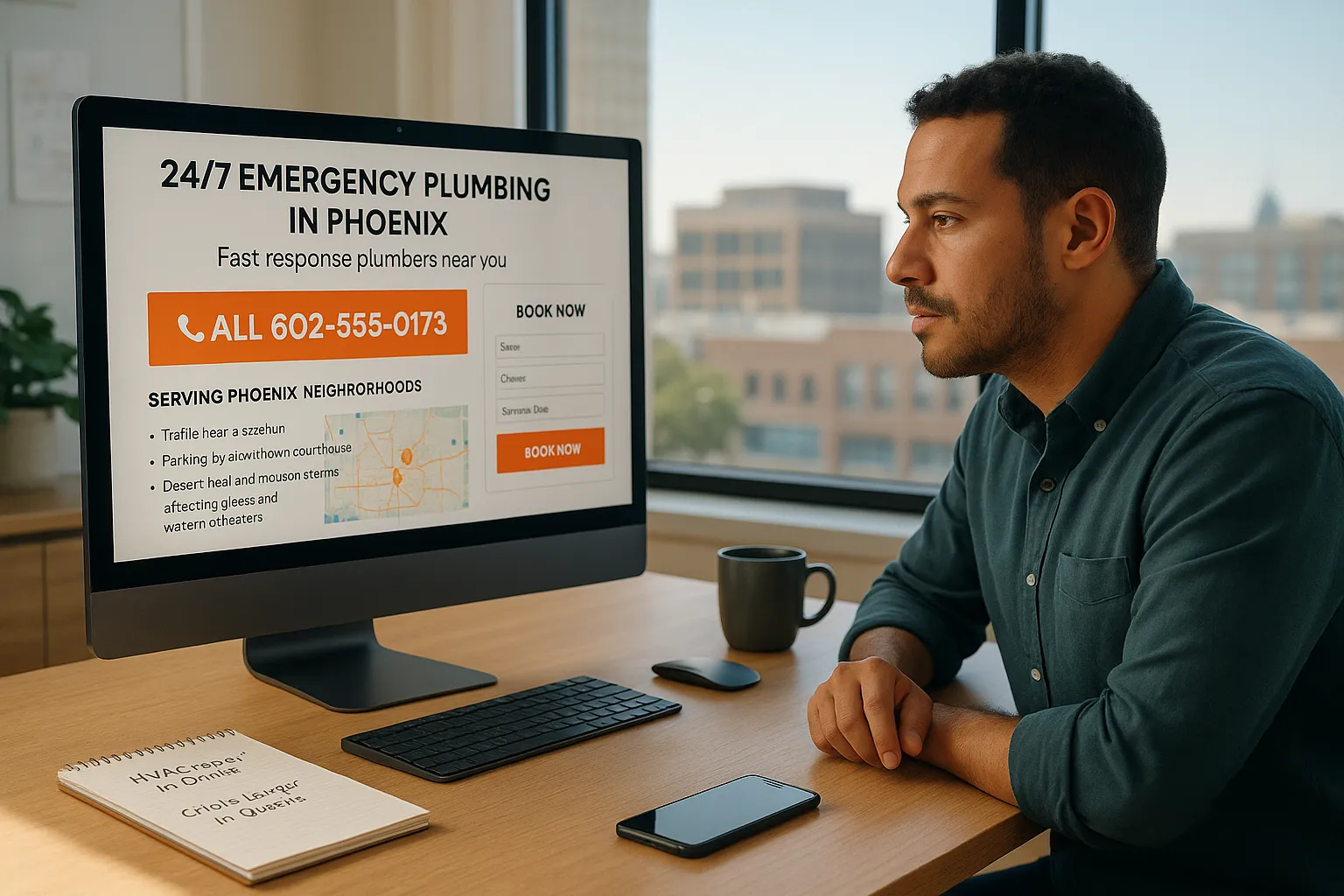
The page language, headings, and content mirror what someone in that location actually types into Google. When someone searches “emergency plumber near me“ and lands on a page that openly says “24/7 emergency plumbing in Phoenix,“ trust rises fast.
- Prove local relevance
Good local SEO landing pages reference real neighborhoods, landmarks, and local needs. We might mention traffic near a stadium, parking near a courthouse, or weather patterns that affect roofing. These signals help both people and search engines see that we genuinely serve that area.
- Guide visitors to take action
A local page is not just a brochure. It should nudge visitors to call, book, fill a form, or visit in person. Clear calls to action, visible phone numbers, and easy directions matter.
When we skip local SEO landing pages and only rely on one generic service page, we usually miss long‑tail local searches and lose out to competitors who built location‑specific content.
Choosing The Right Local Keywords And Locations
Good local SEO landing pages start with specific keywords and service areas. We want to show up where it actually leads to revenue instead of chasing vanity traffic.
Here is a simple process we use:
- List actual service areas
Write down cities, suburbs, and key neighborhoods we truly serve. If we will not send a team there or ship there, we do not build a page.
- Pull real search data
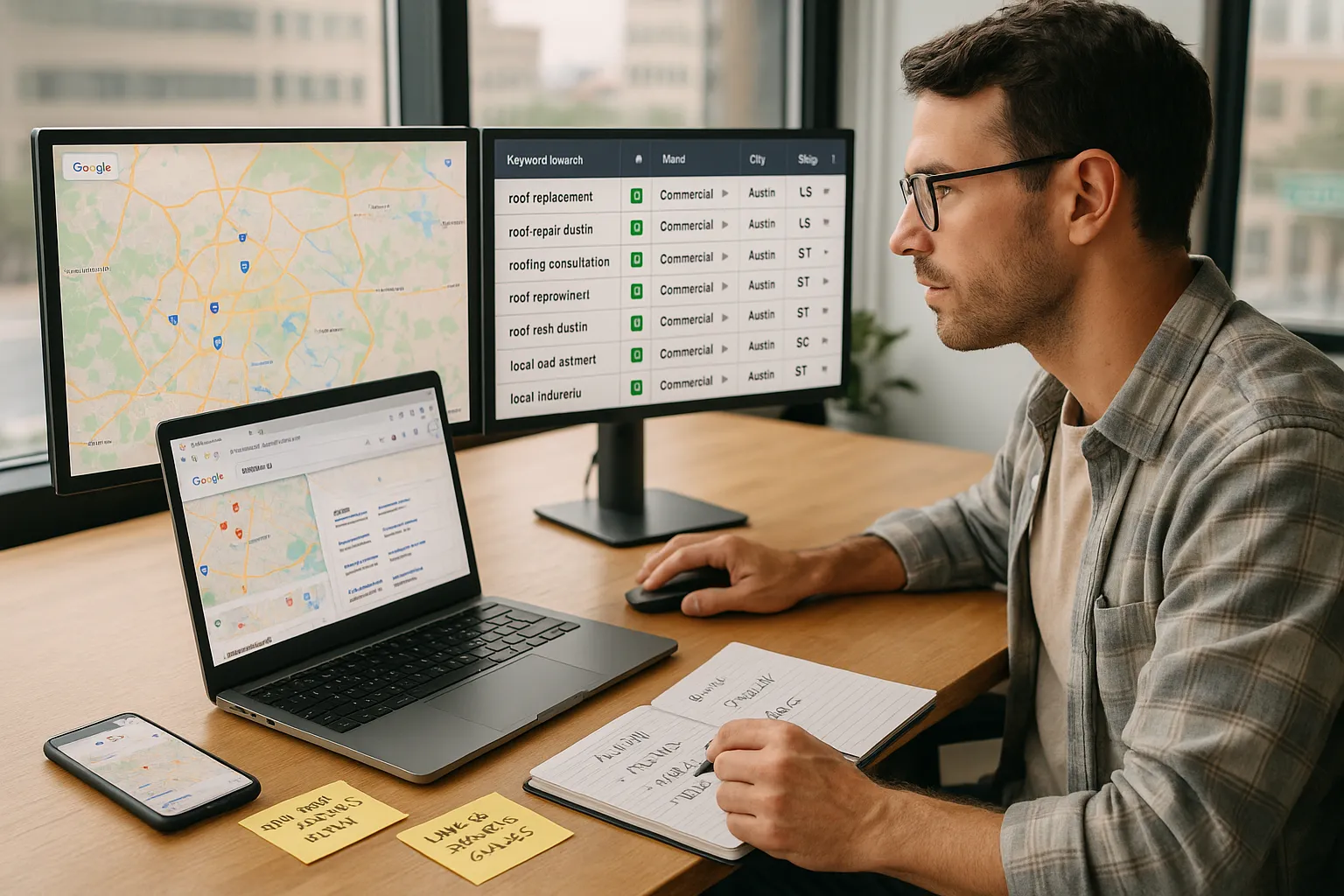
Use tools like Google Keyword Planner, Ahrefs, or Semrush to find terms that combine our service with a city or “near me.“ Focus on search phrases with clear buyer intent such as “book,“ “hire,“ “repair,“ or “consultation.“
- Check Google Maps and SERPs
Search our target phrase in Google, then see what shows up. Are local packs showing? Are competitors using local SEO landing pages for that area? The layout tells us how strong local intent is.
- Group by intent and location
We cluster terms like “roof replacement Austin“ and “roof repair Austin“ on one Austin roofing page, instead of building dozens of thin variations.
We can also link out to deeper guides from each landing page, such as a detailed local business schema guide or a Google Business Profile checklist, to serve more curious visitors without cluttering the main sales message.
How To Structure A High-Converting Local SEO Landing Page
When we build local SEO landing pages, we treat each one like a focused sales pitch for a very specific person in a very specific place.
A simple structure works well:
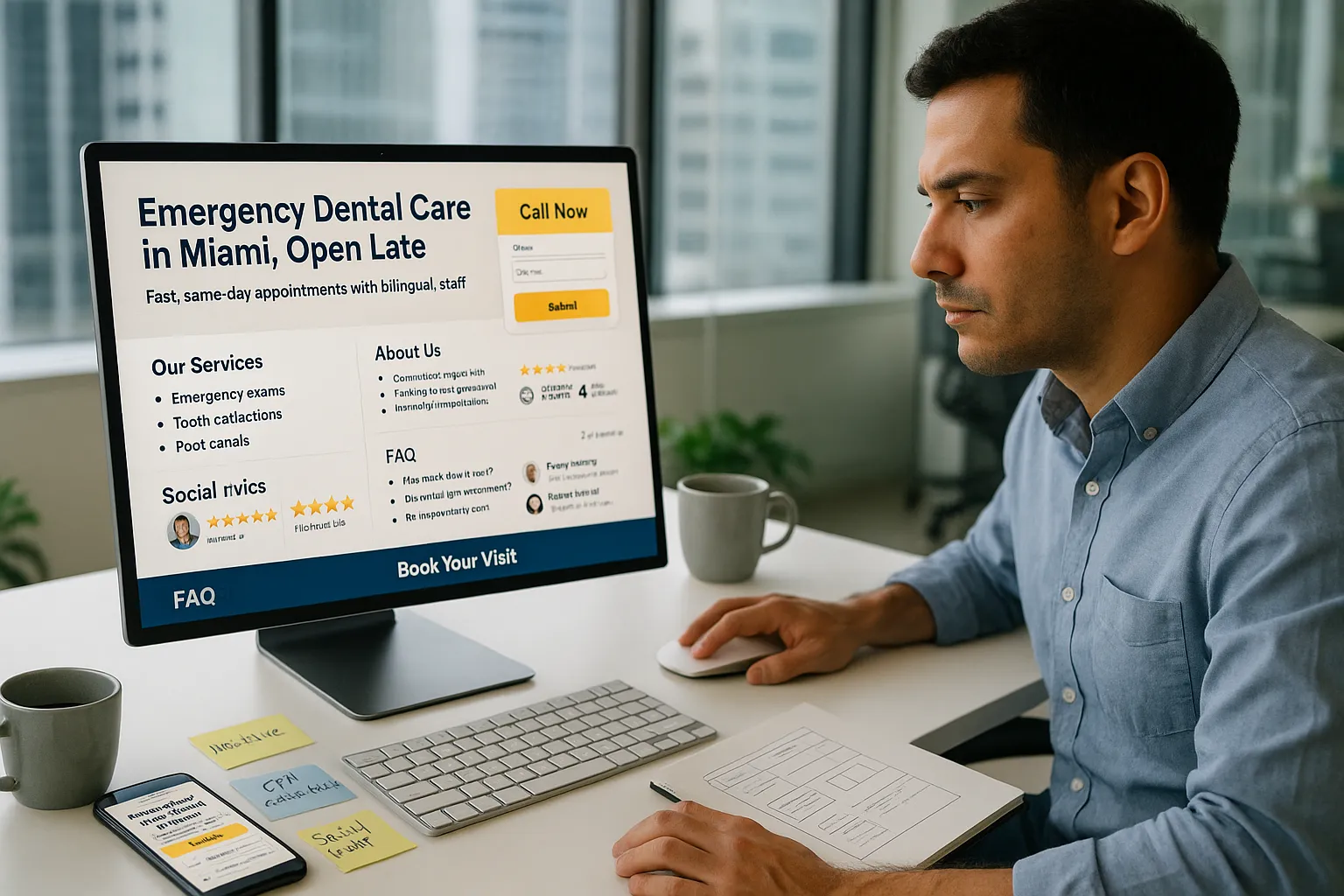
- Headline that repeats the main local term
Example: “Emergency Dental Care in Miami, Open Late“. The visitor instantly knows they are in the right spot.
- Support line that answers “Why you?”
Mention a clear strength: speed, experience, same‑day appointments, bilingual staff, or a warranty.
- Primary call to action above the fold
A phone button, booking widget, or short form should appear without scrolling. Local searchers often act fast on mobile.
- Proof and detail section
Here we talk about services, local conditions, and what makes this specific area unique. We can mention parking, house types, or regulations that affect our work.
- Social proof and trust
Add reviews from customers in that city, star ratings, local awards, or logos of nearby partners.
- FAQ and final call to action
Address common concerns such as pricing, timing, and service radius. End with a clear next step.
This repeatable structure lets us scale local SEO landing pages while keeping them focused on conversion, not just rankings.
On-Page Optimization Essentials For Local Visibility
Search engines read local SEO landing pages through both content and structured signals. We want both to send a clear, consistent message.
Here is our short checklist:
- Title tag and H1
Include the service + city, and a value hook. Example: “Family Law Attorney in Denver | Flat‑Fee Consults“.
- Meta description
Speak to the local visitor directly. Mention neighborhoods, hours, or a key benefit, and invite a click.
- NAP details
Make sure the business name, address, and phone number match our Google Business Profile and other citations.
- Local content
Add a short section about serving that community. Mention local schools, business districts, or common issues.
- Internal links
Link to our service overview page, our contact page, and maybe a pricing or process explainer so visitors can dig deeper.
- Schema markup
Use LocalBusiness or relevant subtype schema to tag address, phone, opening hours, and geo coordinates.
Clean, consistent signals across local SEO landing pages help both Google and people feel more confident that we are a real local option.
Scaling Local Landing Pages Without Hurting Quality
Many brands try to scale local SEO landing pages by spinning the same paragraph 200 times and swapping city names. Search engines and humans both spot this pattern fast.
We prefer a different path.
First, we create a base layout and content framework that covers universal information: what we do, who we serve, core benefits, and how to contact us. This gives us consistency across all pages.
Then we localize:
- Intro paragraph
Mention that city or area by name and reference a real local detail.
- Service angles
Address problems that are common in that location. Humid climates, older housing stock, tourist seasons, or local laws each shape needs.
- Proof elements
Pull reviews, case studies, and photos from customers in that city.
- FAQs
Answer questions that sales or support teams hear from that specific area.
We also watch crawl budget and internal linking when we scale. Too many thin pages can drag the whole site. We only create local SEO landing pages where we have a real service presence, content to support them, and a plan to track leads and calls.
Conclusion
Local SEO landing pages work best when they each carry a single clear job, speak clearly to one local audience, and sit inside a simple tracking plan. Let us walk through the pieces we always check when we launch or refresh them.
Clarifying Your Primary Goal For Each Page
Every local page needs one main conversion goal. That might be phone calls, booked appointments, quote requests, or visits to a physical location.
We write that goal in plain language before any content work. “This page exists to get homeowners in Brooklyn to request a roof inspection“ is far more helpful than “get more traffic.“ The stated goal controls what we show above the fold, what we repeat in headings, and which calls to action we choose.
If we catch ourselves trying to chase three or four different outcomes on one page, we split them or narrow the focus.
Crafting Localized Messaging And Offers
Local SEO landing pages feel more human when our copy mirrors how people in that area talk and buy.
We might:
- Use local phrases that our customers actually say on calls.
- Mention common schedules, such as commuters, parents with school runs, or tourist peaks.
- Adjust offers by area, like free parking validation downtown or same‑day service in suburbs.
We test offers by city. One location might respond best to a discount, another to a fast response time, another to an extended warranty. Local pages give us room to test without changing the entire site.
Page Layout: Above-The-Fold To Final Call To Action
Our layout order does more than design work. It shapes how quickly local visitors feel safe to act.
We usually:
- Put a clear headline and main call to action at the top.
- Add a short trust block, such as a review snippet and “Serving [City] since 2010.”
- Expand on services with local context and photos.
- Drop in a map embed, address, and parking or transit tips.
- Close with FAQs and a final call to action.
Mobile users often never reach the bottom, so we treat the first screen as the whole pitch and then repeat the call to action again later for careful readers.
Core Local SEO Elements To Include On Every Page
Before we publish, we check that each local SEO landing page has:
- City + service in the title tag and H1.
- Consistent NAP details matching Google Business Profile.
- At least one mention of nearby areas or landmarks.
- Internal links to service, contact, and about pages.
- LocalBusiness schema or a relevant type with address and phone.
- Compressed images with descriptive file names and alt text.
This simple checklist keeps our pages grounded in real local signals instead of vague marketing claims.
Tracking Performance And Continuously Improving
We treat local SEO landing pages as living assets, not one‑time projects.
Our basic tracking stack includes:
- Google Analytics to see sessions, scroll depth, and conversions.
- Call tracking to tie phone calls back to specific pages or cities.
- Google Search Console to watch which local queries trigger impressions.
Once we have a month or two of data, we compare pages. Which city gets many clicks but few calls? Which one has a high call rate even with modest traffic? We then test changes to headlines, offers, or proof elements.
Over time, we keep the local SEO landing pages that bring in qualified leads, fold weak ones into nearby areas, and refine content where intent shifts.
Done well, this turns local search from a vague hope into a predictable flow of real customers who already trust us before they even say hello.
Sources:
- “How Mobile Search Connects Consumers to Stores“, Think with Google, 2016, https://www.thinkwithgoogle.com/marketing-resources/micro-moments/how-mobile-search-connects-consumers-to-stores/
- “How consumers use local search“, Google/Ipsos, 2014, https://www.thinkwithgoogle.com/consumer-insights/consumer-trends/how-consumers-use-local-search/
Frequently Asked Questions About Local SEO Landing Pages
What are local SEO landing pages and why do they matter?
Local SEO landing pages are focused pages built around a specific city, neighborhood, or service area plus a clear intent, such as “HVAC repair in Dallas.” They help you match local search queries, prove you genuinely serve that area, and guide visitors to call, book, or request a quote.
How do I choose the right locations and keywords for local SEO landing pages?
Start by listing cities and neighborhoods you truly serve, then use tools like Google Keyword Planner, Ahrefs, or Semrush to find service + city or “near me” terms with buyer intent. Check Google Maps and the SERPs to confirm strong local intent and see how competitors target those areas.
What is the best way to structure a high-converting local SEO landing page?
Use a clear headline with service + city, a support line explaining why choose you, and a primary call to action above the fold. Follow with service details, local context, social proof from that area, FAQs addressing common concerns, and a final call to action that reinforces the main conversion goal.
How many local SEO landing pages should I create for my business?
Create one local SEO landing page per city or clearly defined service area where you have real presence and can serve customers. Avoid mass‑producing thin pages for every tiny suburb. Start with your highest-revenue locations, then expand slowly while tracking leads, calls, and conversions for each page.
Do local SEO landing pages need unique content for each city?
Yes. While you can reuse a core layout, each local landing page should have unique, localized content: city-specific intros, references to neighborhoods or landmarks, local pain points, and reviews from customers in that area. Simply swapping city names in identical paragraphs risks poor engagement and weak search performance.
Some of the links shared in this post are affiliate links. If you click on the link & make any purchase, we will receive an affiliate commission at no extra cost of you.
