

When we first saw a national brand lose foot traffic to a single-location competitor, we realized something: scale does not guarantee local visibility. The brands with hundreds of locations often lose nearby customers to the scrappy shop across the street. Enterprise local SEO is how we flip that script and turn size into a strategic edge instead of a slow anchor.
In this guide, we break down how large organizations can bring order to chaos, align teams, and turn thousands of local searches into revenue – without losing control of brand or compliance.
Key Takeaways
- Enterprise local SEO turns multi-location scale into an advantage by building systems that adapt to each market while maintaining centralized control over brand and compliance.
- Strong technical foundations—clear URL structure, robust location pages, and NAP consistency across listings—are essential to manage thousands of locations without chaos.
- Centralized Google Business Profile management with standard categories, attributes, UTM tracking, and review workflows is critical for driving and measuring local leads at scale.
- Governance through playbooks, stakeholder alignment, and regulatory guardrails allows local teams to customize while protecting brand, legal, and data integrity.
- Advanced enterprise local SEO tactics like structured data, localized content and PR, and first-party data integration help win in competitive markets and connect local visibility to real revenue.
- Ongoing testing, KPI tracking, and iterative optimization transform enterprise local SEO from a one-time project into a compounding growth engine across all locations.
What Makes Enterprise Local SEO Different

Enterprise local SEO lives in a different world than a single-location business. Scale changes everything: the tech stack, the politics, the risk, and the ceiling on results.
Complex Local Presence Across Many Locations
The first big difference is complexity. A small business might manage one Google Business Profile and one location page. We might manage 500 or 5,000.
At scale we deal with:
- Multiple brands or sub-brands in the same portfolio
- Locations spread across cities, states, and sometimes countries
- Mixed formats like retail, service areas, franchisees, and corporate locations
Local intent also varies by market. “Near me” in New York behaves differently than in a suburb in Texas. Search demand, competitors, and regulations all shift by region, so one blanket tactic rarely works.
Enterprise local SEO means we design systems that can adapt to each market while still staying consistent enough to manage.
Brand, Compliance, And Stakeholder Challenges
The second difference is people. At enterprise scale we answer to legal, brand, regional managers, IT, franchisees, and executives.
That leads to tension:
- Legal teams worry about claims, disclaimers, and regulated language
- Brand teams push for uniform messaging and visuals
- Local managers want freedom to market their store or office
On top of that, regulated industries like healthcare, finance, and legal services have strict advertising rules. Local pages, reviews, and Google Business Profile content often need clear guidance to stay compliant across all markets.
So enterprise local SEO is part search project, part change management, and part governance. If we do not handle that well, progress stalls even if our tactics are sound.
Core Foundations Of Enterprise Local SEO

Before we chase advanced tricks, we need strong basics that scale. These foundations let us roll changes across hundreds of locations without breaking the site or losing track of what changed.
Technical Site Architecture For Multi‑Location Brands
We start with structure. A clear, consistent URL pattern helps search engines and users understand how locations relate to the brand.
Common approaches:
- /locations/state/city/location-name/
- /city/location-name/
We want:
- XML sitemaps that include all location URLs
- Clean internal links from the main navigation to a location finder, then to each location page
- Separate sections for brands or business units when needed, while retaining a shared pattern
Google recommends clear, crawlable paths to location pages and a logical hierarchy for businesses with many locations (Source: “Multi-regional and multilingual sites,“ Google Search Central, 2022, https://developers.google.com/search/docs/specialty/international/localized-versions).
Location Pages, Local Content, And On‑Page Optimization
Strong location pages are the workhorses of enterprise local SEO. Each page should:
- Match a distinct physical location or service area
- Include accurate NAP (name, address, phone) details
- Offer localized copy that reflects the city, neighborhood, or service focus
We also add:
- Driving directions and nearby landmarks
- Location-specific FAQs
- Local offers, events, or seasonal details when possible
We avoid copying the same paragraph across hundreds of pages. Repetition still happens, but we insert local nuance so each page speaks to its market.
For more depth on page build-outs, we often pair this with a guide to local landing pages that standardizes templates for content teams.
Local Listings, Citations, And NAP Consistency At Scale
Next we tackle listings. At enterprise scale, we usually work with a listings management platform to sync data across:
- Google Business Profile
- Apple Business Connect
- Bing Places
- Major directories like Yelp and industry-specific platforms
The priority is NAP consistency. Name, address, and phone need to match across our location pages and external listings. Google encourages consistent NAP data to avoid confusion and merging of locations (Source: “Guidelines for representing your business on Google,“ Google, 2023, https://support.google.com/business/answer/3038177).
We support this with a central source of truth – often a location database or internal tool – that feeds both the website and syndication partners.
Managing Google Business Profiles For Hundreds Of Locations
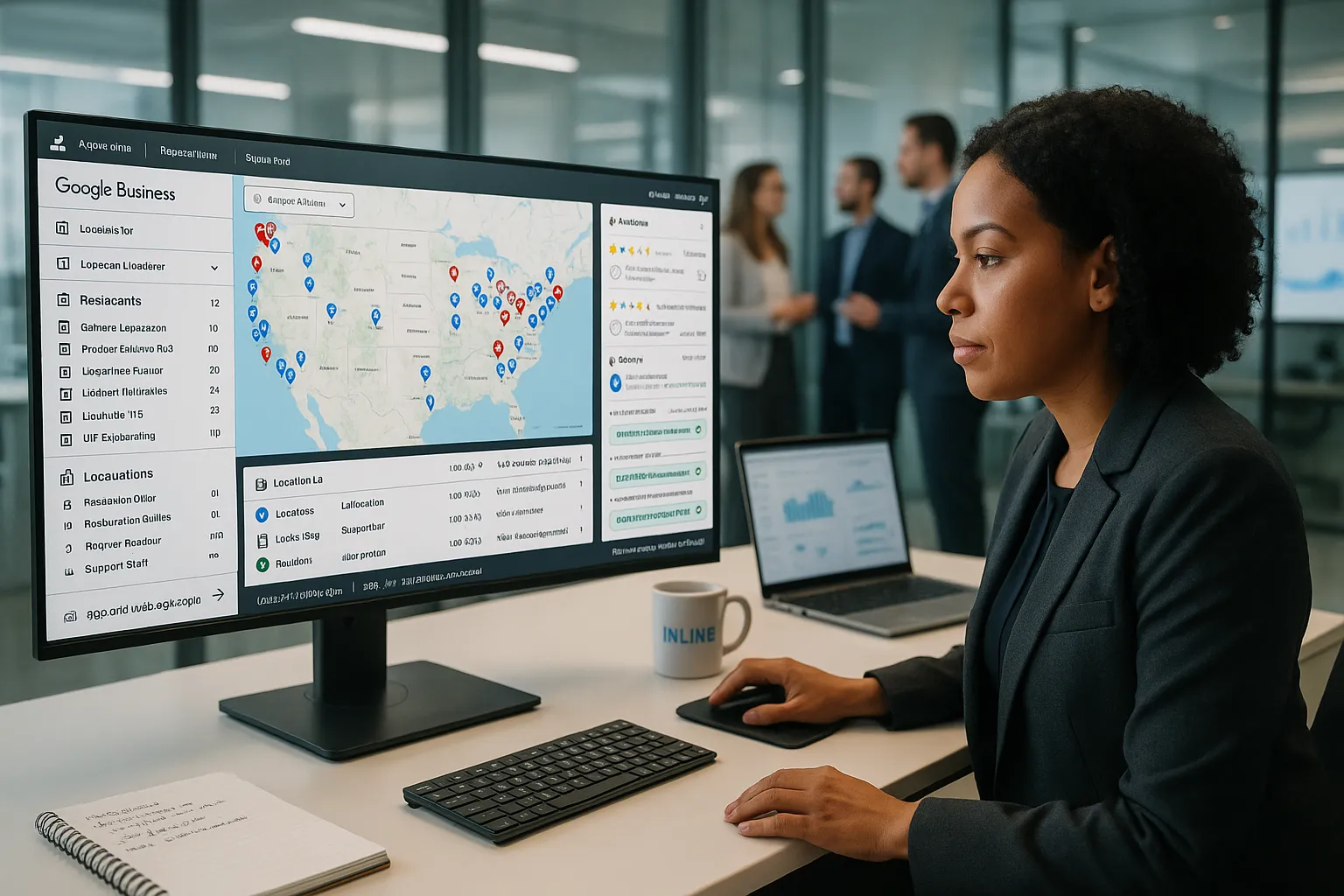
Google Business Profile (GBP) often drives more local leads than the website itself. At enterprise scale we treat it like a separate product line.
Structure, Ownership, And Access Control
We start by organizing locations under a single GBP organization account with clearly defined access roles. That gives us:
- One place to see all locations
- Shared settings by brand or region
- Easier security management when people join or leave the company
We set group accounts for agencies, regional teams, and support staff, and avoid generic logins that everyone shares. This reduces risk and keeps an audit trail when changes happen.
Standardized Attributes, Categories, And UTM Tracking
Consistency matters. We define standard:
- Primary and secondary categories by business line
- Attributes such as wheelchair access, payment types, and services
- Business descriptions and photo guidelines
To measure performance by location, we add UTM parameters to website links and appointment links inside GBP. That lets analytics tools break out traffic and conversions per location, instead of lumping everything into “google / organic.“
We often align these conventions with our organic search analytics setup so that SEO, paid media, and local teams all see the same data story.
Handling Reviews, Q&A, And User-Generated Content
Reviews and Q&A influence both rankings and trust. With hundreds of locations, we need rules and systems.
We build:
- Response templates that local teams can adjust, with legal and brand approval
- SLAs on response time for negative and positive reviews
- A triage process for complaints that raise legal or safety concerns
Google has public policies on review content and removal criteria, which we share with support teams so they know what is eligible to flag (Source: “Prohibited and restricted content,“ Google Maps user-generated content policy, 2023, https://support.google.com/contributionpolicy/answer/7400114).
Training matters here. The more we teach local managers how to answer gracefully, the less risk we have and the stronger our local brand presence becomes.
Enterprise Local SEO Strategy And Governance
Good tactics collapse without clear rules. Strategy and governance turn enterprise local SEO from one-off wins into a predictable system.
Centralized Playbooks With Local Execution
We create playbooks that spell out:
- How to request a new location page or listing
- Standard content for titles, meta descriptions, and headers
- Review response rules and escalation paths
Central teams set the framework. Local teams bring nuance. This balance lets a store in Miami highlight bilingual staff while a branch in Minneapolis leans into curbside pickup, all within a shared structure.
Data, Dashboards, And Reporting For Stakeholders
Different groups care about different numbers. Executives want revenue, regional leads want store performance, SEO teams want visibility and technical health.
So we build layered reports:
- Top-level views that show traffic, calls, direction requests, and leads by region and brand
- Drill-down views for each location
- Trend lines that connect local search metrics to media spend, seasonality, and offline campaigns
We often connect Google Search Console, Google Business Profile Insights, analytics platforms, and call tracking so we can see the full funnel from search to store visit or booked appointment.
Legal, Brand, And Regulatory Considerations
Every enterprise local SEO program needs guardrails. We bring legal and brand in early to agree on:
- Approved language for services and offers
- Required disclaimers per industry or state
- Rules for staff photos, testimonials, and user content
Regulated fields like healthcare, finance, and legal may require extra review before location updates go live. A simple workflow using tickets or forms can prevent mistakes while still allowing local teams to move at a reasonable pace.
Advanced Tactics For Competitive Local Markets
Once foundations are in place, we can push harder in the most contested regions and categories.
Schema Markup And Location-Based Technical Enhancements
Structured data gives search engines clear signals about our locations. We rely on markup such as:
- Organization and LocalBusiness schema
- Store, MedicalClinic, or FinancialService when relevant
- Opening hours, geo coordinates, and service areas
Google recommends structured data to help features like rich results and local panels understand business details (Source: “Introduction to structured data,“ Google Search Central, 2023, https://developers.google.com/search/docs/appearance/structured-data).
We also:
- Fine-tune internal linking from city hub pages to individual locations
- Make page speed and mobile layout a priority, since a large share of local searches happen on phones
Localized Content Marketing And Digital PR
Location pages alone rarely win in tough markets. We pair them with localized content such as:
- City-specific guides and resources
- Local event sponsorship pages
- Stories featuring staff or community projects
We then pitch relevant local publishers, chambers of commerce, and trade sites. This earns coverage and genuine local links that move the needle in competitive maps packs.
Leveraging First-Party Data And Offline Signals
Enterprise brands sit on rich data. We can use it to sharpen local campaigns without exposing personal information.
Ideas:
- Feed top converting locations and time-of-day patterns into local content and offers
- Use call tracking or unique promo codes to link store visits back to local search campaigns
- Align local SEO pushes with openings, remodels, or seasonal peaks by region
Some organizations also connect local campaigns with CRM data to see how leads from specific markets perform over time. The goal is simple: give more budget and attention to the locations and tactics that create real revenue, not just clicks.
Measuring ROI And Prioritizing Local SEO Efforts
Enterprise local SEO succeeds when we can answer a plain question: which local efforts pay off, and where should we focus next.
Core KPIs For Enterprise Local Performance
We track KPIs at both network and location level, such as:
- Local organic sessions and impressions per location page
- Google Business Profile metrics like calls, website clicks, and direction requests
- Store visits, bookings, or leads attributed to local search
We also watch softer signs:
- Review volume and rating trends
- Share of top-3 map pack rankings in priority markets
By tying these metrics to revenue or lead value, we can estimate the financial impact of changes like better location pages or a new review program.
Testing, Iteration, And Continuous Optimization
Perfect local SEO strategies do not appear on day one. We learn by testing.
Some tests that work well at scale:
- A/B content tests on location page templates
- Different photo sets and posts in high-value markets
- Alternate CTAs, like phone-first vs online booking focus
We roll winning patterns into our global playbooks, then retire tactics that produce little lift. Over time, this cycle turns our enterprise local SEO program into a strong growth channel instead of a one-time project.
Conclusion
Enterprise local SEO rewards brands that bring structure to chaos. When we combine clean architecture, disciplined listing management, clear playbooks, and smart testing, our size becomes a strength.
The brands that win local search at scale are not always the ones with the biggest budgets. They are the ones that treat each location like a real place where real people make choices – and then back that mindset with systems that help every store, office, or practice shine in its own market.
If we start with foundations, build honest partnerships with legal and local teams, and keep learning from the data, enterprise local SEO turns thousands of scattered listings into a single, compounding advantage.
Sources
- “Multi-regional and multilingual sites,“ Google Search Central, Google, 2022, https://developers.google.com/search/docs/specialty/international/localized-versions
- “Guidelines for representing your business on Google,“ Google, 2023, https://support.google.com/business/answer/3038177
- “Prohibited and restricted content,“ Maps user-generated content policy, Google, 2023, https://support.google.com/contributionpolicy/answer/7400114
- “Introduction to structured data,“ Google Search Central, Google, 2023, https://developers.google.com/search/docs/appearance/structured-data
Enterprise Local SEO: Frequently Asked Questions
What is enterprise local SEO and how is it different from regular local SEO?
Enterprise local SEO is the practice of managing local search visibility for brands with many locations, formats, or sub-brands. Unlike a single-location strategy, it focuses on scalable systems: unified site architecture, centralized listings and Google Business Profiles, plus governance across legal, brand, and local teams.
How should large brands structure their websites for enterprise local SEO?
Multi-location brands should use a clear, consistent URL structure, such as /locations/state/city/location-name/. Every location page must be indexable, listed in XML sitemaps, and reachable via internal links from a location finder. This helps search engines understand each location and improves crawlability at scale.
What are the most important elements of a high-performing enterprise location page?
Strong location pages include precise NAP details, localized copy about the city or neighborhood, driving directions and landmarks, local FAQs, and offers or events when relevant. Avoid duplicating the same text across hundreds of pages; add market-specific nuance while keeping layout and core fields standardized.
How do you manage Google Business Profiles at scale for enterprise local SEO?
Create a single GBP organization account, then group locations by brand or region. Standardize categories, attributes, descriptions, and UTM tagging in profile links. Set role-based access for agencies and regional teams, define review-response templates and SLAs, and establish clear escalation paths for sensitive complaints.
How can enterprise brands measure ROI from local SEO efforts?
Track KPIs per location, such as local organic sessions, GBP calls, direction requests, and website clicks, then connect these to store visits, bookings, or leads. Layer in review trends and map-pack rankings. Use UTM parameters, call tracking, and analytics to tie local search activity to revenue or lead value.
What are some advanced tactics to improve enterprise local SEO in competitive markets?
Beyond basics, enterprises can deploy LocalBusiness and Organization schema with hours and geo-coordinates, build city-specific content and digital PR for local links, and align campaigns with first-party data such as peak times and top-converting locations. Continuous A/B testing of templates, CTAs, and photos refines performance over time.
Some of the links shared in this post are affiliate links. If you click on the link & make any purchase, we will receive an affiliate commission at no extra cost of you.
