
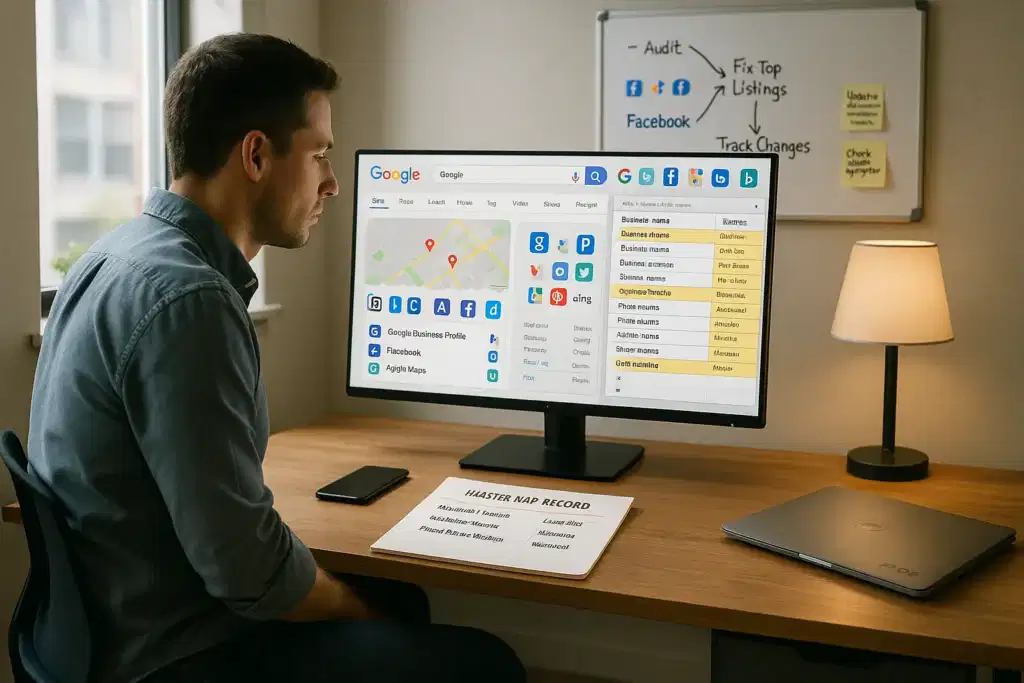
NAP citation work sounds boring until we see a competitor outrank us with a tiny website and almost no content. That sting usually starts with a map pack result that keeps stealing our calls and walk ins. In this guide we break down how consistent NAP citation data quietly pushes our business to the front of local search, and how to fix it without drowning in spreadsheets.
Key Takeaways
- Consistent NAP citation data across major platforms helps search engines verify your business and directly improves local search and map pack visibility.
- A strong NAP citation strategy focuses on core platforms, trusted data aggregators, industry directories, and local organizations rather than hundreds of low-quality listings.
- Start NAP citation work with an audit: create a master NAP record, find existing listings, flag inconsistencies, and track fixes in a simple spreadsheet.
- Fix NAP citation issues in priority order by updating top-tier listings, correcting data feeds, cleaning industry and local profiles, and merging duplicate entries.
- Avoid common NAP citation mistakes like old brand names, multiple tracking numbers, inconsistent abbreviations, wrong categories, and shared numbers for multi-location businesses.
What NAP Citations Are And Why They Matter
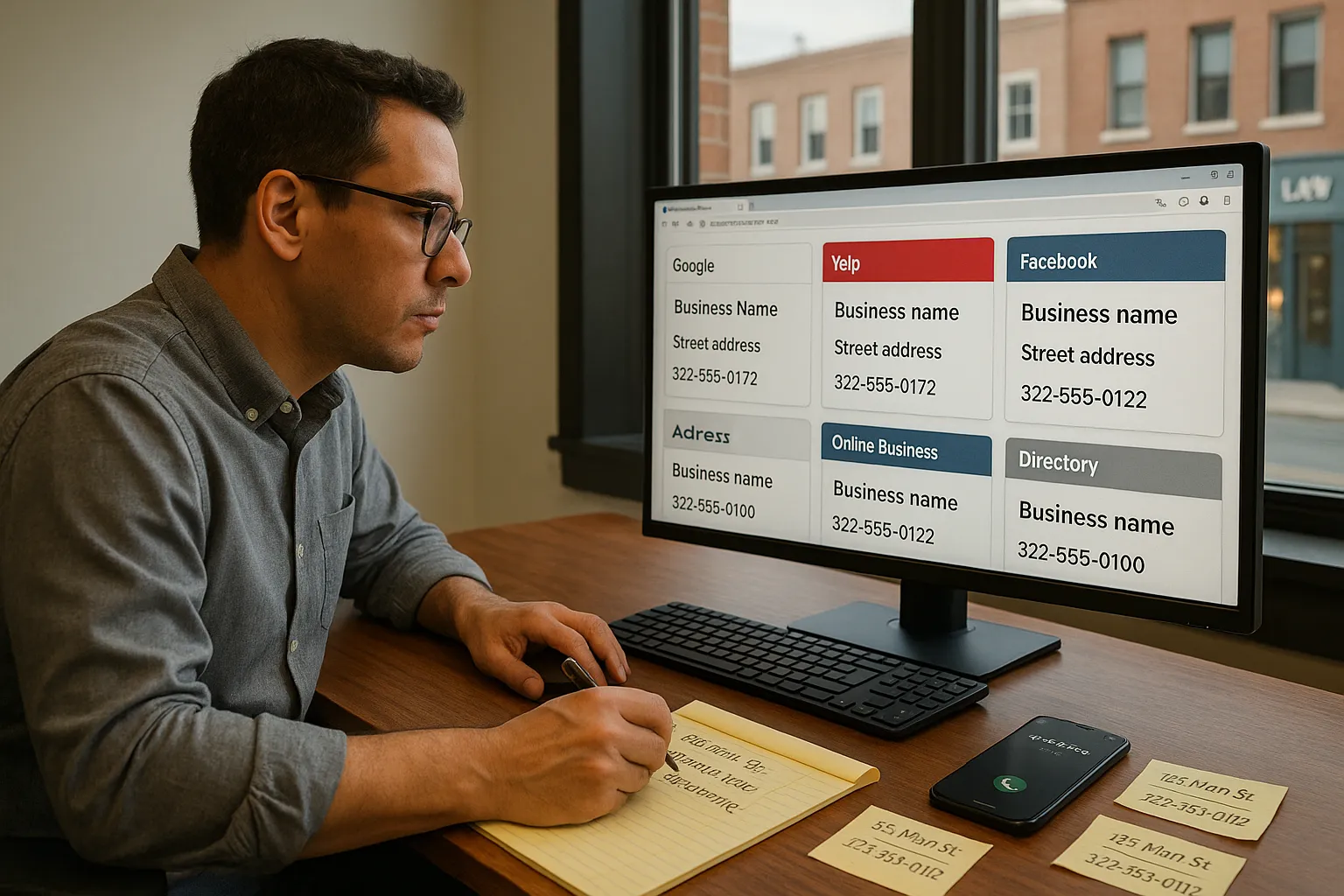
NAP citation means a mention of our business Name, Address, and Phone number on another site, usually together with our website URL. A NAP citation can appear on Google Business Profile, Yelp, Facebook, Apple Maps, a chamber of commerce site, or an industry directory.
Here is why NAP citation work matters:
- Search engines use consistent NAP citation data to confirm that we are a real, local business.
- People use those profiles to call us, get directions, or decide whether to trust us.
- Inconsistent NAP citation records create doubt for both algorithms and humans.
Google explains in its Business Profile guidelines that accurate information helps customers find a business and improves local relevance for results [Business Profile guidelines, Google, updated 2024, https://support.google.com/business/answer/3038177]. When our NAP citation details match across many trusted sites, that pattern acts like repeated proof of who we are, where we are, and how to contact us.
If we work in law, medicine, home services, hospitality, restaurants, or any other trust heavy field, messy NAP citation data can cost real revenue. People will not fight through conflicting phone numbers or addresses. They will tap the listing that looks clean and consistent instead.
How NAP Citations Influence Local Search And Maps Rankings
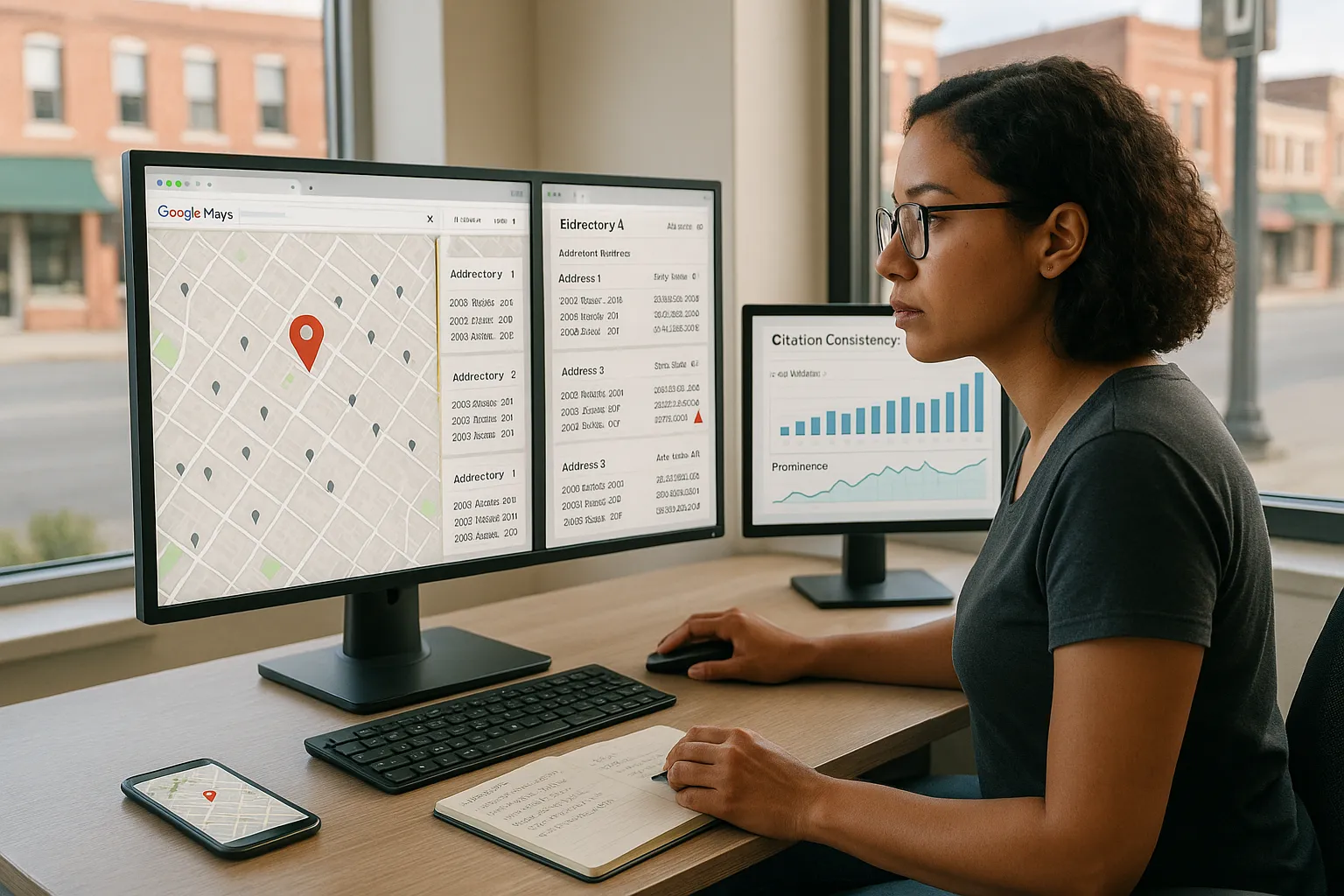
NAP citation consistency influences how strongly we appear in Google Maps and local search. Google has said that relevance, distance, and prominence shape local results [Improve your local ranking on Google, Google, updated 2024, https://support.google.com/business/answer/7091]. NAP citation work touches all three.
Here is the short version:
- Relevance: When NAP citation data, categories, and descriptions repeat across many sites, search engines better match us to local intent queries.
- Distance: Correct address and map pin in each NAP citation entry help systems understand our true location so we appear in the right area.
- Prominence: Strong NAP citation coverage from well known directories, niche sites, and local organizations makes our entity look established.
Local search tools like Moz and BrightLocal repeatedly show that citation signals still correlate with stronger map visibility, even after more complex factors like behavior and content enter the picture [Local Search Ranking Factors, Moz, 2023, https://moz.com/local-search-ranking-factors] [Local Search Industry Survey, BrightLocal, 2023, https://www.brightlocal.com].
We do not rank on NAP citation work alone, but broken listings hold us back. When a competitor with weaker content outranks us, a cleaner NAP citation footprint is often one reason.
Building Strong NAP Citations: Where Your Business Should Appear
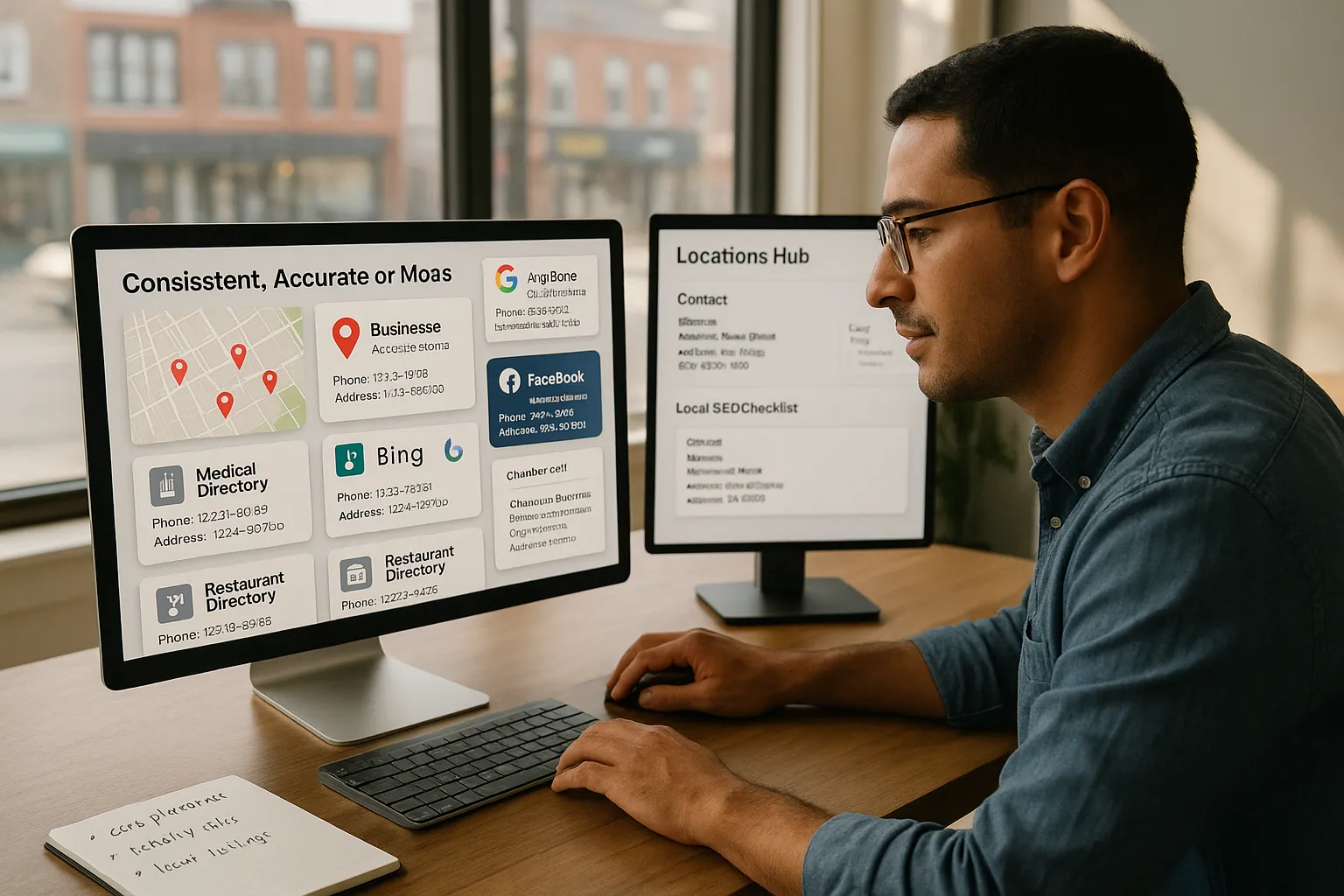
A strong NAP citation profile starts with the right places, not with hundreds of random low quality directories. We want a mix of high trust, relevant, and local sites where a NAP citation naturally belongs.
Here is a simple stack to aim for:
- Core platforms
- Google Business Profile
- Apple Maps
- Bing Places
- Yelp
- Facebook page
- Data aggregators and mapping partners (where available in our region)
- Data providers that feed GPS apps, navigation systems, and many smaller directories
- Industry specific NAP citation sites
- Healthgrades, Zocdoc for medical
- Avvo, FindLaw for lawyers
- OpenTable, TripAdvisor for restaurants and hospitality
- Houzz, Angi for home services
- Local and professional NAP citation sources
- Chamber of commerce
- City business registry
- Trade associations and licensing boards
- Local news or business directories
We can also create supporting content on our own site, such as a detailed contact page or a locations hub, then link to that from key NAP citation listings. An internal guide like our local SEO checklist can sit beside this hub and help visitors and crawlers understand how our business serves the area.
How To Audit Your Existing NAP Citations
Before we add new NAP citation entries, we should clean what already exists. A simple NAP citation audit helps us spot conflicts that drag down trust.
Here is a practical workflow:
- Build a master NAP citation record
Write down the exact business name, address, phone, website URL, hours, and main category we want to use everywhere.
- Search for live NAP citation entries
- Search “business name” + phone
- Search old names, old addresses, and any tracking numbers we ever used
- Look at the “Reviews from the web” section on our Google Business Profile for extra NAP citation sources
- Export and organize
Place each NAP citation listing into a spreadsheet with columns for URL, name, address, phone, and status.
- Mark problem entries
Flag NAP citation records that show old addresses, old brand names, wrong suite numbers, wrong categories, or duplicate versions.
Many local SEO tools can speed this up, but we can also do it by hand. The point is not to chase every tiny NAP citation on the internet. We focus on the listings that appear on page one when we search our name, plus the bigger platforms that influence maps and navigation apps.
If our site already has a local SEO hub or knowledge base, we can link from a NAP citation cleanup guide there, such as a business listing management guide, so our team has one place to follow the process.
Fixing Inconsistent NAP Data Step By Step
Once we see where NAP citation data goes wrong, we can fix it in a structured way. A clear order keeps us from spinning forever.
Here is a simple plan:
- Lock our master NAP citation format
Decide on exact spelling, punctuation, suite or unit format, and local phone. Use the same NAP citation string on our website contact page.
- Correct top tier listings first
Start with Google Business Profile, Apple Maps, Bing Places, Yelp, and Facebook. Update name, address, phone, website, hours, and categories to match our master NAP citation record.
- Fix data aggregators or feeds
If data providers in our region push NAP citation data to many sites, claim or correct those records so future listings use the right details.
Log in and edit listings where we can. Where self service does not exist, email support with our correct NAP citation block in plain text.
- Handle duplicates
Merge or remove duplicate NAP citation profiles when a platform allows it. Duplicates often confuse ranking systems and customers.
- Track changes
Update our spreadsheet with dates and actions so we know which NAP citation profiles are clean and which still need attention.
Most edits take days or weeks to ripple through apps and search results. We set a reminder to recheck our top NAP citation listings each quarter, plus whenever we move, rebrand, or change our main phone line.
Common NAP Citation Mistakes By Professionals And How To Avoid Them
Professionals in law, medicine, finance, and other high trust fields often treat NAP citation work as an afterthought. That leads to patterns that quietly cost them leads.
We see the same mistakes often:
- Old brand names lingering in NAP citation records
Someone rebrands but leaves the old name on half the directories. This splits reviews and confuses people.
- Tracking numbers in main NAP citation fields
Using different call tracking numbers in citation fields scatters authority. If we need tracking, we keep one local number in the NAP citation itself and apply tracking in ways that do not change that base number.
- Inconsistent abbreviations
Suite vs Ste vs #, Street vs St, different spacing on phone numbers. Small changes across NAP citation entries can signal separate entities.
- Wrong categories or services
A restaurant listed as a bar on one NAP citation site and a cafe on another sends mixed signals about what we offer.
- Neglected multi location structure
Large practices or franchises reuse one phone number for different addresses in NAP citation entries. That often causes map pack cannibalization where one location suppresses the others.
We avoid these issues by treating our NAP citation standard as policy. Any time branding, address, or phone changes, NAP citation updates go on the launch checklist along with signage, email signatures, and legal documents.
Conclusion
NAP citation work will never feel glamorous, but it behaves like basic plumbing for local SEO. When our NAP citation footprint is clean, every other effort works better, from content and links to reviews and ads.
Our next steps are simple. Create one master NAP citation record, audit the listings that matter most, fix them in priority order, and revisit that checklist any time our details change. If we keep that habit, we give search engines and people the same clear story about who we are and where we serve.
Sources
- Business Profile guidelines, Google, updated 2024, https://support.google.com/business/answer/3038177
- Improve your local ranking on Google, Google, updated 2024, https://support.google.com/business/answer/7091
- Local Search Ranking Factors, Moz, 2023, https://moz.com/local-search-ranking-factors
- Local Search Industry Survey, BrightLocal, 2023, https://www.brightlocal.com
NAP Citation FAQs
What is a NAP citation in local SEO?
A NAP citation is any online mention of your business’s Name, Address, and Phone number, often alongside your website URL. Common NAP citation sources include Google Business Profile, Yelp, Facebook, Apple Maps, industry directories, and local chambers of commerce. Consistent citations help search engines and customers trust your business information.
How do NAP citations influence Google Maps and local search rankings?
NAP citation consistency supports the three main local ranking factors: relevance, distance, and prominence. Matching NAP data across trusted sites helps Google understand what you do, where you are, and how established you are. Clean, consistent citations won’t rank you alone, but messy or outdated listings can significantly hold you back.
What is the best way to audit my existing NAP citations?
Start by creating a master NAP record with your exact name, address, phone, URL, hours, and main category. Then search for your business name, old addresses, and phone numbers, and export all listings into a spreadsheet. Flag entries with old, duplicate, or incorrect data, prioritizing page-one results and major directories.
How do I fix inconsistent NAP citation data step by step?
First, lock in a single, precise NAP format and match it on your website. Next, update core platforms like Google Business Profile, Apple Maps, Bing Places, Yelp, and Facebook. Then correct data aggregators, industry and local sites, clean duplicates, and track each change so you know which listings are fully updated.
What common NAP citation mistakes should professionals avoid?
Frequent issues include lingering old brand names, using multiple call tracking numbers as primary phones, inconsistent abbreviations for addresses or suites, wrong categories, and reusing one phone number across multiple locations. These patterns split authority and confuse algorithms and users. Treat your standard NAP format as firm policy across all platforms.
How many NAP citations do I need for local SEO success?
You don’t need hundreds of low-quality NAP citations. Focus on coverage in core platforms, key data aggregators, major industry sites, and genuine local or professional directories. Once those are accurate and consistent, additional minor listings usually add diminishing returns compared with improving reviews, content, and on-page local SEO signals.
Some of the links shared in this post are affiliate links. If you click on the link & make any purchase, we will receive an affiliate commission at no extra cost of you.
