

When our phone buzzes with a “near me” search, we rarely scroll past the first few Google Maps results. We tap what looks trustworthy and close, then move on with our day. That tiny moment decides which local business gets the call, the booking, or the visit. In this guide, we unpack local SEO Google Maps in plain language so we can move from invisible to chosen in those moments.
Key Takeaways
- Local SEO Google Maps success depends on three core factors—proximity, relevance, and prominence—supported by real user engagement with your listing.
- A fully optimized Google Business Profile with consistent NAP, accurate categories, rich photos, posts, and active messaging is the foundation of strong local SEO Google Maps visibility.
- Reviews drive both rankings and conversions, so consistently request feedback, respond to all reviews, and use recurring themes to improve your service.
- Localized website content, dedicated location pages, and proper schema markup reinforce your Google Maps presence and build trust with both users and search engines.
- Ongoing efforts like earning local links, updating photos and posts monthly, and monitoring Google Business Profile insights help you steadily improve and maintain your Local Pack position.
Why Google Maps Matters For Local Visibility
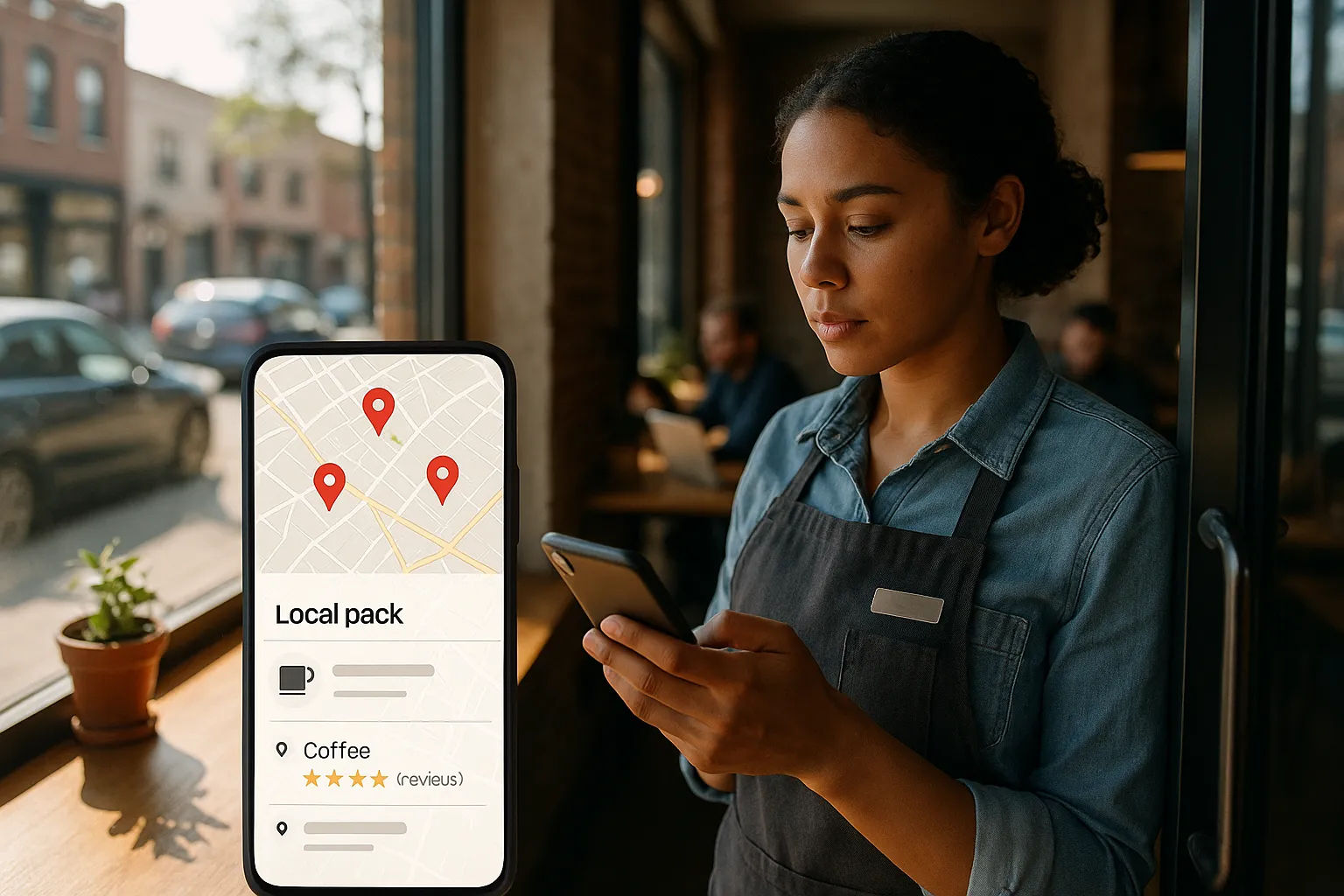
Google Maps is often the first contact point between us and nearby customers. When someone searches “dentist near me” or “coffee shop open now,” Google usually shows a map with three highlighted listings, called the Local Pack. Those three spots pull a big share of clicks, calls, and driving directions.
Here is why that matters.
- People using Google Maps usually have high intent. They are ready to visit, call, or book.
- Mobile users see the Local Pack before organic results in many local searches.
- Voice searches on Google Assistant often read out Local Pack results.
Google has said that local results in Maps and Search consider relevance, distance, and prominence.[^google-local] When we treat our business like a local data asset, not just a website, we stand a better chance of showing up in that cluster of map results.
[^google-local]: How Google determines local ranking, Google Business Profile Help, 2024, https://support.google.com/business/answer/7091
How The Google Maps (Local Pack) Algorithm Works
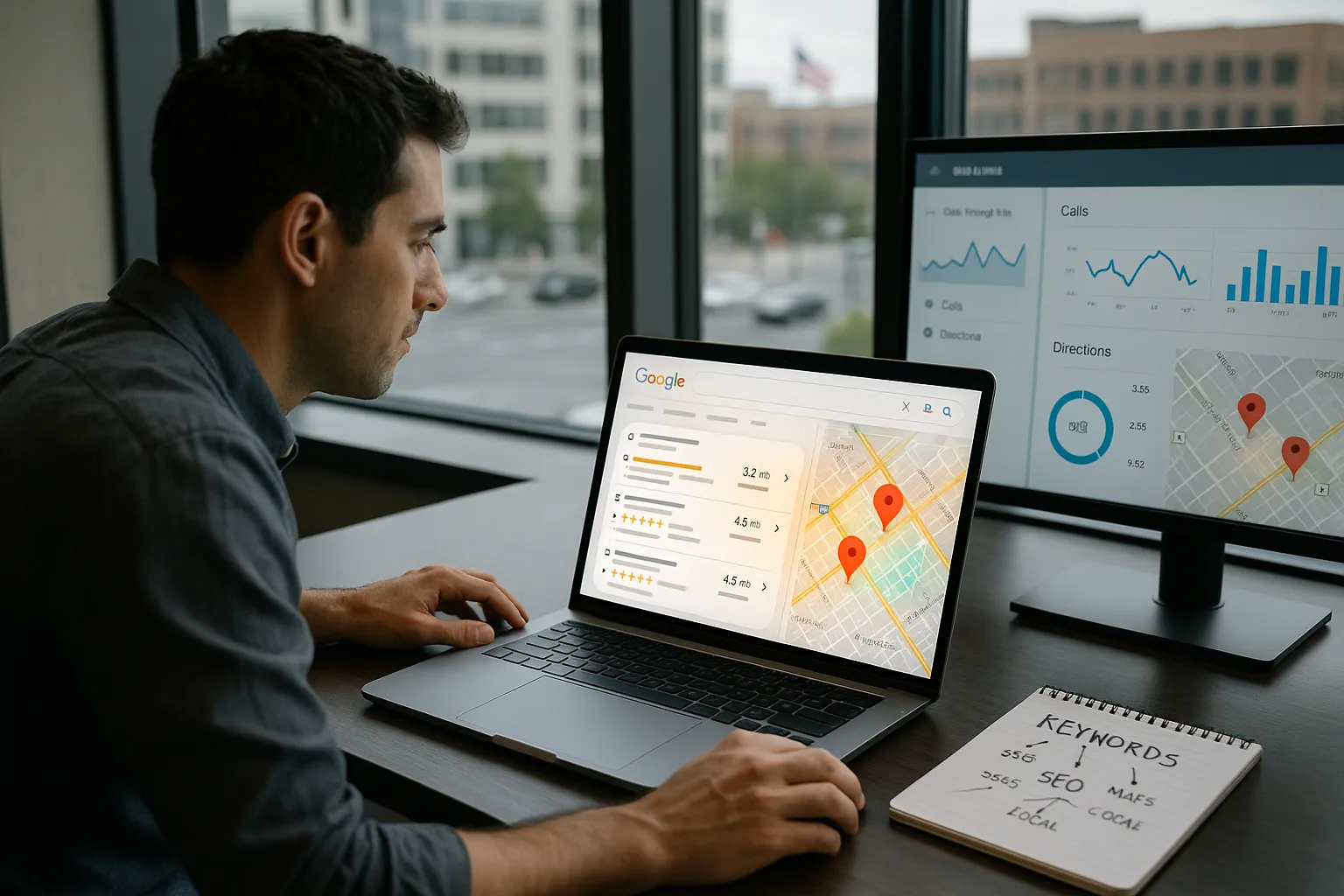
Google Maps local SEO feels mysterious until we break it into a few clear ideas. The Local Pack mostly runs on three big levers.
Proximity, Relevance, And Prominence
First, Google looks at proximity. How close is our business to the searcher or to the location they typed? We cannot change our address every time someone searches, so we focus on serving the area we are truly in.
Next, relevance. Google compares our business data with the search. Do our categories, services, and content match what people type? A restaurant that never mentions “vegan options” will miss some vegan searches, even if the food is perfect.
Last, prominence. This is Google’s sense of how well known and trusted we are. It looks at links, news mentions, directories, and online popularity plus review volume and quality.
Together, these three levers shape most local SEO Google Maps results.
Behavioral And Engagement Signals
Google also studies how people interact with listings. It watches actions like:
- Clicks from the Local Pack to our website
- Taps on “Call,” “Directions,” or “Message”
- How often people choose our listing over others for similar searches
Research from Whitespark and other local SEO studies suggests engagement plays a supporting role alongside the classic three factors.[^whitespark] If more people choose us, stay on our site, and follow through with visits, it sends a quiet but helpful signal.
[^whitespark]: Local Search Ranking Factors, Whitespark, 2023, https://whitespark.ca/local-search-ranking-factors/
Setting Up And Optimizing Your Google Business Profile
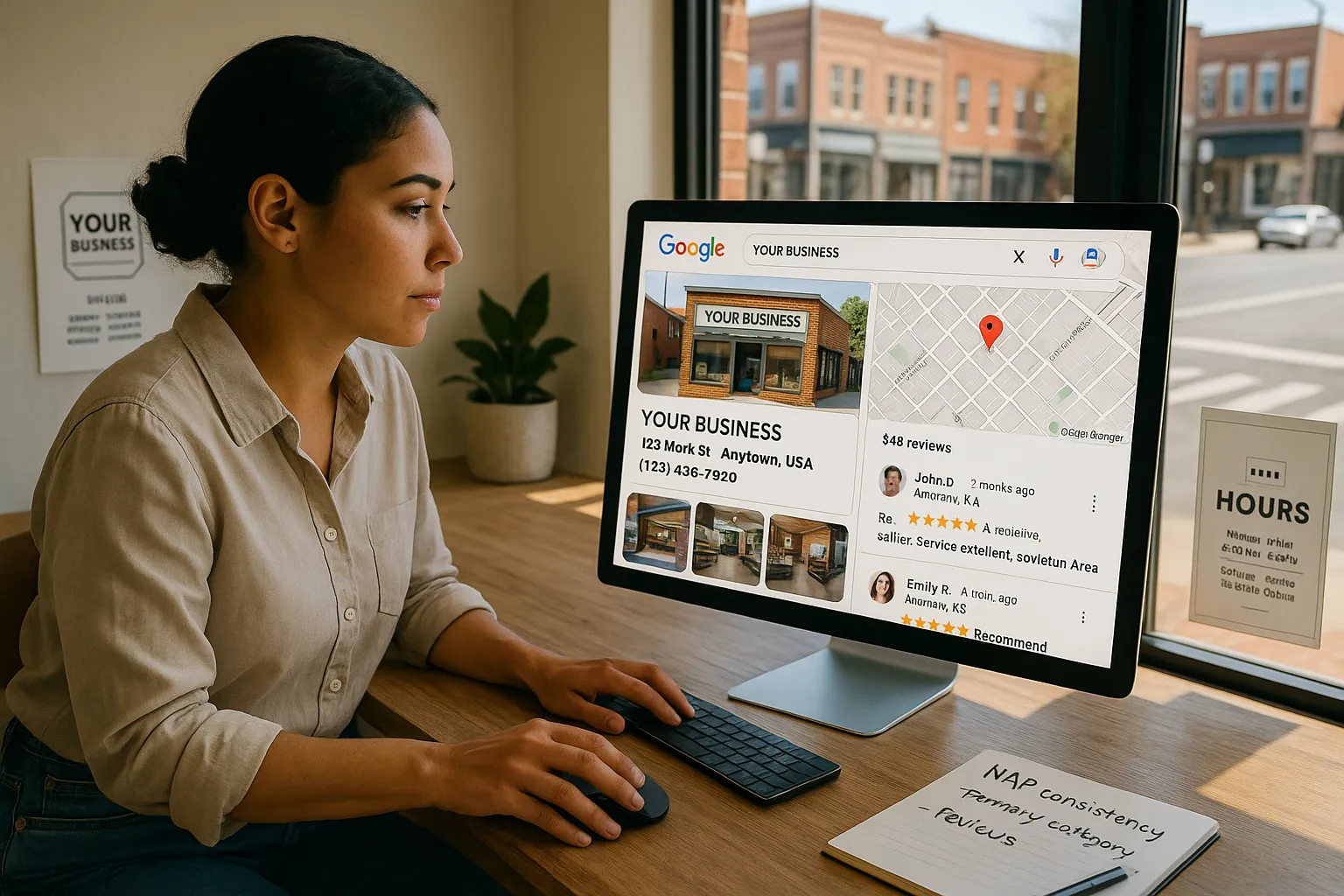
Our Google Business Profile (GBP) is the engine behind local SEO Google Maps. Without a complete, accurate profile, we are asking Google to guess.
Core Business Information (NAP)
Start with the basics, and get them right everywhere:
- Name – Match real‑world signage and legal name.
- Address – Use standard postal format: no extra keywords.
- Phone – Local number when possible, not just a call center.
This NAP data should match our website, major directories, and social profiles. Inconsistent NAP can confuse Google and people.
Categories, Services, And Attributes
We choose one primary category that best describes our main service, then add a few supporting categories. A law firm might set “Personal injury attorney” as primary, with “Legal services” and “Trial attorney” as additions.
We then add detailed services and products. This helps local SEO Google Maps match us with niche searches like “knee specialist for runners” or “gluten free birthday cake.” Attributes such as “wheelchair accessible entrance,” “outdoor seating,” or “online care” matter a lot for real people and for relevance.
Photos, Posts, And Messaging
High quality photos increase trust. Google’s own research has found that listings with photos drive more requests for directions and clicks to websites.[^google-photos] We aim for:
- Exterior shots so people know what to look for on the street
- Interior shots, staff, menu, or equipment
- Short videos where it makes sense
Regular Google Posts about offers, events, or updates keep the profile active. If messaging fits our business and we can respond fast, we enable it to catch questions before a competitor does.
Reviews And Reputation Management
Reviews feed both prominence and conversion. We want a steady stream of new reviews, not just a one‑time spike.
We can:
- Ask happy clients in person, then send a short follow‑up link
- Reply to every review, good or bad, with a calm, human response
- Watch for patterns in feedback and fix real problems
A mix of detailed, recent reviews that mention services and city names can reinforce local SEO Google Maps signals.
[^google-photos]: Improve your local ranking on Google, Google Business Profile Help, 2024, https://support.google.com/business/answer/7091
On-Site Local SEO Signals That Support Google Maps Rankings
Our website backs up everything we tell Google on our profile. When those two match, we look more trustworthy to both the algorithm and the human visitor.
Location Pages And Localized Content
If we serve more than one city or neighborhood, we build focused location pages. Each page should cover:
- Full NAP details for that office or shop
- Unique intro copy, not copy‑paste across cities
- Local cues such as nearby landmarks, transit lines, or parking tips
We fold local topics into our blog or resources. A medical clinic might write about “flu season in Chicago,” while a restaurant might publish a short guide to “late night eats near Union Station.” This kind of content supports long‑tail local SEO Google Maps searches.
Schema Markup And Technical Basics
Schema.org local business markup helps search engines understand our NAP, geo‑coordinates, hours, and services. Google’s documentation confirms that structured data can enhance how our business appears in search results.[^schema]
We also keep technical basics in shape:
- Fast loading pages on mobile
- Clear internal links from the homepage to each location
- Clean, crawlable code without blocked pages
This mix of content and structure gives Google confidence that our real‑world location matches our online presence.
[^schema]: Local business structured data, Google Search Central, 2024, https://developers.google.com/search/docs/appearance/structured-data/local-business
Practical Strategies To Boost Your Local Maps Presence
Once the profile and site are in decent shape, we move into ongoing habits that strengthen local SEO Google Maps over time.
Local Links, Citations, And Mentions
Local links still matter. A short feature in the city newspaper, a chamber of commerce listing, or a sponsorship on a school site can all help. We look for:
- Local business directories that real people use
- Industry associations with member pages
- Community event pages that list sponsors
We keep NAP consistent across these places. When search engines see the same data repeated in trustworthy sources, confidence goes up.
Special Considerations For Different Professions
Different fields face different local SEO Google Maps patterns.
- Doctors and medical clinics need accurate hours, insurance details, and clear directions. Many patients search on mobile in stressful moments. Clarity wins.
- Law firms rely heavily on reviews and content that matches case types and cities. People often compare several firms in one sitting.
- Restaurants and hospitality live or die on photos, menus, and fast responses to reviews. Google Maps almost acts like a second website here.
- Home services such as plumbers or electricians must handle service areas correctly, since many operate from a warehouse or home office.
We match our profile and site setup to how people in our field actually search and decide. For deeper technical work, we can later connect this map strategy with broader efforts such as our technical SEO foundations and content strategy for local brands.
Tracking, Measuring, And Improving Local Maps Performance
Local SEO Google Maps is not a one‑time project. We keep an eye on data and make small, steady adjustments.
Key Metrics To Monitor In Google Business Profile And Analytics
In Google Business Profile insights, we watch:
- Searches that found us (brand vs discovery queries)
- Views in Maps vs Search
- Actions: calls, website clicks, messages, and direction requests
In Google Analytics or another analytics tool, we track:
- Traffic from local queries and map‑related pages
- Conversion events such as form fills, bookings, or online orders
- Behavior on location pages
Together, these numbers show whether local SEO Google Maps work turns into real business.
Simple Optimization Routines You Can Do Monthly
We keep a light monthly rhythm so nothing slips:
- Add at least one new photo to GBP
- Post a short update or offer
- Respond to every new review
- Check hours, holiday schedules, and service list
- Skim insights for any sharp changes
Every quarter or so, we might refresh location pages, add new local topics, or review where we appear for “near me” searches. Small steps compound.
Conclusion
Local SEO Google Maps rewards businesses that act like real neighbors, not just websites chasing rankings. When we keep our data accurate, our content grounded in the places we serve, and our responses human, the algorithm tends to follow.
We treat our Google Business Profile as a living asset, our site as a local trust signal, and our reviews as an ongoing conversation with the community. If we start with the basics in this guide, then layer on local links, better photos, and regular updates, we give ourselves a fair shot at those three coveted spots on the map.
The next move is simple. Pick one area from above, give it thirty focused minutes this week, and check the numbers next month. Local SEO Google Maps rarely flips overnight, but steady attention can turn nearby searchers into regular customers.
Local SEO Google Maps – Frequently Asked Questions
What is local SEO Google Maps and why is it important for my business?
Local SEO Google Maps is the process of improving how your business appears in Google Maps and the Local Pack. It matters because users searching “near me” often choose one of the first three map results, driving most calls, directions, website visits, and walk‑in traffic.
How does Google decide which businesses show up first in Google Maps?
Google Maps rankings mainly rely on three factors: proximity (how close you are to the searcher), relevance (how well your categories, services, and content match the query), and prominence (overall popularity, links, and reviews). Engagement actions like calls, direction requests, and website clicks also support higher visibility over time.
How do I optimize my Google Business Profile for better local SEO Google Maps rankings?
Complete every section of your profile with accurate NAP data, choose a precise primary category, and add detailed services, attributes, photos, and regular Google Posts. Encourage and respond to reviews, keep hours up to date, and enable messaging if you can reply quickly. These steps strongly support local SEO Google Maps.
What on-site SEO elements help my Google Maps visibility?
Create unique location pages for each office or store, including full NAP details, local landmarks, and practical info like parking. Add local business schema markup, ensure fast mobile loading, and maintain clear internal links. When your website’s signals match your Google Business Profile, Google trusts your local presence more.
How long does it take to see results from local SEO Google Maps efforts?
Timelines vary by competition and your current visibility. Many businesses see early movement in 4–8 weeks after cleaning NAP data, optimizing their profile, and getting fresh reviews. Consistent monthly actions—new photos, posts, and review responses—usually compound into more stable, higher map rankings over several months.
Can a business with multiple locations rank well in Google Maps for each area?
Yes. Create a separate Google Business Profile for each physical location, using unique, accurate NAP details. Support each profile with its own location page on your website, localized content, and location‑specific reviews and photos. Consistent data and real community presence help each branch rank in its own neighborhood.
Some of the links shared in this post are affiliate links. If you click on the link & make any purchase, we will receive an affiliate commission at no extra cost of you.
