
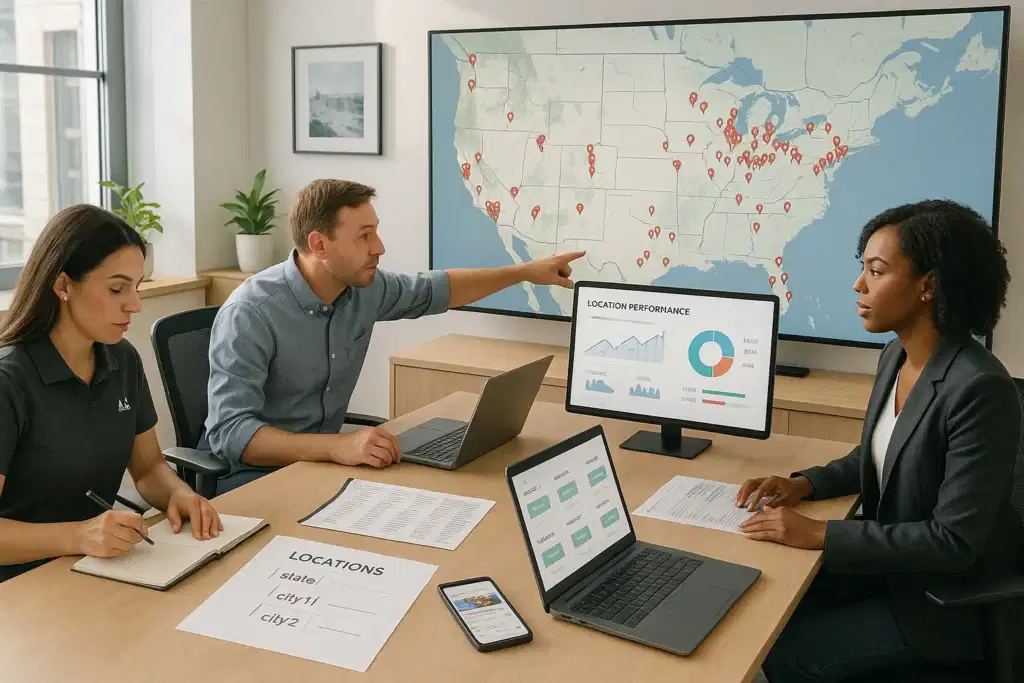
Local SEO for franchises can feel like playing chess on 200 boards at once, with Google as the referee. One location ranks in the map pack, another disappears, and a third has the wrong phone number showing. We know that chaos, and we also know it does not have to stay that way. In this guide we walk through a practical, scalable way to help every franchise location win its local market without losing control at the brand level.
Key Takeaways
- Local SEO for franchises works best when you create a clear multi-location site structure, with dedicated, fully optimized pages for every individual location.
- Treat each Google Business Profile like a second homepage for that store, using a central playbook for names, categories, tracking, and branding while letting franchisees own photos, reviews, and local updates.
- A master location database is essential to keep NAP data and citations consistent across Google, maps apps, directories, and industry sites for all franchise locations.
- Scalable local content for franchises comes from reusable templates enriched with genuine local details like staff, landmarks, pricing, events, and community involvement.
- Effective local SEO for franchises depends on tight tracking, reporting, and governance so brands can spot struggling locations, enforce standards, and continuously improve results.
Understanding The Unique Local SEO Challenges Of Franchises
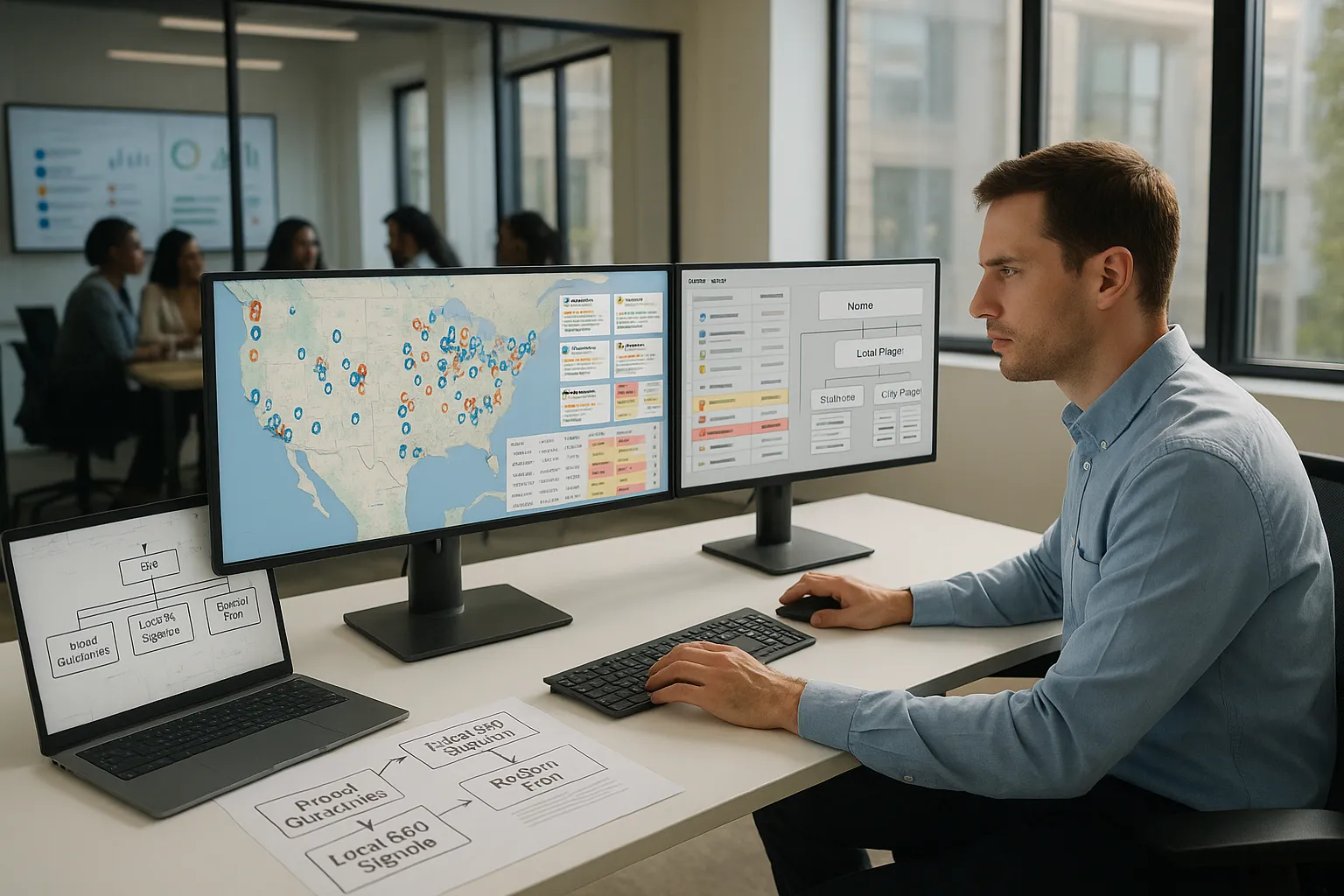
Franchises sit in an awkward spot between “one brand” and “many local businesses.” Local SEO for franchises needs to respect both. If we treat everything as one big corporate brand, local visibility suffers. If we let every owner do their own thing, brand trust and data quality fall apart.
Here is what usually causes trouble:
- Duplicate or competing pages for nearby locations that confuse Google and customers.
- Inconsistent NAP data – name, address, phone – across websites, Google Business Profiles, and directories.
- Franchisees editing profiles in ways that break brand guidelines, categories, or tracking.
- National content only, with no strong local signals like city pages, local reviews, or area-specific topics.
- No central reporting, so we cannot see which locations need help or where wins come from.
Our job with local SEO for franchises is to design a system that:
- Keeps brand control over structure, data, and tracking.
- Gives each location a clear, unique local footprint.
- Lets us roll out changes across hundreds of locations without chaos.
Once we frame it as a systems problem, the rest of the strategy starts to click.
Structuring Your Website For Multi‑Location Local Search Success
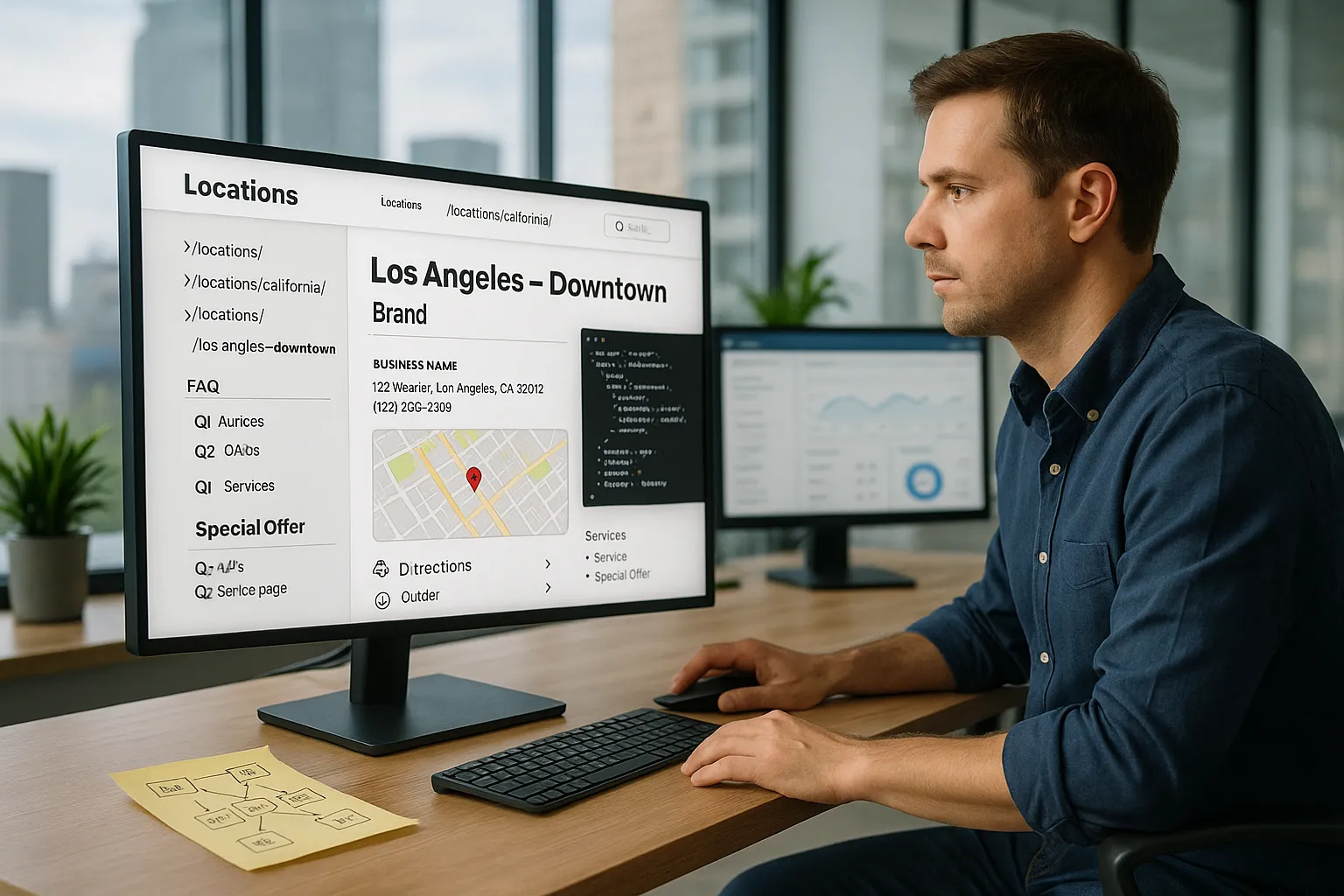
Good local SEO for franchises starts with the site architecture. Google needs a clear answer to a simple question: which page represents this exact location?
A strong structure often looks like this:
- A main “Locations” hub page:
/locations/ - State or region pages:
/locations/california/ - Individual location pages:
/locations/los-angeles-downtown/
Each location page should be the single source of truth for that store or office. That means:
- Unique title tags and H1 with city and brand.
- Clean NAP data that matches the Google Business Profile.
- Embedded map, driving directions, and parking or access info.
- Location-specific FAQs, services, and offers.
We also like to:
- Add LocalBusiness schema markup for each page. This helps search engines connect the page, address, and phone.
- Use internal links from related content, such as blog posts or service pages, back to the matching location page.
If you want a deeper schema walkthrough, you can pair this with a guide such as Our local schema checklist. When the structure is clean and predictable, scaling local SEO for franchises becomes much easier.
Optimizing Google Business Profiles For Every Franchise Location
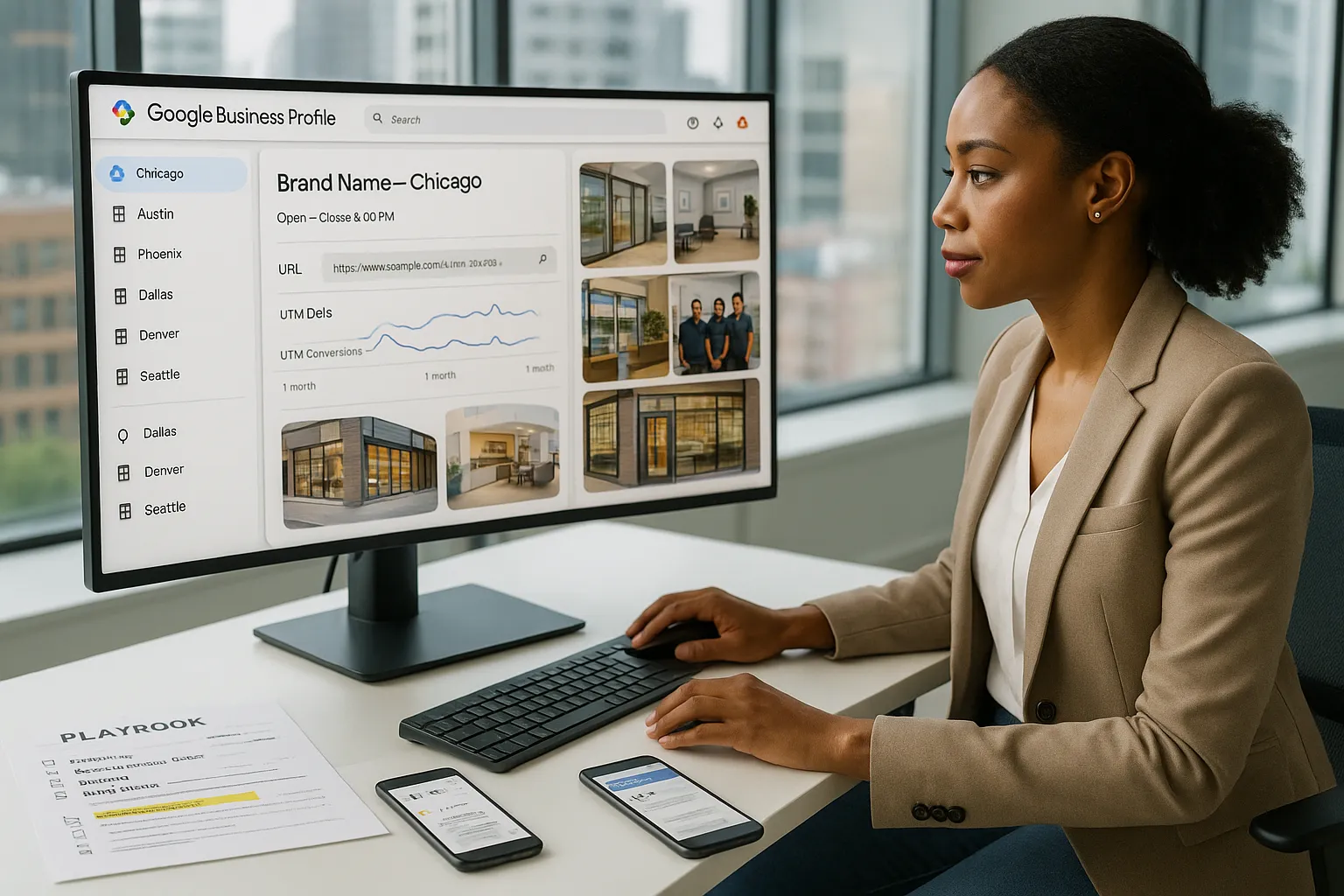
Google Business Profile is often the first touchpoint for local customers. For local SEO for franchises, we treat it like a second homepage for each location.
We start with a central playbook:
- Name: Follow a strict format such as “Brand Name – City” without keyword stuffing.
- Categories: Set a default primary category by business model, then a short list of allowed secondary categories.
- Hours and special hours: Keep these synced with the website and any booking system.
- Website URL: Always link to that location’s page, not the homepage.
- UTM tracking on URLs so we can see conversions by profile.
Then we support franchisees with clear tasks:
- Add local photos of the storefront, interior, staff, and products.
- Answer Q&A with brand-safe yet local-aware replies.
- Ask for reviews from local customers and respond with a mix of corporate voice and personal touch.
For multi-location groups, we usually manage access with a central Google Business Profile account or an aggregator tool. The aim is balanced control: corporate manages categories, naming, and tracking: franchisees handle reviews, photos, and local updates. When we treat profiles this way, local SEO for franchises tends to move quickly in the right direction.
Building Consistent NAP And Local Citations Across All Locations
NAP consistency is one of the unglamorous parts of local SEO for franchises, but it saves us from a lot of ranking and trust issues.
We start with a master location database that lives in one place: a spreadsheet, CRM, or location management tool. That database holds the canonical name, address, phone, and URL for each location. Every system pulls from that, not from random edits.
Then we tackle citations in layers:
- Major platforms: Google, Apple Maps, Bing, Yelp, Facebook.
- Industry sites: such as health directories for clinics, legal sites for law firms, or restaurant platforms for food brands.
- Local directories: city business listings, local chambers, and niche neighborhood sites.
We watch for:
- Old phone numbers from past owners.
- Duplicate listings for the same address.
- Closed or relocated locations that still show as open.
For larger networks, a data aggregator or listings management service can help push updates at scale. Even then, we keep the master database as the single source of truth. Local SEO for franchises only works long term if the data layer is stable and predictable.
Creating Localized Content That Scales Across Franchise Locations
Local SEO for franchises needs more than name, address, and reviews. We need content that proves each location actually serves its community.
We like a “template plus local flair” approach:
- Start with a reusable page framework: intro, services, process, social proof, FAQs.
- Insert location variables at scale: city name, neighborhood names, driving directions from local landmarks.
- Add true local content for top markets: photos of the team, local projects, community events, and partnerships.
Here are content ideas that travel well across many locations:
- “What to expect at your first visit” pages that highlight local staff.
- Service pages written once, then lightly adapted for local needs.
- Blog posts like “How much does [service] cost in [city]?” that answer local search intent.
We can also support this with a global knowledge hub. Think articles on topics such as schema markup for local businesses or location page SEO checklists that your marketing team uses internally.
The trick is to avoid thin, copy-paste city pages that only swap city names. We give Google meaningful local signals while still producing content in a way our team can manage.
Tracking, Reporting, And Governance For Franchise Local SEO
Good local SEO for franchises lives or dies on measurement and rules. Without that, we just guess which locations need help.
For tracking, we like a simple stack:
- UTM tags on every Google Business Profile link.
- Location-based goals in analytics for calls, forms, bookings, and direction clicks.
- Rank tracking at the city or ZIP level for core keywords.
Reporting then becomes a franchise health check:
- Which locations gain traffic and calls month over month.
- Which ones drop in map pack or organic rankings.
- Which have low review volume or poor star ratings.
On governance, we set clear rules:
- Who can edit Google Business Profiles.
- How new locations get added to the website and citations.
- What naming formats, categories, and tracking tags are allowed.
We also train franchise owners. Short playbooks, recorded videos, or quarterly calls help them see why local SEO for franchises matters and what we expect from them. When everyone understands the system, we spend less time fixing mistakes and more time improving results.
Conclusion
Local SEO for franchises rewards brands that think in systems, not just tactics. We give each location its own clear local presence, while keeping the data, profiles, and content under steady control.
If we set up strong site structure, consistent NAP and citations, disciplined Google Business Profile management, and honest local content, we give every franchise owner a fair shot at the local map pack. From there, monitoring and governance keep the gains.
The brands that win are not always the biggest. They are the ones that treat local SEO for franchises as a repeatable, shared playbook the whole network can follow.
Local SEO for Franchises: Frequently Asked Questions
What is local SEO for franchises and why is it different from regular local SEO?
Local SEO for franchises focuses on helping each individual franchise location rank in local search while still maintaining centralized brand control. Unlike a single-location business, franchises must manage hundreds of profiles, location pages, and citations in a consistent, scalable way without letting local owners go off‑brand.
How should I structure my website for effective local SEO for franchises?
Use a clear hierarchy: a main locations hub (e.g., /locations/), regional or state pages, then unique pages for each franchise location. Each location page should have unique titles and headings, consistent NAP data, LocalBusiness schema, an embedded map, directions, and localized FAQs, services, and offers.
What’s the best way to manage Google Business Profiles for multiple franchise locations?
Create a central playbook for naming, categories, hours, URLs with UTM tracking, and brand-safe responses. Corporate should control structure and tracking, while franchisees handle local reviews, photos, Q&A, and updates. Use a shared Google Business Profile account or management tool to assign access and enforce standards at scale.
How can franchises create localized content at scale without producing thin city pages?
Use a “template plus local flair” model: build reusable page frameworks, then customize them with city names, neighborhood references, local directions, staff photos, community involvement, and location-specific FAQs. Add locally focused blog posts and service pages to show each franchise genuinely serves its market, not just swapped city names.
How long does it take for local SEO for franchises to show results across locations?
Most franchise networks start seeing early improvements within 2–3 months once core fixes are in place—clean site structure, accurate NAP, optimized Google Business Profiles, and consistent tracking. Broad, network-wide gains often take 6–12 months, especially when you’re cleaning up old citations, duplicates, and inconsistent owner edits.
Some of the links shared in this post are affiliate links. If you click on the link & make any purchase, we will receive an affiliate commission at no extra cost of you.
