
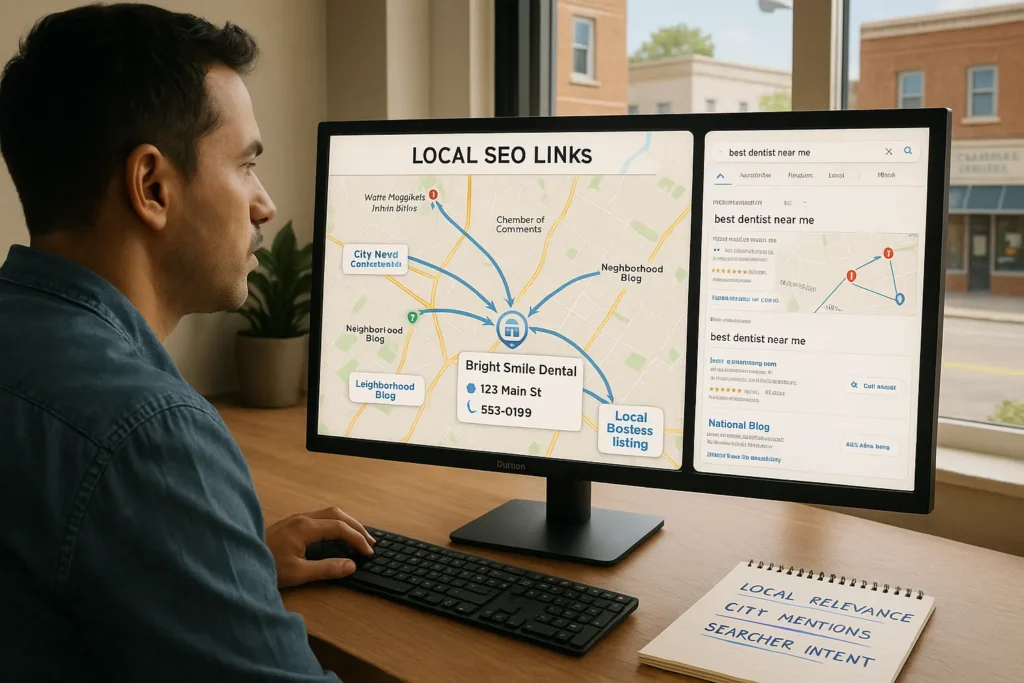
Local SEO links are the quiet workhorses behind local rankings and real customers walking through your door. One day your Google Business Profile sits buried, the next day a few smart local backlinks nudge you into the map pack and your phone starts buzzing. We have watched that shift happen enough times to treat local link building as non‑negotiable for serious local growth. In this guide, we walk through how to build local SEO links that both rank and actually bring in buyers, not just traffic.
Key Takeaways
- Local SEO links send powerful authority and geography signals to Google, helping you win both the map pack and nearby organic search results.
- A link counts as a strong local SEO link when it comes from a locally relevant site, includes location signals (like city or neighborhood mentions), and matches real local searcher intent.
- You can find high‑value local link opportunities by targeting local hubs, business groups, suppliers, competitor link sources, and community resource pages that already serve your city or region.
- Tactics like local sponsorships, scholarships, PR stories, guest content, and event hosting build local SEO links that drive both rankings and real-world relationships.
- Optimizing your own site with clean NAP data, location-focused pages, embedded maps, and smart internal links maximizes the ranking power of each local backlink.
- Tracking local rankings, referral traffic, citation consistency, and link quality lets you refine your local SEO links strategy toward sources that actually generate leads and customers.
Why Local Links Matter More Than Ever
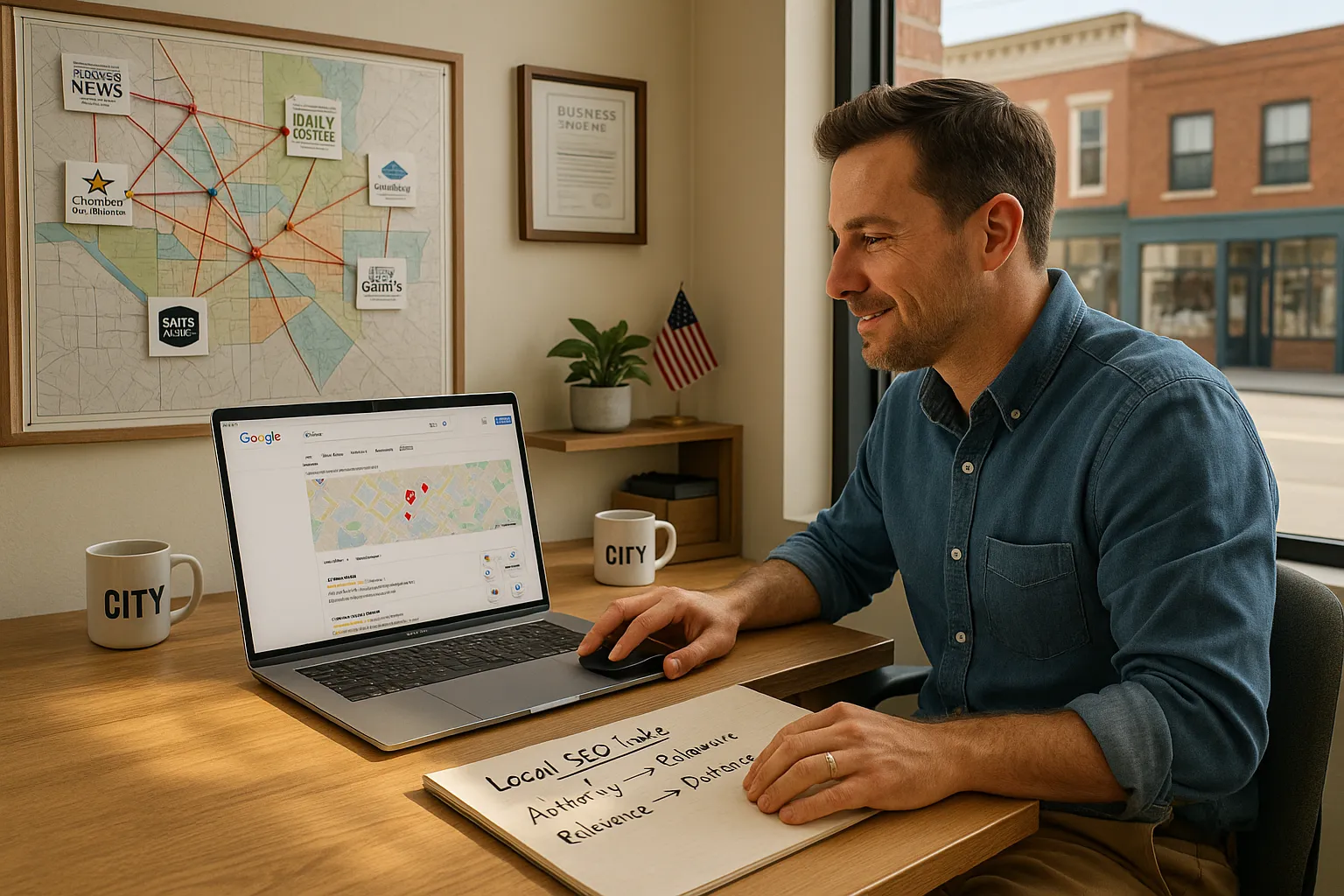
Local SEO links send Google two signals at once: authority and geography. They tell the algorithm, “people in this area trust this business,“ which is exactly what you want for map results and localized organic rankings.
Here is why this matters. Google’s own Search Central documentation confirms that relevance, distance, and prominence shape local search results (Google Search Central, “Improve your local ranking on Google,“ updated 2024, https://support.google.com/business/answer/7091). Local backlinks support all three. They:
- Confirm your location through city, neighborhood, and regional mentions.
- Reinforce topical relevance when the linking site is tied to your service category.
- Boost prominence when known local brands, media, or organizations mention you.
We also see strong correlation in industry studies. BrightLocal‘s Local Search Ranking Factors reports repeatedly place link signals among the top local ranking factors (BrightLocal, “Local Search Ranking Factors,“ 2023, https://www.brightlocal.com). In short, strong local SEO links help you win both the map pack and nearby organic results, which is where intent and conversions are highest.
What Makes A Link “Local” (And How It Differs From Regular Backlinks)
A regular backlink tells Google that another site on the internet finds you worth referencing. A local link goes one step further and anchors you to a place.
We look at three elements when we decide whether a backlink counts as a local SEO link:
- Local relevance of the site
Does the site serve a defined geographic audience, like a city news outlet, chamber of commerce, neighborhood blog, local non‑profit, or regional supplier?
- Location signals in the content
Does the page mention your city, neighborhood, or service area along with your brand or NAP details (name, address, phone)?
- Searcher intent match
Would someone in your area reasonably use that site to discover local businesses, events, or resources?
Regular backlinks from national blogs or general directories still help, but they do not anchor you to a physical market in the same way. Strong local SEO links close that gap and make it easy for Google to connect your brand to a real‑world location.
Finding High-Value Local Link Opportunities
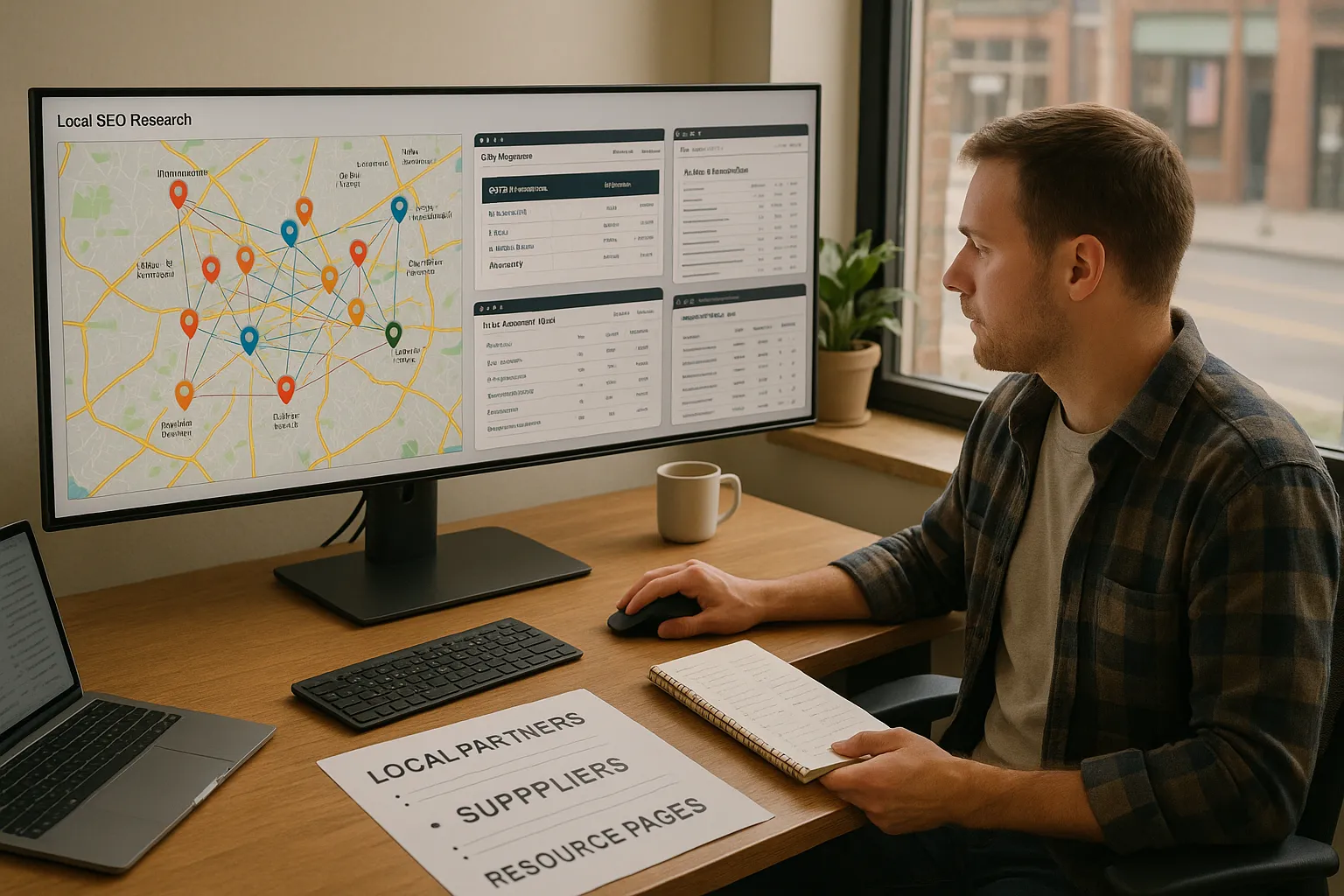
Before we build anything, we map the local web around your business. Our goal is to spot places where a mention of your brand feels natural and useful.
Here is a simple playbook:
- Start with local hubs
Look at city magazines, neighborhood blogs, local radio or TV websites, tourism boards, and event calendars. These often link to featured businesses.
- Scan business and professional groups
Think chambers of commerce, trade associations, networking groups, and BNI‑style chapters. Most list members with links.
- Mine supplier and partner relationships
If you sell a brand like Lennox, Shopify, or Invisalign, check whether those brands list local partners. Many do.
- Review competitor backlinks
Use tools like Ahrefs or Semrush to see who already links to top local competitors, then target the same or better sources.
- Look at local resource pages
Schools, churches, community centers, and city projects often keep “local resources” pages that can feature you.
Each of these sources can turn into one or more local SEO links, especially if the site serves the same city or metro you target.
Proven Local Link Building Tactics You Can Start Today
We like tactics that create both links and real relationships. That way your local SEO links keep paying off far beyond rankings.
Here are methods that work across cities and industries:
- Local sponsorships
Sponsor youth sports teams, meetups, school events, or charity runs. Ask for a sponsor logo, brand mention, and a link from the organizer’s site.
- Scholarships or grants
Create a small scholarship tied to your field and local area. Local schools, news outlets, and scholarship directories often link to the application page.
- Local PR pitches
Share real stories: a new location, a free clinic day, a unique project, or data about local trends. Pitch city reporters or niche local writers.
- Guest content for local sites
Offer useful guides for local blogs or associations. Think “Home buying tips in Austin“ from a mortgage broker, or “How to pick a pediatrician in Denver“ from a clinic.
- Event hosting
Host workshops, meetups, or charity drives at your office. Event listings and partner promotions often include links.
The secret is to tie every tactic back to a clear local angle. That keeps the links relevant and makes them stronger local SEO links in Google’s eyes.
Optimizing Your Website To Maximize Local Link Value
You can land great local SEO links and still leave rankings on the table if your own site sends weak local signals. We want each incoming link to point at a page that screams “local authority.“
Here is what we focus on:
- Clean NAP information
Make sure your name, address, and phone are consistent across your site, your Google Business Profile, and top citations like Yelp and Apple Maps.
- Location‑focused pages
Build strong city or neighborhood pages that deserve local backlinks. A /locations/ or /city/your‑city/ structure works well.
- Embedded maps and directions
Add a Google Map embed and clear driving or transit directions on your contact and location pages.
- Internal linking
When you earn new local SEO links to blog posts or news pages, point internal links from those pages to your core service and location pages. Use descriptive anchor text.
If you already have content about nearby service areas, tie it together with a simple internal structure, such as linking from your main /local-seo-guide/ to deeper pages like /local-seo-audit/ and /google-business-profile-seo/.
Tracking, Measuring, And Refining Your Local Link Strategy
Local SEO links should not live in a spreadsheet that no one checks. We want to see business results, not just link counts.
Here are the metrics we watch:
- Local rankings
Track map pack positions and localized organic rankings for your target keywords using a tool with grid‑based tracking.
- Referral traffic and leads
In Google Analytics, check which local sites send traffic and which of those visits convert into calls, forms, or bookings.
- Citation and NAP consistency
Use a tool or manual checks to confirm that new links carry correct business details.
- Link quality
Review domain authority, local relevance, and link placement. A contextual link inside a local news story beats a buried footer mention.
Then we adapt. If we see one type of local SEO link sending higher value traffic, we put more effort there. If some links never send visits or seem off‑topic, we shift focus to stronger opportunities.
Conclusion
Reaching Sustainable Local Authority With Smart Link Building
The goal is not to collect every possible backlink. We want a tight, believable network of local SEO links that mirrors how people in your city already talk about you.
Start with a short hit list: a chamber of commerce, one or two sponsorships, a local PR story, and a couple of guest pieces for local partners. Point those links toward strong location and service pages, then support them with helpful content and clean NAP data.
Over time, this builds something bigger than rankings. You create real local visibility, stronger relationships, and a brand that shows up everywhere your neighbors look. That is the kind of local authority that keeps sending customers long after the first link goes live.
Frequently Asked Questions About Local SEO Links
What are local SEO links and why do they matter for local rankings?
Local SEO links are backlinks from websites with a clear geographic focus, like city blogs, chambers of commerce, or local news sites. They signal both authority and location to Google, helping improve visibility in the map pack and localized organic results, which typically bring in higher‑intent, nearby customers.
How are local SEO links different from regular backlinks?
Regular backlinks mainly show that another site finds your content valuable. Local SEO links also tie your business to a specific place by including city or neighborhood mentions, local audiences, and often your NAP details. This helps Google confidently associate your brand with a real‑world service area.
What are some effective ways to build local SEO links today?
Strong tactics include sponsoring local events or youth sports, offering a small local scholarship, pitching real stories to city reporters, writing guest content for local blogs or associations, and hosting workshops or charity drives. Each activity can earn locally relevant mentions and links from trusted community websites.
How can I optimize my website to get more value from local SEO links?
Ensure your NAP is consistent across your website, Google Business Profile, and major citations. Create robust city or neighborhood pages, embed Google Maps and directions, and build clear internal links from blogs or news pages to core service and location pages so each local backlink reinforces your local authority.
How many local SEO links do I need for my business to rank locally?
There’s no fixed number. The right volume depends on your market’s competitiveness and the strength of your competitors’ profiles. A few high‑quality, locally relevant links from trusted organizations often outperform dozens of weak ones. Focus on earning steady, credible links rather than chasing a specific link count.
Some of the links shared in this post are affiliate links. If you click on the link & make any purchase, we will receive an affiliate commission at no extra cost of you.
