

The first time we saw a single local SEO tweak bring in three new buyer inquiries in one afternoon, we stopped blaming the market. The phones were quiet, our open houses felt like ghost towns, and then a simple change to our local presence flipped the script. When we treat local SEO for real estate as seriously as yard signs and postcards, our brand stops being invisible and starts feeling like the obvious choice in town. In this guide, we will walk through a clear, practical way to own your local search results and bring in clients who are ready to move now.
Key Takeaways
- Local SEO for real estate helps you show up in “near me” and city-specific searches, turning online visibility into a steady stream of qualified local buyers and sellers.
- Defining your core neighborhoods, client types, and key search phrases makes local SEO for real estate more targeted and effective than trying to rank for everything everywhere.
- A fully optimized Google Business Profile—with accurate NAP, the right categories, keyword-rich descriptions, photos, and consistent reviews—is the fastest way to boost calls and map visibility.
- Dedicated local pages on your website, focused on specific cities or neighborhoods and backed by fast, mobile-friendly tech, signal clearly to Google where and how you serve clients.
- Publishing hyper-local content like market reports, neighborhood guides, and client case studies builds trust, earns backlinks and citations, and turns local SEO for real estate into real appointments and closings.
- Regularly tracking rankings, profile actions, website engagement, and closed deals lets you refine your local SEO strategy and double down on the locations and content that generate the best ROI.
Why Local SEO Matters So Much For Real Estate Professionals
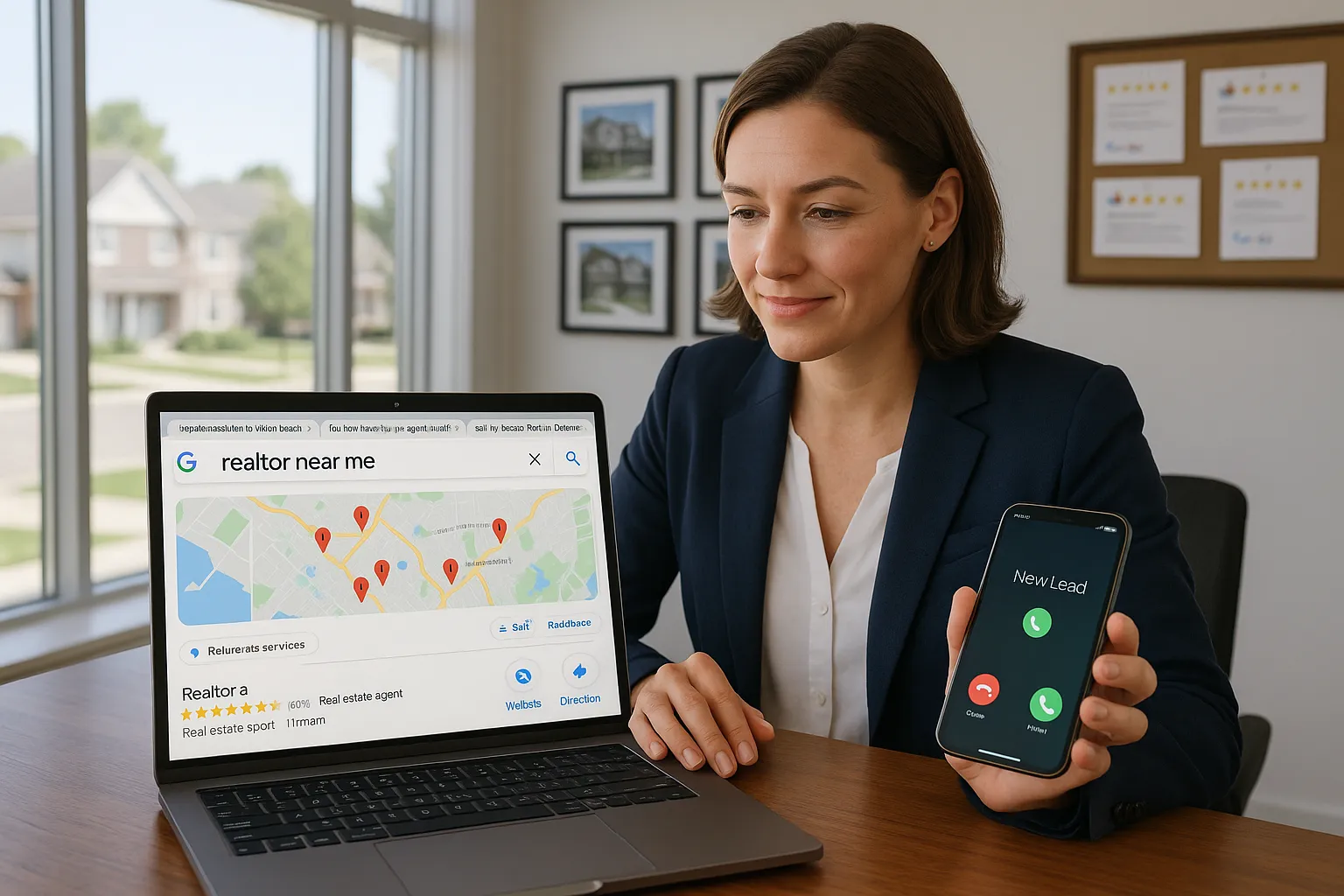
Local SEO for real estate decides whether buyers and sellers find us or our competitors when they search “realtor near me” or “homes for sale in [city].” Here is why this matters.
Most property journeys start online. The National Association of Realtors reported that 96% of home buyers used the internet in their home search in 2023.
When we show up in the local pack, map results, and organic listings, we get:
- More qualified leads who already want our area
- Higher trust because Google “vouches” for us
- Calls and form fills that keep coming long after ads stop
Local SEO for real estate also works well with how clients search. They do not just type “real estate agent.” They type “condo specialist in Miami Beach,” “first time home buyer agent Austin,” or “sell my house fast in Denver.” If our pages, Google Business Profile, and reviews send strong local signals, we win those searches.
The good news. Local SEO for real estate is not about tricks. It rewards agents and brokers who clearly show who they serve, where they work, and how they help.
Clarify Your Local Market And Ideal Client
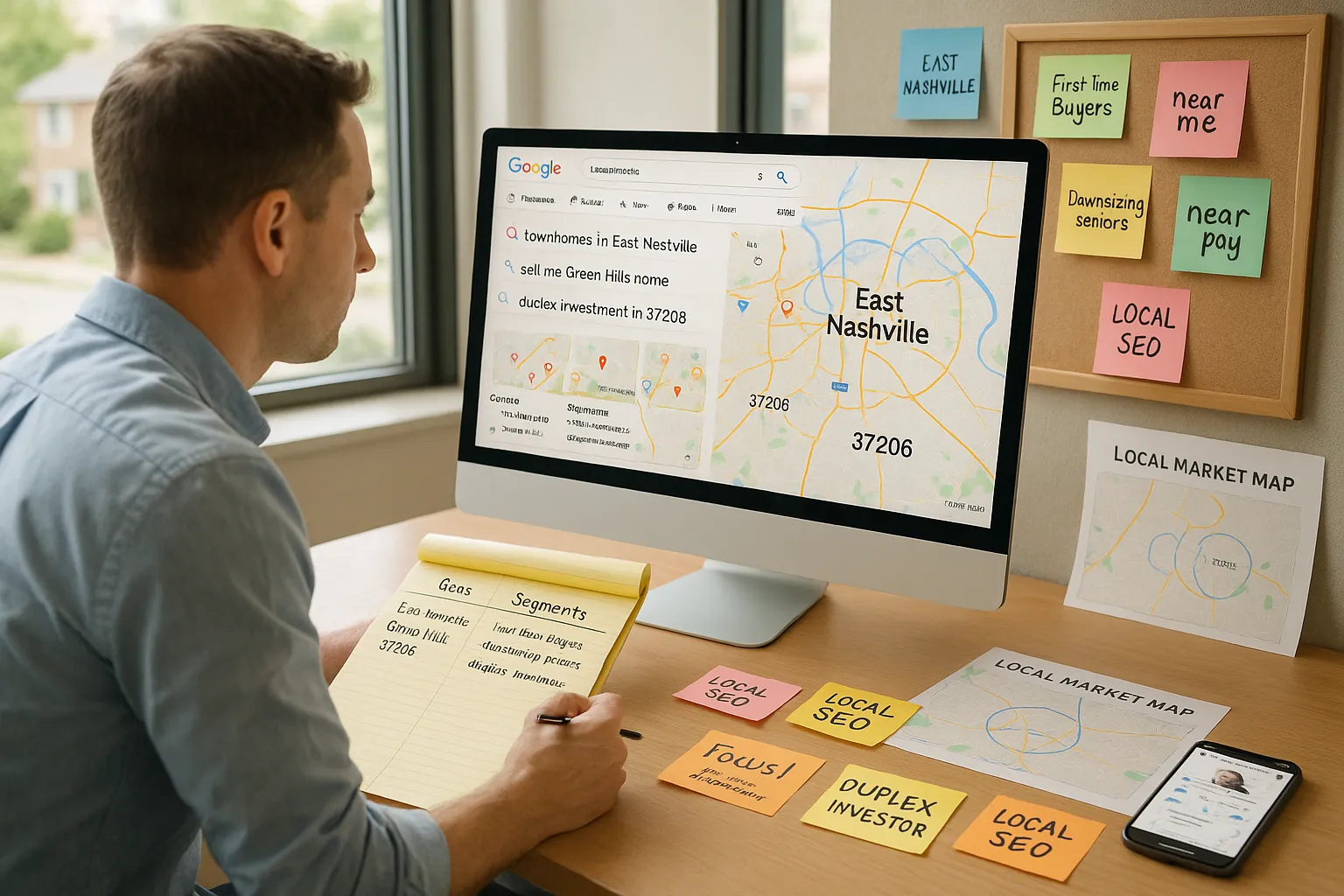
Local SEO for real estate works best when we stop trying to rank for everything everywhere. We need sharp focus.
Start with three questions:
- What zip codes, cities, or neighborhoods do we care about most?
- What price ranges and property types actually pay our bills?
- What client stories keep repeating in our deals?
From there, build a simple market map:
- Geos: “East Nashville,” “Green Hills,” “37206,” not “all of Tennessee”
- Segments: “first time buyers,” “downsizing seniors,” “investors buying duplexes”
- Search phrases: “townhomes in East Nashville,” “sell my Green Hills home,” “duplex investment in 37206”
Now our content, service pages, and Google Business Profile can mirror this language.
We can even group ideas. If we focus on investors, we might link to an internal guide like Real Estate SEO For Investors. If we love first time buyers, we might support this with a page like Local SEO For Mortgage Professionals for partner lenders.
When we put this stake in the ground, local SEO for real estate gets easier, and clients feel like we speak directly to them.
Optimize Your Google Business Profile For Local Visibility
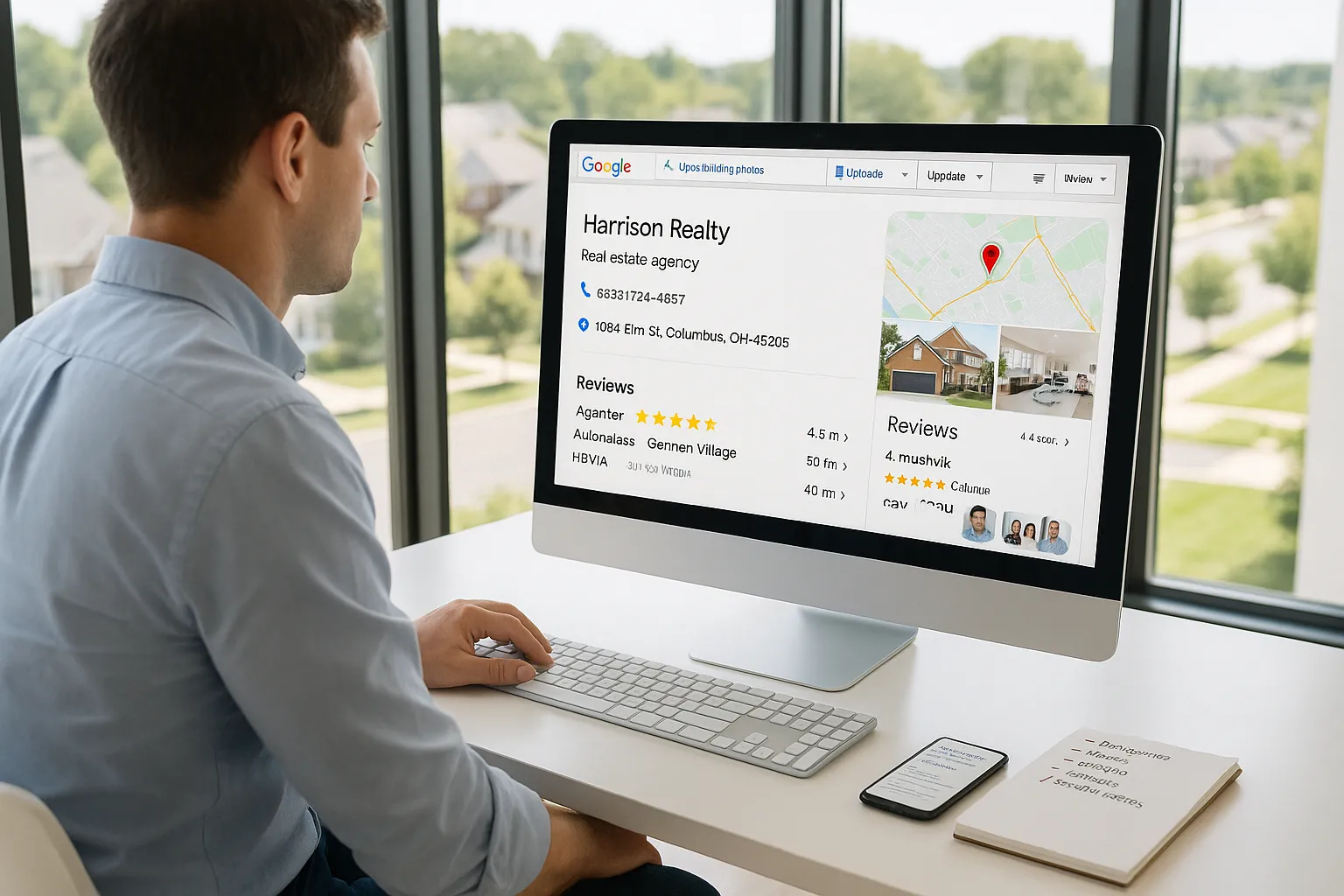
If we want local SEO for real estate that brings in phone calls fast, we start with Google Business Profile.
Here is the short checklist:
- Use our exact business name, not stuffed with keywords
- Pick the right categories, such as “Real estate agency” or “Real estate consultant”
- Add a local phone number and consistent NAP data (name, address, phone)
- Write a description that includes phrases like “buyer agent in [city]” and “listing specialist in [neighborhood]”
- Add high quality exterior, interior, team, and listing photos
- Post updates about open houses, new listings, and market stats every week
Reviews carry serious weight. A BrightLocal study in 2023 found that 87% of consumers used Google to read local business reviews, and star rating shaped trust very quickly.
Ask happy clients for reviews right after closing. Give them a short prompt that mentions your service area, such as “We helped you buy in Cherry Creek. If you feel comfortable, mention that in your review.” This reinforces local SEO for real estate without any spammy tricks.
Treat your profile like a mini website. Keep it active and accurate, and Google rewards that steady signal.
Build A Real Estate Website That Ranks Locally
Local SEO for real estate does not stop at our Google Business Profile. Our website tells Google exactly where and how we serve people.
We start with structure:
- A dedicated page for each target city or neighborhood
- Clear service pages: “Home Selling in [city],” “Buying a Condo in [area]”
- An “About” page with real local details, not generic fluff
On each local page, we include:
- The city or neighborhood in the title tag and H1
- Natural mentions of nearby landmarks, schools, and transit
- Internal links to blog posts and property pages about that same area
We avoid stuffing our target phrase. Instead, we use related terms like “real estate agent in [city],” “homes for sale in [zip],” and “local housing market.” Search engines can connect these entities.
Technical pieces matter as well. Fast page speed, mobile friendly pages, and clean internal links all support local SEO for real estate. If we want to go deeper, we can build an internal resource like Technical SEO For Real Estate Sites.
We give Google one clear message. “This site is about real estate in these locations for these clients.”
Create Local Real Estate Content That Actually Converts
Content is where local SEO for real estate turns into real trust.
Instead of generic blogs about “tips for buyers,” we write pieces that only make sense in our area:
- “2025 Housing Market Forecast For Scottsdale Buyers”
- “Best Neighborhoods In Charlotte For Medical Residents”
- “What It Really Costs To Own A Condo In Downtown Seattle”
We anchor each piece with a clear takeaway and then weave in our locations and specialties.
Strong local content ideas:
- Monthly market reports with charts and simple explanations
- Neighborhood guides that mention parks, schools, commute times, and local businesses
- “Case study” stories that follow a specific client from first call to closing
Each article should invite action. Add local calls to action such as “Curious what your South Tampa home could sell for this spring? Reach out for a free pricing review.”
Over time, this kind of focused content builds topical authority. Google starts to see us as the local expert. People do too. That is how local SEO for real estate stops being abstract and starts filling our pipeline.
Earn Local Citations, Reviews, And Backlinks
Local SEO for real estate runs on trust signals from other sites, not just our own.
We look at three groups:
- Citations: Our NAP data on sites like Yelp, Realtor.com, Zillow, Bing Places, and Apple Maps. Consistency here supports our map rankings.
- Reviews: Google, Zillow, Facebook, and local directories. We never script fake reviews. We ask real clients and make it easy.
- Backlinks: Mentions with links from local blogs, news outlets, chambers of commerce, and partner businesses.
Here are a few outreach ideas:
- Offer market commentary to a local news outlet when sales spike or rates change
- Partner with a lender, stager, or contractor on a joint article hosted on their site
- Sponsor a youth sports team or charity event and request a link from their sponsor page
Each mention of our brand and location feeds local SEO for real estate. Search engines see a network of proof that we are real, active, and trusted in our area.
Measure Your Local SEO Results And Refine Your Strategy
If we do not measure, local SEO for real estate turns into guesswork.
We track at three levels:
- Visibility: Map rankings, local pack presence, and organic positions for target phrases like “realtor in [city]”
- Engagement: Clicks from Google Business Profile, website visits, time on site, and calls
- Revenue: Leads, appointments, signed agreements, and closed transactions
Tools that help:
- Google Business Profile Insights for calls, direction requests, and profile views
- Google Analytics for traffic and conversions
- A basic rank tracker to watch our local terms over time
Every month, we ask:
- Which neighborhoods are sending the most leads?
- Which content pages pull in the most organic visits?
- Which lead sources close at the highest rate?
Then we adjust. If a “homes for sale in [neighborhood]” page brings in strong traffic, we build more content around that area. If reviews slow down, we refresh our process at closing.
Local SEO for real estate is not one and done. Small, regular tweaks compound into big gains over 6 to 12 months.
Conclusion
Local SEO for real estate works when we treat it like part of our daily prospecting, not a side project.
We get clear on our markets and clients. We tune our Google Business Profile. We build a local focused website. We publish content only a true local could write. We earn reviews and mentions that prove our authority.
Do that with patience and discipline, and local SEO for real estate turns quiet weeks into steady inquiry streams. Not magic. Just the compound effect of showing up in the right place every time someone in our area starts their next move.
Sources:
- “Real Estate in a Digital Age 2023 Report,” National Association of Realtors, 2023, https://www.nar.realtor/research-and-statistics/research-reports/real-estate-in-a-digital-age
- “Local Consumer Review Survey 2023,” BrightLocal, 2023, https://www.brightlocal.com/research/local-consumer-review-survey/
Frequently Asked Questions
What is local SEO for real estate and why does it matter for agents?
Local SEO for real estate is the process of making your Google Business Profile, website, and online content highly visible for searches like “realtor near me” or “homes for sale in [city].” It matters because most buyers start online, and strong local visibility turns those searches into steady calls, inquiries, and appointments.
How do I optimize my Google Business Profile for local SEO for real estate?
Use your exact business name, choose accurate categories like “Real estate agency,” and keep your name, address, and phone consistent. Add a local phone number, write a location-focused description, upload high‑quality photos, post weekly updates, and actively request reviews that mention your neighborhoods or cities to strengthen local signals.
What kind of website structure works best for local SEO for real estate?
Create dedicated pages for each key city or neighborhood you serve, plus clear service pages like “Home Selling in [city].” Use local details in titles, headings, and copy, link internally to related blogs and listings, and ensure your site is fast, mobile friendly, and easy to navigate so Google clearly understands your locations and services.
What local content should real estate agents create to attract qualified leads?
Focus on content that only a local expert could write: neighborhood guides, monthly market reports, and case studies from recent clients. Include landmarks, schools, commute times, and real pricing insights. End each piece with strong, location-based calls to action to convert readers into inquiries and listing or buyer consultations.
How long does local SEO for real estate take to show results?
Most agents begin noticing meaningful improvements from local SEO for real estate within 3–6 months, with stronger gains over 6–12 months. Timelines depend on competition, consistency with content and reviews, and how well your Google Business Profile and website are optimized. Regular updates and ongoing measurement help accelerate progress.
How much does local SEO for real estate typically cost?
Costs vary based on whether you DIY or hire help. Many agents start by investing time only—optimizing their Google Business Profile and creating content themselves. Professional local SEO services can range from a few hundred to several thousand dollars per month, depending on market size, scope of work, and competitive intensity.
Some of the links shared in this post are affiliate links. If you click on the link & make any purchase, we will receive an affiliate commission at no extra cost of you.
