

When was the last time we chose a new doctor without checking Google first? Our patients are doing the same thing, often on their phones, often in a hurry, and usually within a few miles of home. That is exactly where local SEO for medical professionals decides who gets the call and who gets ignored. In this guide, we will walk through concrete steps that help our practice show up when nearby patients search for care, not someday, but starting this quarter.
Key Takeaways
- Local SEO for medical professionals helps nearby patients find and choose your practice at the exact moment they search for care, especially on mobile and “near me” queries.
- Optimizing your Google Business Profile with accurate categories, services, hours, photos, and compassionate review responses is the single most impactful step for winning more local medical searches.
- Strong on-page local SEO for medical professionals includes dedicated location pages, patient-friendly service pages, city + specialty in titles and headings, embedded maps, and consistent name, address, and phone details.
- Building local authority requires a steady flow of Google reviews, accurate listings on major medical directories, locally relevant content, and community partnerships that earn trusted links.
- Tracking calls, directions, local rankings, and conversions—then testing small improvements—turns local SEO into an ongoing system that keeps new patient volume growing predictably over time.
Why Local SEO Matters For Medical Practices
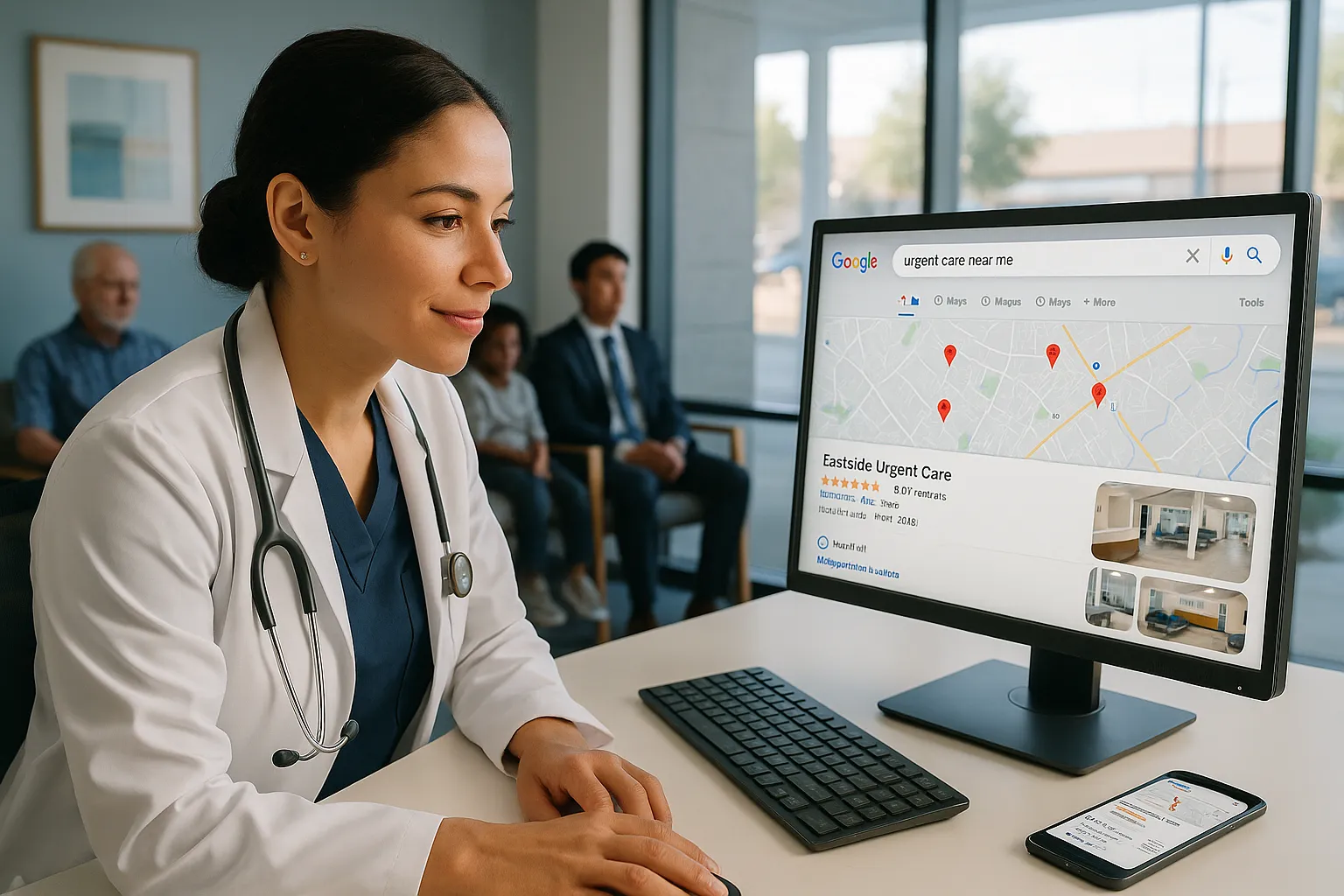
Local SEO for medical professionals matters because most patients search online before booking care. Google’s own research found that “near me” searches containing “clinic” or “urgent care” have grown strongly in recent years, and a large share of those lead to visits within 24 hours. When our practice does not show up in that map pack, we lose real appointments, not abstract clicks.
Here is why this channel is so important:
- Patient behavior is hyper local. Patients rarely travel across town unless we offer something very specific.
- Trust starts before the first visit. Reviews, photos, and accurate information shape how safe and credible we look.
- Local SEO keeps working. Once we set things up correctly and keep them fresh, we gain a steady stream of qualified leads.
For busy clinicians, local SEO for medical professionals is one of the few marketing efforts that can grow patient volume without a heavy ongoing time cost.
How Local Search Works For Healthcare Queries
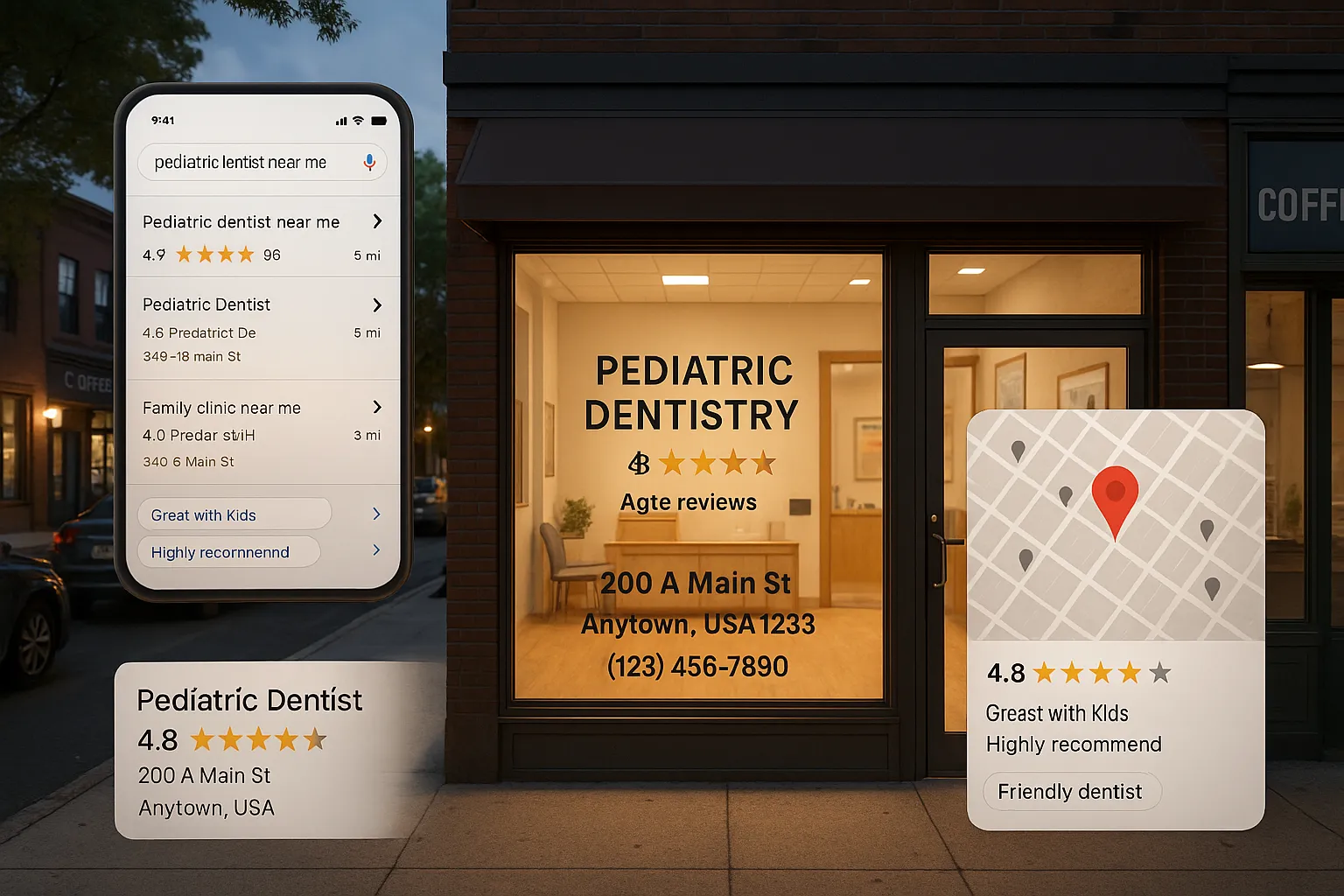
Local search has three main ingredients: relevance, distance, and prominence. Google describes this in its help documentation for local results and uses these factors to rank which practices appear in the map pack.
Here is the simple version:
- Relevance is how closely our profile and website match the query. If someone searches “pediatric dentist near me,” Google looks for pediatric terms in our content.
- Distance is how close we are to the searcher or the location they typed.
- Prominence is our online reputation and footprint. This includes reviews, links, and mentions of our practice name, address, and phone.
Local SEO for medical professionals means feeding these three signals with clear medical services, accurate location data, and signs that real patients trust us.
We can think of this as a digital version of being the clinic that everyone on the block already knows.
Optimizing Your Google Business Profile For Medical Searches
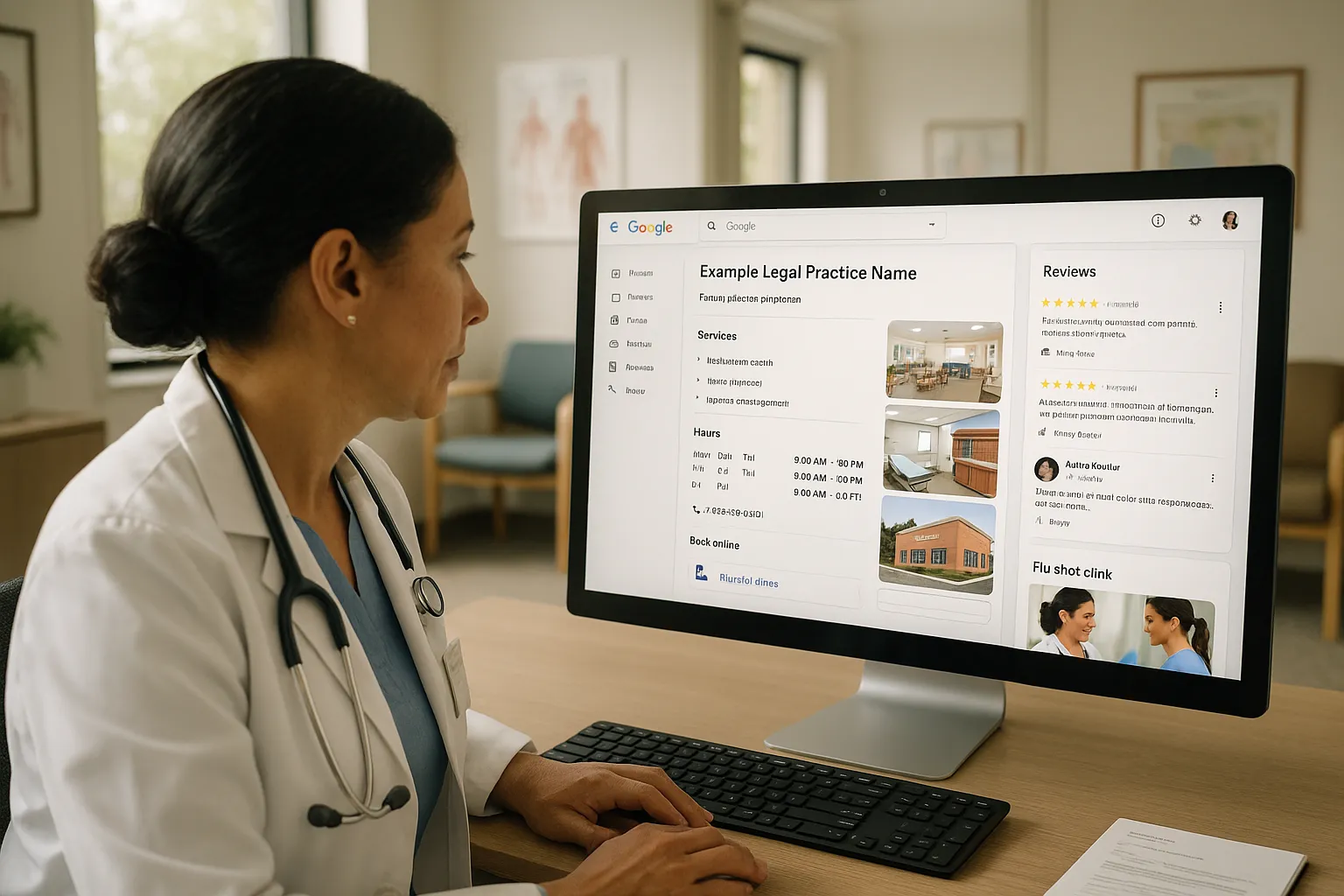
Our Google Business Profile is the center of local SEO for medical professionals. Many patients will decide to call or book without ever visiting our website, so this piece deserves careful attention.
Start with the basics:
- Use our exact legal practice name, not stuffed with keywords.
- Choose the most accurate primary category, such as “Family practice physician,” “Cardiologist,” or “Urgent care center.”
- Add services that match what patients actually ask for, like “well woman exam,” “sports physical,” or “diabetes management.”
- Keep hours, phone, and appointment links current.
Then go further:
- Upload real photos of the waiting room, exam rooms, and exterior.
- Use Google Posts to share flu shot clinics, new specialists, or holiday hours.
- Reply to every review with empathy and without revealing protected health information.
This profile is where local SEO for medical professionals often wins or loses, since small changes here tend to move call volume fast.
On-Page Local SEO Essentials For Medical Websites
Our website supports local SEO for medical professionals by confirming to Google who we are, where we are, and what conditions we treat.
Here is a practical checklist:
- One page per location. Each office needs a dedicated page with name, address, phone, directions, parking details, and nearby landmarks.
- Service pages that match patient language. Patients search “knee pain doctor” more than “orthopedic specialist,” so we use both.
- Title tags and headings that include city and specialty. Example: “Dermatologist in Austin | Skin Cancer Screening & Acne Care.”
- Embedded map. Use a Google Map on each location page.
- Consistent NAP. Name, address, and phone must match our Google Business Profile and major directories.
We can also add internal links between related clinical topics, such as from “chronic back pain” to a longer guide on physical therapy. Over time, this structure helps local SEO for medical professionals because search engines see a clear, medical topic cluster tied to a real place.
If we are planning content, it helps to map this to supporting pieces like a guide to medical website accessibility or a checklist for HIPAA friendly online forms.
Building Local Authority And Trust Online
Local SEO for medical professionals is not only about keywords. It is also about trust. Patients and search engines both look for signs that our practice is known and respected in our community.
Practical ways to build that trust:
- Reviews. Encourage happy patients to leave honest feedback on Google. The American Medical Association reminds physicians to protect patient privacy when replying, so we keep responses general and kind.
- Local citations. Make sure our practice details are correct on Healthgrades, Vitals, WebMD, Yelp, and local hospital partner sites.
- Local content. Publish short posts about allergy season in our city, school sports physicals, or local health fairs.
- Partnerships. Sponsor a nearby sports team or charity run and request a link from their website.
We can also publish more in depth articles, such as a local SEO checklist for clinics, which attract links from other healthcare sites. Those mentions support both human trust and local search prominence.
Measuring And Improving Your Local SEO Performance
We cannot refine local SEO for medical professionals without tracking results. The good news is that a small set of metrics tells us most of what we need.
Start with these:
- Google Business Profile Insights. Track calls, website clicks, and direction requests by month.
- Local rankings. Use a grid based rank tracker or even manual checks from different ZIP codes around our office.
- Organic traffic to location pages. Google Analytics 4 shows which pages bring in local visitors.
- Conversion actions. Measure online appointments, contact form fills, or click to call taps.
Then test small changes. Update photos, adjust service descriptions, or add an FAQ about insurance and see how behavior changes over a few weeks. Local SEO for medical professionals rewards steady, data based tweaks rather than big, sporadic overhauls.
When we treat this channel like a clinical follow up schedule, not a one time project, we catch issues early and keep new patient flow healthy.
Conclusion
Local SEO for medical professionals comes down to one idea. We meet nearby patients at the exact moment they search for help and make it very easy to choose us.
If we keep our Google Business Profile current, build clear location and service pages, and earn honest local reviews, we already outperform many practices that rely only on word of mouth. From there, small experiments and regular measurement help us refine what works.
The clinics that win local search do not chase every marketing trend. They keep their digital front door open, accurate, and welcoming so that when someone nearby types “doctor near me,” our name appears as the obvious next step.
Local SEO for Medical Professionals: Frequently Asked Questions
What is local SEO for medical professionals and why does it matter for my practice?
Local SEO for medical professionals is the process of improving how your clinic appears in location‑based Google searches, especially the map pack. It matters because most patients search “near me” before booking care, and strong local visibility turns those searches into real appointments instead of missed opportunities.
How does Google decide which medical practices show up in local search results?
For healthcare queries, Google looks at three main factors: relevance, distance, and prominence. Relevance measures how closely your profile and website match the search. Distance is how close you are to the searcher. Prominence reflects your reviews, links, and online mentions of your practice’s name, address, and phone.
How can I optimize my Google Business Profile for medical local SEO?
Use your exact legal practice name and the most accurate primary category, add patient‑friendly services, and keep hours, phone, and appointment links updated. Upload real photos, publish Google Posts for updates like flu clinics, and reply to reviews with empathy while protecting patient privacy and avoiding any PHI disclosure.
What on-page SEO elements are most important for local SEO for medical professionals?
Create one page per location with full address, phone, directions, and parking details. Build service pages using both medical and patient language, and include city plus specialty in title tags and headings. Embed a Google Map, keep NAP consistent everywhere, and link between related condition and treatment pages to reinforce local relevance.
How should medical practices measure and improve their local SEO performance over time?
Track Google Business Profile Insights for calls, clicks, and directions, monitor local rankings around your ZIP codes, and review organic traffic to location pages in Google Analytics. Measure conversions like online bookings and click‑to‑call. Then test small changes—photos, service descriptions, and FAQs—and watch results over several weeks.
Is local SEO different for medical professionals compared with other local businesses?
Yes. Medical local SEO must respect HIPAA and healthcare ethics. You should never reveal protected health information in reviews or content, and trust signals—credentials, accurate medical information, and clear insurance details—matter more. Patients also search by symptoms and conditions, so combining clinical terms with everyday language is especially important.
Some of the links shared in this post are affiliate links. If you click on the link & make any purchase, we will receive an affiliate commission at no extra cost of you.
