

Local SEO for hotels is often the difference between an empty lobby and a steady stream of walk-ins and direct bookings. We have guests who literally find us while standing a block away, phone in hand, searching “hotel near me.” That tiny moment on a tiny screen decides whether they walk through our doors or someone else’s. In this guide, we walk through how we can win those moments and turn nearby searches into paying guests.
Key Takeaways
- Local SEO for hotels helps convert high-intent “near me” and map searches into direct bookings instead of costly OTA reservations.
- A fully optimized Google Business Profile—with accurate NAP, rich photos, posts, and Q&A—is the single most important asset for winning local hotel searches.
- Targeted location pages, segment-focused landing pages, and helpful local guides align your website content with how guests actually search, strengthening local SEO for hotels.
- Consistent on-site signals like clear title tags, local schema markup, mobile-friendly design, and strong internal linking help Google trust and rank your hotel locally.
- Steady new Google reviews, quality local backlinks, and clean citations build authority over time and push your hotel above nearby competitors in map and local results.
- Tracking Search Console, Google Business Profile Insights, analytics, and calls lets you see which local SEO actions drive real bookings and refine your strategy each month.
Why Local SEO Matters For Hotels Today
Local SEO for hotels matters because our guests now plan and book based on what they see in Google Maps and local search, not just on OTAs. When someone types “boutique hotel near Times Square” or “pet friendly hotel in Austin,” Google decides which properties deserve the top spots. If we are not there, we are invisible.
Here is why this channel hits different for hotels:
- High intent. People searching locally are usually close to booking, either for tonight or an upcoming trip.
- Mobile first. Many travelers search from phones during a trip, using maps, “near me” phrases, and voice.
- Zero-click decisions. Guests often decide based on Google Business Profile photos, star ratings, and the map pack without even visiting our site.
Strong local SEO for hotels supports direct bookings, reduces our dependence on high OTA commissions, and makes our brand visible to guests who prefer to call the front desk or book on mobile. If our property, rooms, and reviews stand out locally, we win traffic and revenue every single day with no extra ad spend.
How To Set Up And Optimize Your Google Business Profile
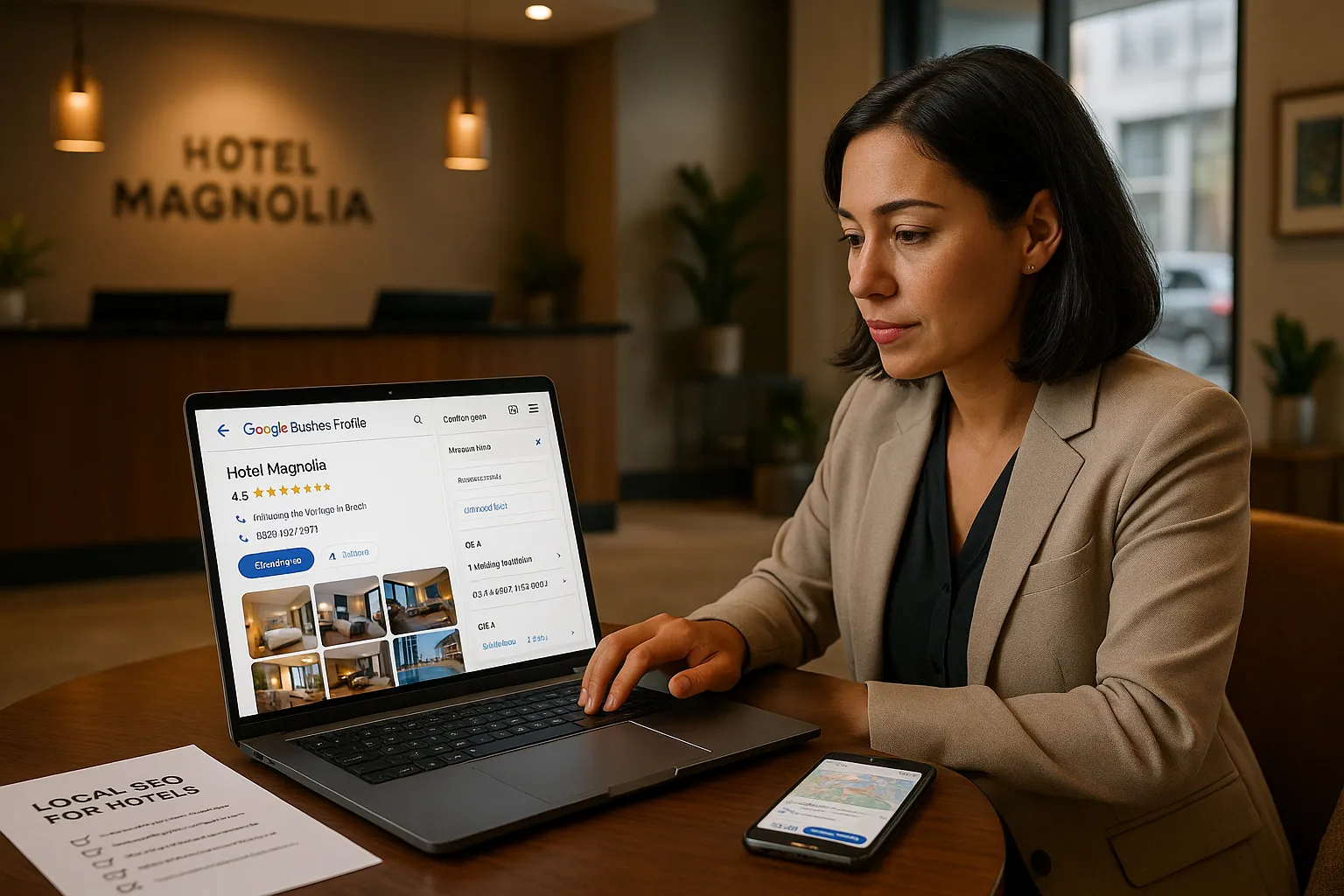
Our Google Business Profile is the single most important asset for local SEO for hotels. It feeds Google Maps, the local pack, and knowledge panels. When it is wrong or half-complete, we bleed bookings.
Here is how we tune it for maximum bookings:
- Claim and verify
- Search our hotel name in Google.
- If a profile exists, claim it. If not, create one at
google.com/business. - Complete the verification steps (call, text, video, or postcard).
- Use the exact business name and categories
- Use our real hotel name, no extra keywords.
- Set the main category as “Hotel,” then add accurate extras such as “Boutique hotel,” “Resort hotel,” or “Extended stay hotel” if they fit.
- Perfect our NAP and details
- Keep Name, Address, Phone (NAP) consistent with our website and online listings.
- Add website URL, booking URL, check-in/check-out times, and attributes like “free Wi‑Fi,” “free breakfast,” or “parking available.”
- Photos and videos that sell the stay
- Upload high quality photos of rooms, lobby, bathrooms, views, pool, breakfast area, and nearby attractions.
- Keep seasonal photos fresh so guests sense that we care.
- Use Posts and Q&A
- Post limited-time offers, event promos, and local guides.
- Answer common questions publicly (parking, late check‑in, pet rules) so guests see quick, clear responses.
When we treat our Google Business Profile like a second homepage and keep it accurate, rich, and active, Google trusts us more and highlights us in local results.
Building A Strong Local Keyword And Content Strategy
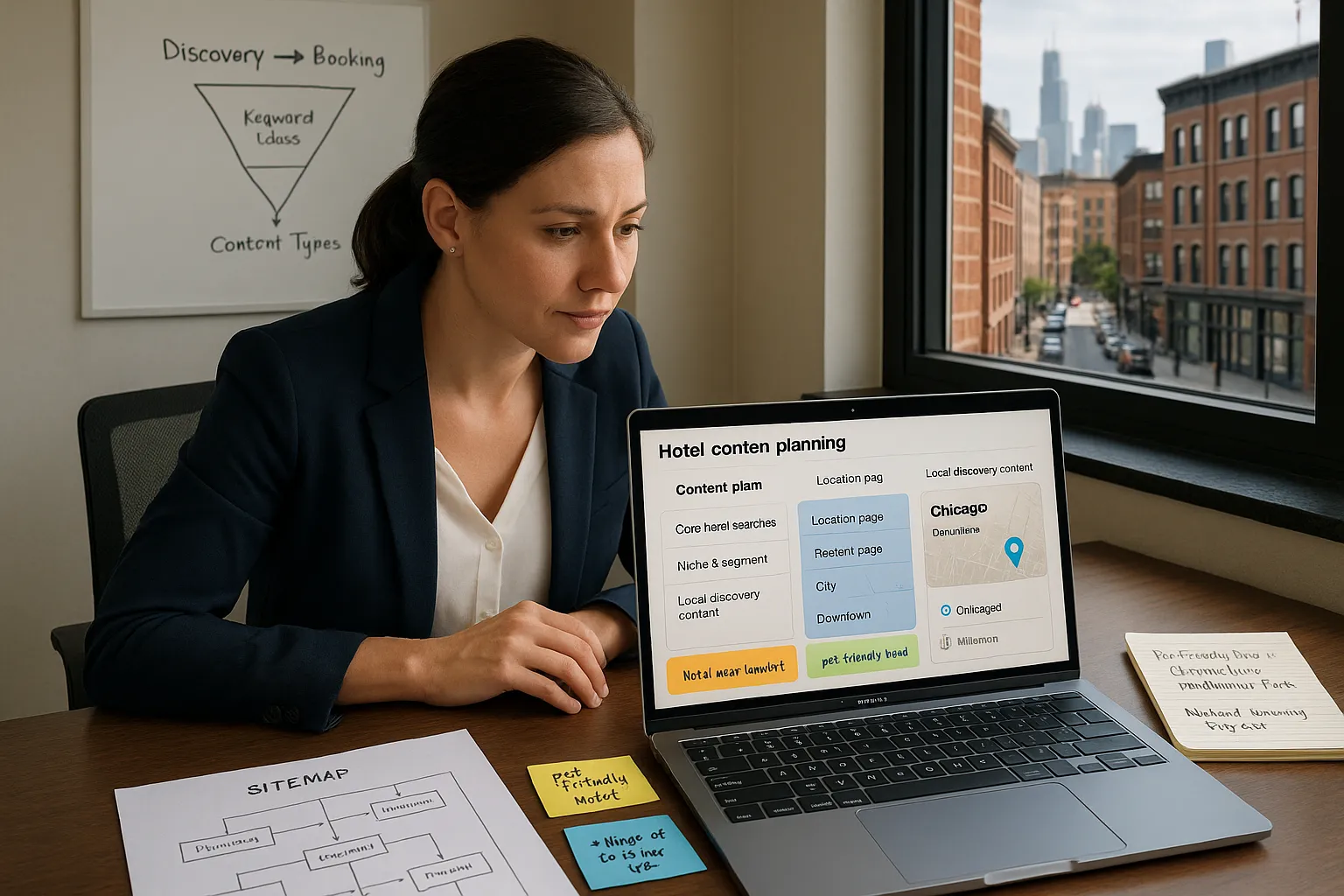
Good local SEO for hotels starts with the right keywords and content that match real search behavior. We want to cover both booking intent and discovery intent.
First, we group keywords into three buckets:
- Core hotel searches
- “hotel in [city]”
- “hotel near [landmark]”
- “boutique hotel [neighborhood]”
- “[city] hotel with pool / with free parking / with breakfast”
- Niche and segment terms
- “family friendly hotel in [city]”
- “pet friendly hotel [city]”
- “business hotel near [convention center]”
- “romantic hotel in [city]”
- Local discovery content
- “things to do near [our hotel]”
- “where to eat in [neighborhood]”
- “best coffee shops near [city] airport”
We then build content around these topics:
- A strong location page on our site that clearly states our city, neighborhood, and nearby landmarks.
- Themed landing pages for segments, like “Pet Friendly Hotel in Chicago Near Millennium Park.”
- Helpful local guides, such as a weekend itinerary or a list of nearby restaurants, which we can link from our blog and from our hotel content marketing efforts.
When our pages echo how guests search and answer those needs in plain language, local SEO for hotels improves, and guests see us as the obvious choice in that part of town.
Improving On-Site SEO For Local Hotel Searches
Our website must back up our local presence. Google cross checks what it sees on our site with our Google Business Profile and other listings.
Here are the on-site moves that matter most:
- Nailing basic on-page signals
- Use the city, neighborhood, and main selling points in title tags, meta descriptions, and H1 headings.
- Put our full address and phone in the footer and on the contact page.
- Embed a Google Map on our contact or location page.
- Local schema markup
- Add
Hotelschema with name, address, phone, check‑in/check‑out, and sameAs links to our profiles. - Mark up FAQs, reviews, and events where relevant. This helps search engines connect our brand to the city and local entities.
- Mobile and performance
- Guests search and book on their phones. Our site needs fast load times, simple menus, and a booking button that is hard to miss.
- Avoid heavy pop‑ups that block room details on small screens.
- Clear internal linking
- Link from the homepage to our main location page, plus segment pages like “family rooms” or “long stay.”
- Connect local guide content to our booking pages and to related resources such as hotel SEO case studies.
When Google sees consistent location signals and guests enjoy a smooth path from search to room details to booking, local SEO for hotels pays off with more direct reservations.
Earning Reviews, Local Links, And Citations
Local SEO for hotels leans heavily on reputation and authority. Google wants to send travelers to properties with strong ratings and a trusted local presence.
We focus on three areas:
- Reviews
- Ask every happy guest for a quick Google review using follow‑up emails or a small card at checkout.
- Reply to all reviews, both positive and negative, with calm, specific responses.
- Use phrases guests use (“quiet rooms,” “great breakfast,” “near the subway”) in our replies to reinforce our strengths.
- Local links
- Build relationships with nearby restaurants, tour companies, wedding venues, and event spaces.
- Offer to feature them in our local guides and ask for a link on their partner or accommodation pages.
- Join the local chamber of commerce and tourism board, and ask for a link from member listings.
- Citations
- Make sure our NAP is consistent across hotel directories such as TripAdvisor, Booking.com, Expedia, Yelp, Apple Maps, and local travel sites.
- Fix old or duplicate listings that show old phone numbers or addresses.
Regular new reviews, a steady trickle of local links, and clean citations send strong trust signals. Over time, this helps us rank higher than nearby hotels with similar rates and amenities.
Tracking Local SEO Performance And Bookings
We do not want local SEO for hotels to feel like a black box. We can track results in a straightforward way and tie them back to bookings.
Here is a simple measurement setup:
- Google Search Console
- Track impressions and clicks for queries with our city name, neighborhood, and hotel terms.
- Watch which pages earn local traffic and which need stronger content.
- Google Business Profile Insights
- Monitor views on Search and Maps, direction requests, calls, website visits, and bookings if connected.
- Compare branded searches (hotel name) to discovery searches (“hotel near [landmark]”). Growth in discovery means our local reach is expanding.
- Analytics and call tracking
- Tag clicks from the Google Business Profile to our website.
- Set goals for online bookings, contact form submissions, and clicks to call.
- Use call tracking numbers that keep NAP consistent while still recording performance.
- Review and rankings checks
- Track star rating, review count, and response time.
- Check our map rankings from different locations near our hotel using tools or manual spot checks.
When we link this data to revenue, we can see which actions move the needle: more reviews, new local guides, or updates to our Google Business Profile. That helps us decide where to spend our time each month.
Conclusion
Local SEO for hotels is not a one-off project. It is a steady habit: keep our Google Business Profile fresh, publish content that sounds like real guest searches, keep our website fast and clear, and nurture reviews and local relationships.
If we commit to these steps, we slowly become the “default” option for guests searching near our corner of the city. Our brand beats generic OTA listings, our direct bookings rise, and our rooms stay fuller from guests who found us right when and where they needed us. That is the quiet advantage of strong local SEO for hotels, and it compounds month after month.
Frequently Asked Questions About Local SEO for Hotels
What is local SEO for hotels and why is it so important today?
Local SEO for hotels is the process of optimizing your online presence so your property appears in Google Maps and local search results when travelers look for hotels nearby. It matters because many guests now make “near me” and city-based decisions directly from the map pack, often without visiting OTAs or your website first.
How do I optimize my Google Business Profile for local SEO for hotels?
Start by claiming and verifying your Google Business Profile, using your exact hotel name and correct categories. Ensure NAP, website, and booking URLs are accurate, add amenities and check-in details, upload high‑quality photos and videos, and use Posts and Q&A. Treat the profile like a second homepage and keep it regularly updated.
What kind of content helps improve local SEO for hotels?
Create pages that mirror how guests actually search: core hotel terms like “hotel in [city]” or “boutique hotel near [landmark],” segment pages such as “pet friendly hotel in [city],” and local discovery guides covering nearby attractions, restaurants, and itineraries. This mix captures both ready‑to‑book and research‑stage travelers.
How can hotels get more local reviews and use them to boost rankings?
Ask every satisfied guest for a Google review via checkout cards or follow‑up emails. Reply to all reviews with specific, calm responses, naturally mentioning strengths like “quiet rooms” or “close to subway.” Consistent new reviews and active management build trust with both Google and travelers, which supports stronger local visibility.
How long does it take for local SEO for hotels to show measurable results?
Most hotels begin noticing early signals—more map views, calls, and direction requests—within 4–8 weeks of optimizing Google Business Profile, on‑site content, and reviews. Strong ranking gains and higher direct bookings usually take 3–6 months of consistent work, especially in competitive city centers or tourist destinations.
Some of the links shared in this post are affiliate links. If you click on the link & make any purchase, we will receive an affiliate commission at no extra cost of you.
