
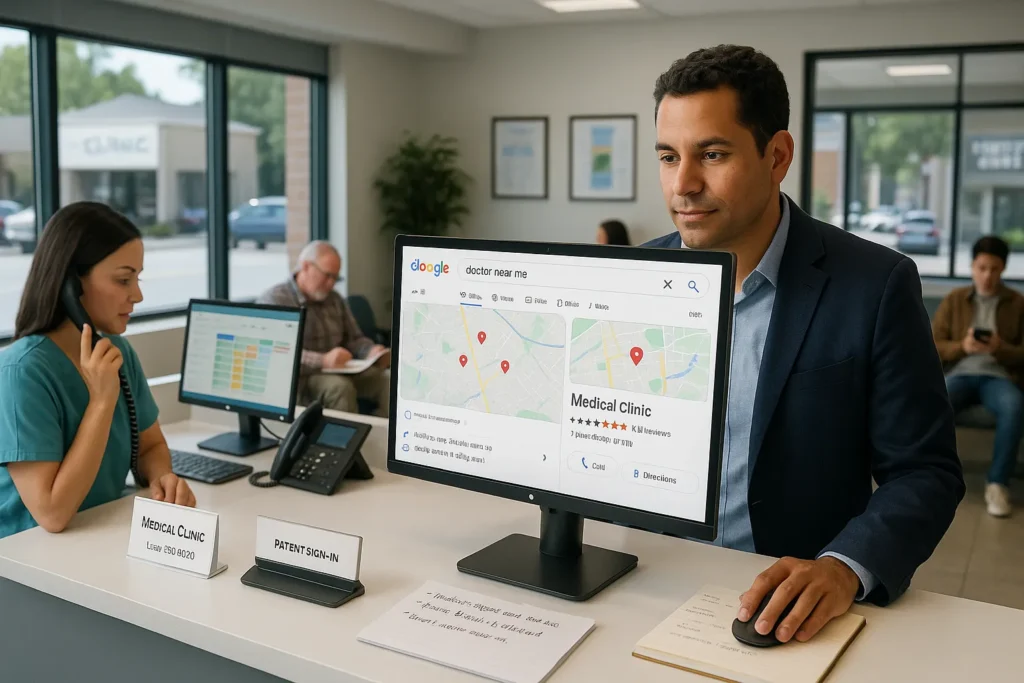
Local SEO for healthcare is usually the moment we realize word of mouth is not enough anymore. A quiet waiting room, a full staff schedule, and your phone barely ringing while a clinic two blocks away has a line. We feel that gap too, and the good news is patients are already searching for care nearby. Our job is to help your practice be the one they find and trust first.
Key Takeaways
- Local SEO for healthcare ensures your practice appears when nearby patients search high-intent terms like “doctor near me” or “urgent care open now,” turning online intent into booked visits.
- Optimizing your Google Business Profile with accurate NAP details, specific medical categories, updated hours, and real photos is foundational for winning local healthcare visibility.
- Building a location-optimized healthcare website—with dedicated location pages, strong on-page local signals, consistent NAP in the footer, and fast mobile performance—directly supports local SEO for healthcare.
- Systematic review management and accurate local citations on platforms like Google, Healthgrades, and local medical directories build trust with patients and reinforce your local search presence.
- Measuring Google Business Profile actions, Search Console queries, and conversions from organic traffic, then executing a 90-day improvement plan, makes local SEO for healthcare a repeatable growth engine rather than guesswork.
Why Local SEO Matters For Healthcare Providers
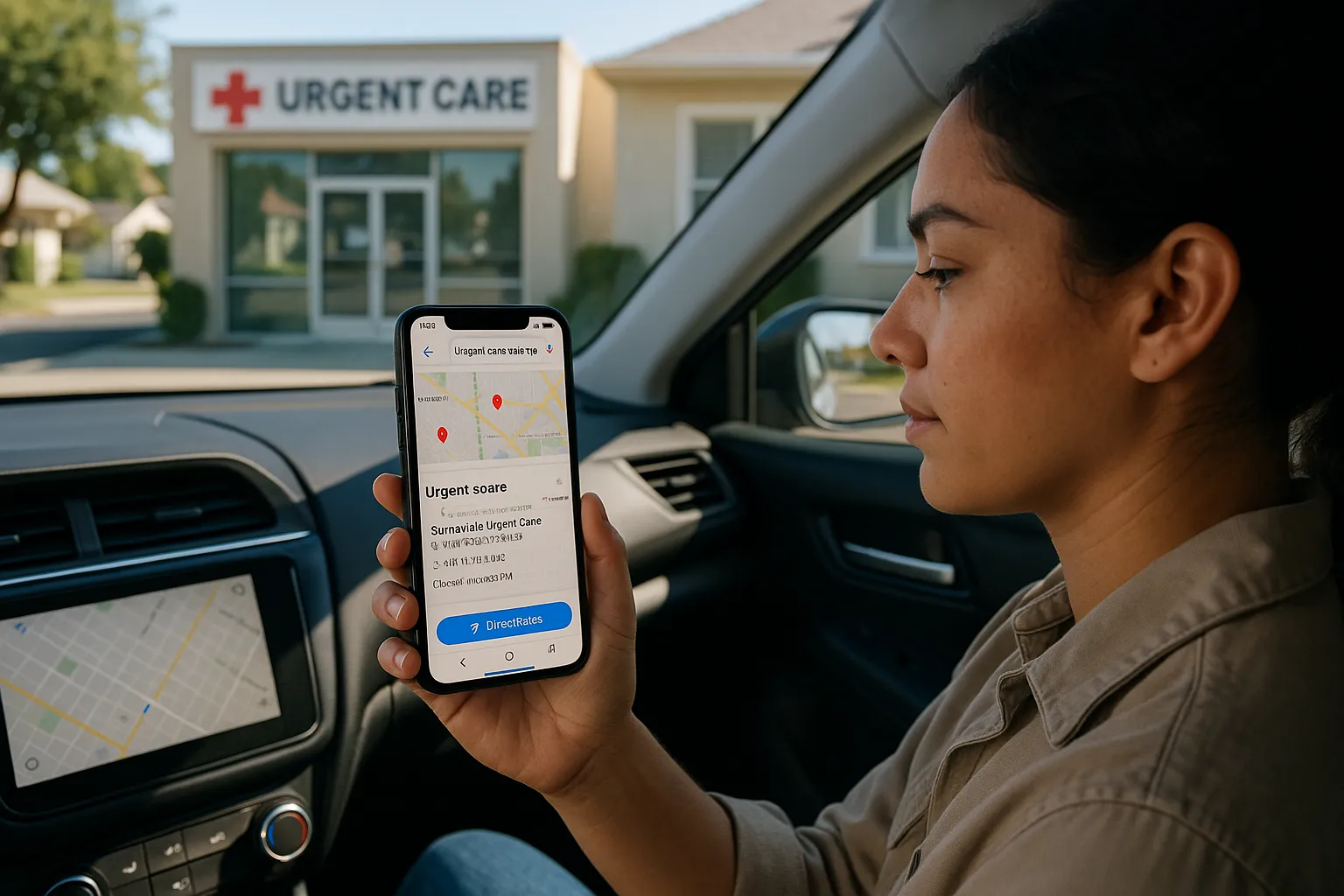
Local SEO for healthcare helps us show up when someone nearby types “doctor near me” or “urgent care open now” on Google. That moment of intent is where appointments begin.
Here is why this matters. Research from Google shows that 77% of patients use search engines before booking with a provider. Many of those searches include clear local signals like neighborhood names, zip codes, and “near me” queries.
When we get local SEO right:
- Our practice appears in the map pack and organic results.
- Patients see our phone number, directions, and hours instantly.
- We shorten the path from search to scheduled visit.
If we ignore it, aggregators, hospital networks, and aggressive competitors occupy that space. The patient still books, just not with us.
Source: “Digital Journey to Wellness: Hospital Selection”, Google & Compete, 2012, https://services.google.com/fh/files/blogs/the_digital_journey_to_wellness_hospital_selection.pdf
Understanding How Patients Search For Care Nearby
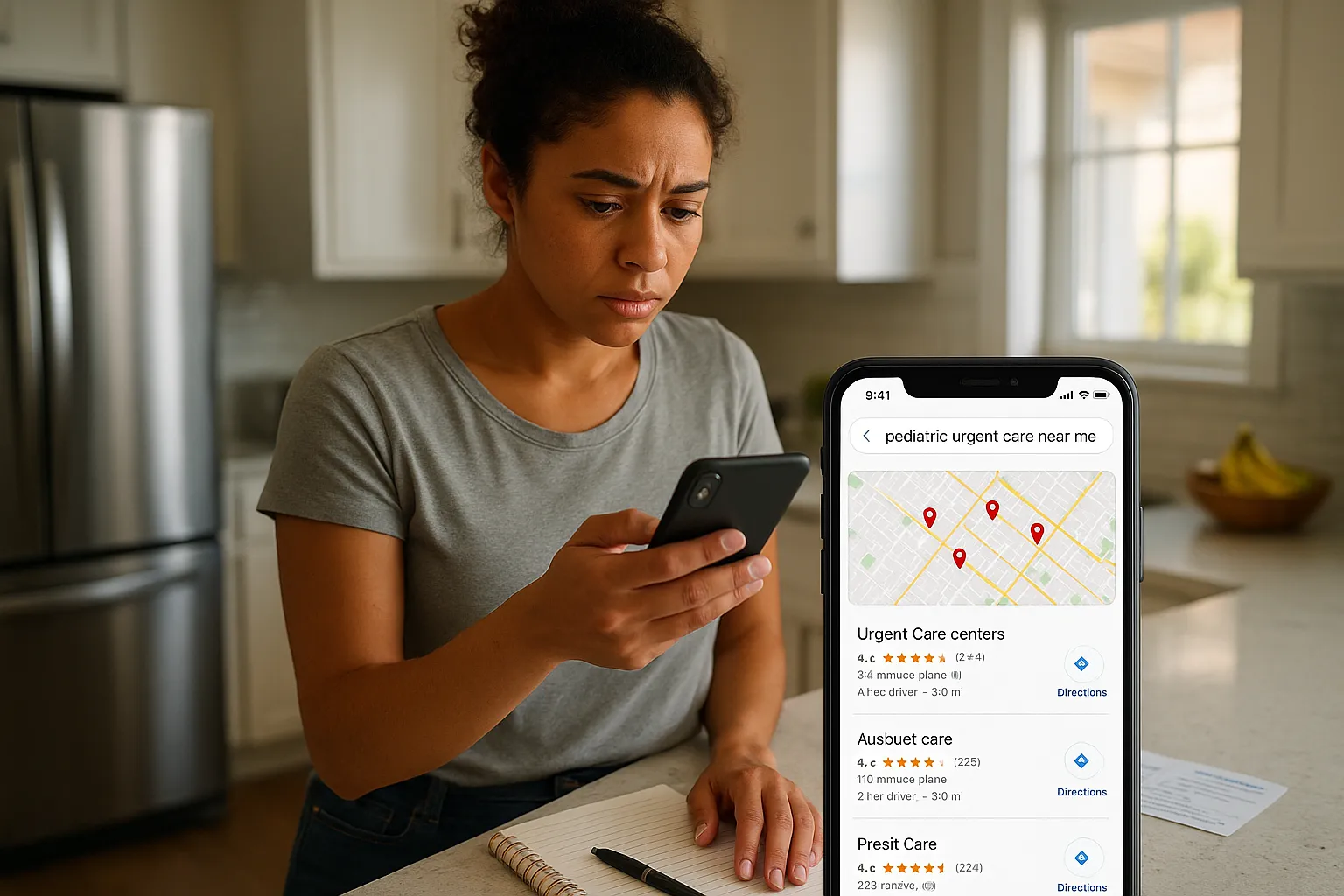
Before we change title tags or build citations, we need to understand how real patients search.
Most local searches for healthcare fall into a few patterns:
- Symptom or condition + location: “knee pain doctor in Austin”, “dermatologist near Brooklyn Heights”.
- Service + near me: “pediatric urgent care near me”, “STD testing near me”.
- Brand or doctor name: they already heard of us and want directions, reviews, or phone number.
On mobile, urgency is higher. Google has reported that “near me” searches grew more than 500% over several years, and health is a big share of that growth. Patients often stand in their kitchen or sit in a parking lot while searching.
Practical steps:
- Ask front desk staff to log the exact phrases callers use.
- Review Search Console once a month for queries that already bring impressions.
- Listen for neighborhood names, local landmarks, and slang that real people actually say.
We then fold those phrases into our local SEO for healthcare strategy instead of guessing.
Source: “How people use Google Search for health”, Think with Google, 2019, https://www.thinkwithgoogle.com/consumer-insights/consumer-journey/online-health-research/.
Optimize Your Google Business Profile For Medical Practices
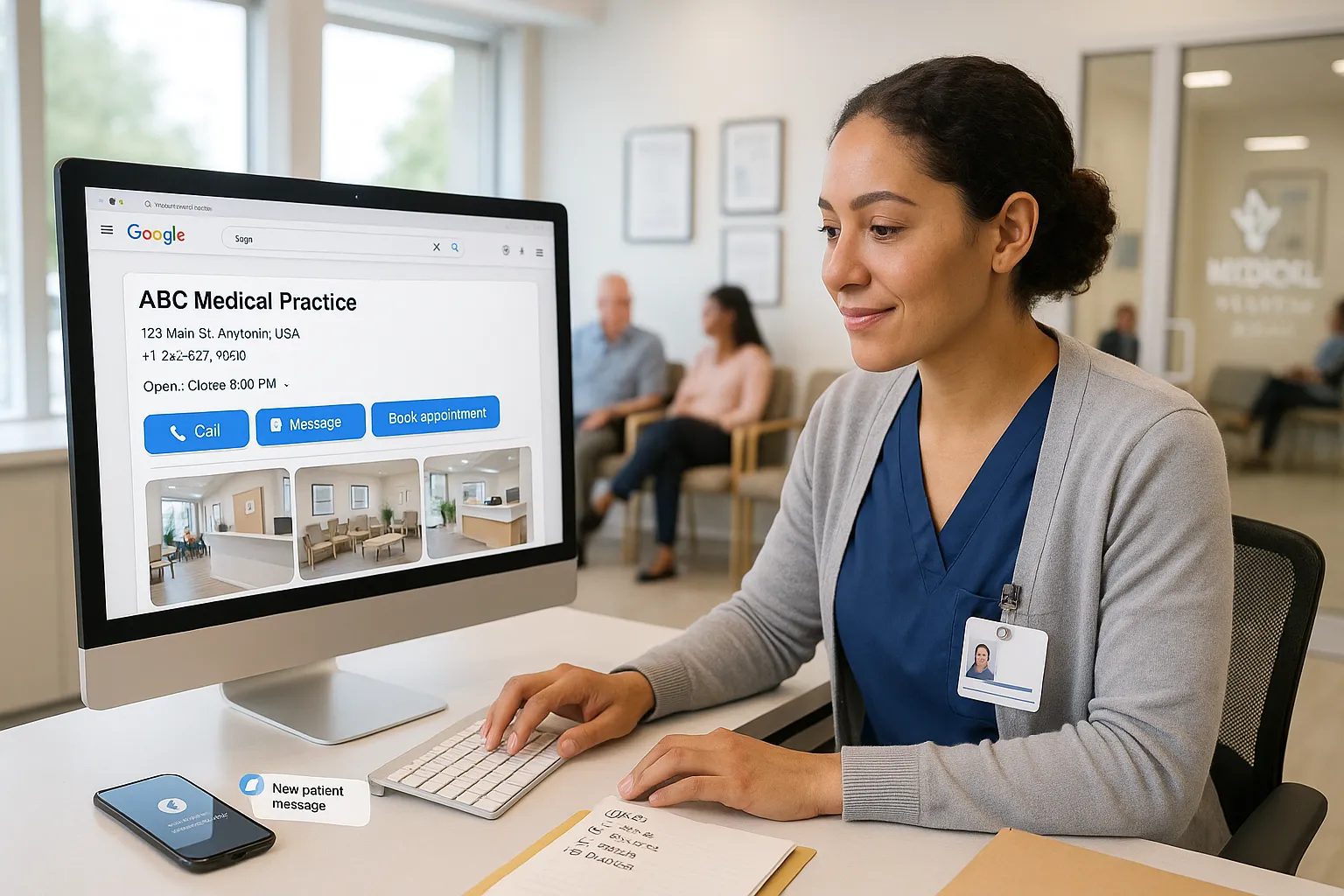
Our Google Business Profile (GBP) is often the first touchpoint a patient sees, long before the website. Local SEO for healthcare lives or dies on how complete and accurate that profile is.
Start here:
- Exact name, address, phone
Match our legal practice name and NAP across GBP, website, and major directories.
- Correct categories
Use a precise primary category, such as “Pediatrician”, “Urgent care center”, or “Dental clinic”. Add secondary services only if they are real and available.
- Hours, including holidays
Keep regular and special hours updated so patients do not arrive to a locked door.
- Photos and short videos
Upload real images of the front desk, waiting room, treatment rooms, exterior signage, and staff. This lowers anxiety and increases calls.
- Messaging and booking
Turn on messaging if our staff can answer quickly. Link directly to an online scheduling page or portal.
We should treat GBP updates like we treat charting. Consistent, accurate, and reviewed.
Source: “Get started with Google Business Profile”, Google Business Profile Help, https://support.google.com/business/answer/6300665
Build A Location-Optimized Healthcare Website
A website that supports local SEO for healthcare does three simple things. It makes it clear who we are, where we are, and what medical problems we solve.
We can start with this checklist:
- Location pages
Create a dedicated page for each clinic or office, with full address, embedded Google Map, parking info, nearby landmarks, and unique content.
- On-page signals
Include city, neighborhood, and service terms in title tags, H1s, meta descriptions, and body copy. Keep it natural, like “family dentist in Plano” inside a real sentence.
- NAP in the footer
Display our name, address, and phone sitewide, with schema markup for LocalBusiness or the specific medical subtype.
- Mobile speed
Most local searches happen on phones. Simple design, compressed images, and clear tap targets help patients call or book in seconds.
We can support this page with internal links from related topics, such as our “technical SEO checklist for healthcare websites” guide or a post on “how to choose the right specialist” so authority flows toward location pages.
Earn Trust With Reviews, Reputation, And Local Citations
Patients care a lot about what other patients say. Local SEO for healthcare rewards clinics that manage reputation like a clinical workflow, not an afterthought.
Review system ideas:
- Train staff to ask happy patients for reviews at checkout, then send a follow up text or email with direct links to Google and Healthgrades.
- Reply to every review. Thank people for kind words, and respond calmly to criticism without sharing PHI. Show empathy and offer a phone call for details.
Local citations help search engines confirm that we are real and stable.
Focus on:
- Major platforms such as Healthgrades, Vitals, Zocdoc, WebMD, Yelp, Apple Maps, Bing Places.
- Local chambers of commerce and medical associations.
- Exact same NAP across all listings.
We can keep a simple spreadsheet with each directory, login, and last update date so nothing drifts over time.
Create Localized Content That Answers Patient Questions
Local SEO for healthcare works better when our content sounds like we actually live in the community. Patients search for conditions, but they also look for context.
Strong content topics:
- Seasonal issues in our area, such as “allergy season in Phoenix” or “flu trends in Chicago”.
- Local guides, like “what to do after a minor car accident in Dallas” written by our urgent care team.
- Clear explanations of services with local angles, such as “prenatal care in Queens” or “sports physicals for Seattle high school athletes”.
Structure each piece so it answers one main question fast at the top, then gives details, risks, and next steps. Link from blog posts to relevant service and location pages so authority flows where appointments happen.
We can also add internal links to related resources such as our “guide to medical schema markup” or a “patient review playbook” so readers who want more detail know where to go next.
Measure Local SEO Performance And Prioritize Next Steps
Local SEO for healthcare should feel measurable, not mystical. We want clear signals that effort turns into calls and booked visits.
Start with these metrics:
- Google Business Profile: views, calls, direction requests, and website clicks.
- Search Console: impressions and clicks for local queries that include city names, neighborhoods, or “near me”.
- Analytics: form submissions, online bookings, and phone calls from organic visits, broken down by location page.
Then set a simple 90 day plan.
Month 1: Clean NAP, fix Google Business Profile, and claim major directory listings.
Month 2: Improve site speed, build or update location pages, add clear calls to action.
Month 3: Launch a consistent review request flow and publish at least two localized articles.
Every quarter, we can compare rankings and calls across locations and move attention to clinics that lag behind.
Conclusion
Local SEO for healthcare is not a magic trick. It is a series of small, repeatable steps that help nearby patients find us, trust us, and book with confidence.
When we claim and improve our Google Business Profile, keep NAP details tight, invest in clear location pages, and treat reviews as a core process, search visibility improves. Add in localized content that speaks our community’s language, and we stand out from generic directories.
If our waiting room feels quieter than it should, this is the signal to act. We can start with a single location, a single profile, and a single review process, then expand. Patients are already searching. Local SEO simply makes sure they see us first.
Local SEO for Healthcare: Frequently Asked Questions
What is local SEO for healthcare and why does it matter for medical practices?
Local SEO for healthcare is the process of helping your practice appear in Google’s local and map results when nearby patients search things like “doctor near me” or “urgent care open now.” Done well, it shortens the path from search to scheduled visit and reduces lost patients to competitors and aggregators.
How do I optimize my Google Business Profile for a medical practice?
Start by making your name, address, and phone (NAP) exactly match your website and major directories. Choose precise categories (e.g., Pediatrician, Urgent care center), keep hours and holiday hours updated, add real photos and short videos, and enable messaging or online booking if staff can respond quickly.
What are the key website elements for strong local SEO for healthcare?
Create a separate location page for each office with full address, embedded map, parking details, and local landmarks. Use city and neighborhood terms naturally in titles, headings, and copy. Add consistent NAP in the footer with LocalBusiness or medical schema, and ensure your site loads fast and works smoothly on mobile devices.
How should healthcare providers manage reviews and citations for local SEO?
Train staff to ask happy patients for reviews at checkout, then follow up by text or email with direct links to Google and key health sites. Respond to every review without sharing PHI. Maintain consistent NAP across major healthcare directories, maps, and local associations, tracking everything in a simple spreadsheet to prevent data drift.
How long does local SEO for healthcare take to show results?
Most clinics start noticing clearer signals within 60–90 days, especially after fixing Google Business Profile data, cleaning NAP, and improving location pages. Full impact on rankings and call volume can take several months, depending on competition, review velocity, and content quality, but steady, repeatable actions usually compound over time.
Some of the links shared in this post are affiliate links. If you click on the link & make any purchase, we will receive an affiliate commission at no extra cost of you.
