
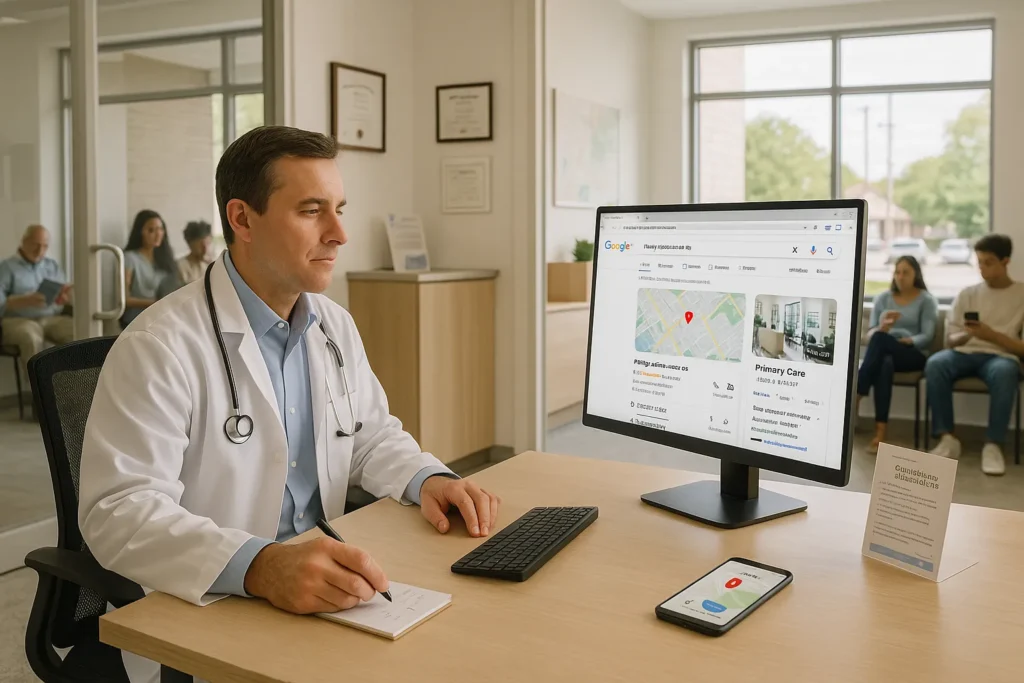
Local SEO for doctors is often the quiet difference between a packed waiting room and awkward gaps in the schedule. We see it every week: one clinic ranks in the top three results and books out, while another, with better care, hides on page two. In this guide, we walk through how to help your practice show up when nearby patients search on Google, Maps, and review sites, without crossing any medical or legal lines. Let’s talk about how we turn online visibility into booked appointments, not vanity traffic.
Key Takeaways
- Local SEO for doctors ensures your practice appears in critical “near me” searches on Google and Maps, turning online visibility into real appointments.
- A fully optimized Google Business Profile with accurate categories, NAP details, photos, and booking links is the starting point for effective local SEO for doctors.
- Location-focused websites with dedicated clinic and service pages, fast mobile performance, and clear calls to action help patients find and contact you quickly.
- Consistent review generation and professional responses on Google and medical directories build trust, strengthen rankings, and provide actionable feedback on patient experience.
- Local content, partnerships, and community links signal to Google that your clinic is a trusted neighborhood health resource, boosting local SEO for doctors.
- Tracking calls, directions, new patients, and 3-pack visibility—while staying HIPAA- and AMA-compliant—keeps your local SEO efforts ethical and focused on patient outcomes.
Why Local SEO Matters For Medical Practices
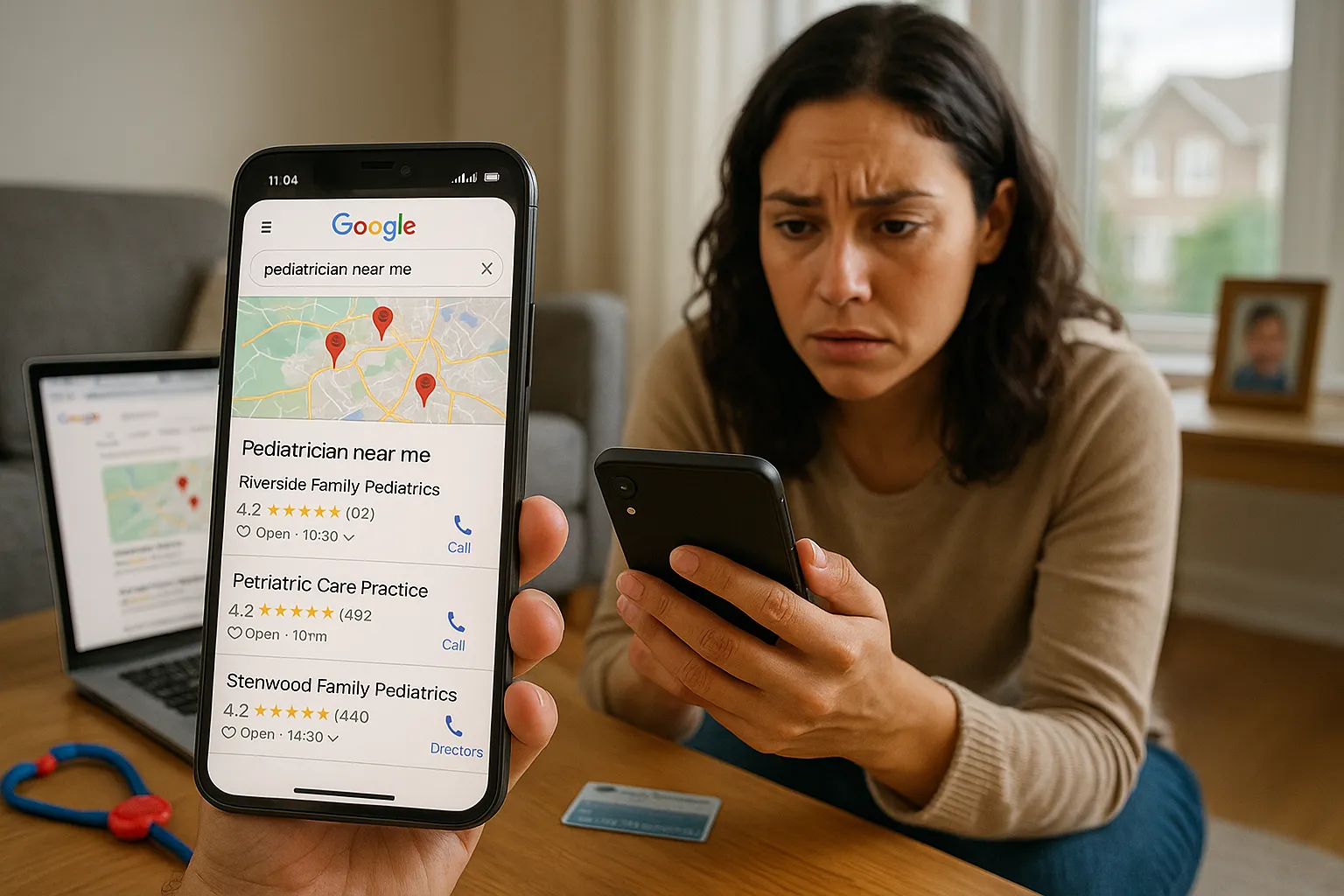
Local SEO for doctors matters because almost every patient journey now starts with a search query like “pediatrician near me” or “urgent care open now.” If your practice does not appear in those local results, you simply never enter the patient’s decision process.
Here is why this channel deserves our attention:
- Patients rely on search and maps. Google reports that “near me” searches grew more than 500% over a few years, and healthcare is a huge share of that.
- Local packs steal most clicks. The 3-map listings at the top often win a large share of appointments before users ever scroll.
- Reviews shape trust. Patients compare ratings, review volume, and recency to decide who feels safe and competent.
For busy doctors, local SEO for doctors works like an always-on referral engine that runs beside insurance networks and word of mouth. It helps us show up for the right conditions, in the right neighborhoods, at the exact moment someone feels worried enough to act.
How Local SEO Works For Doctors
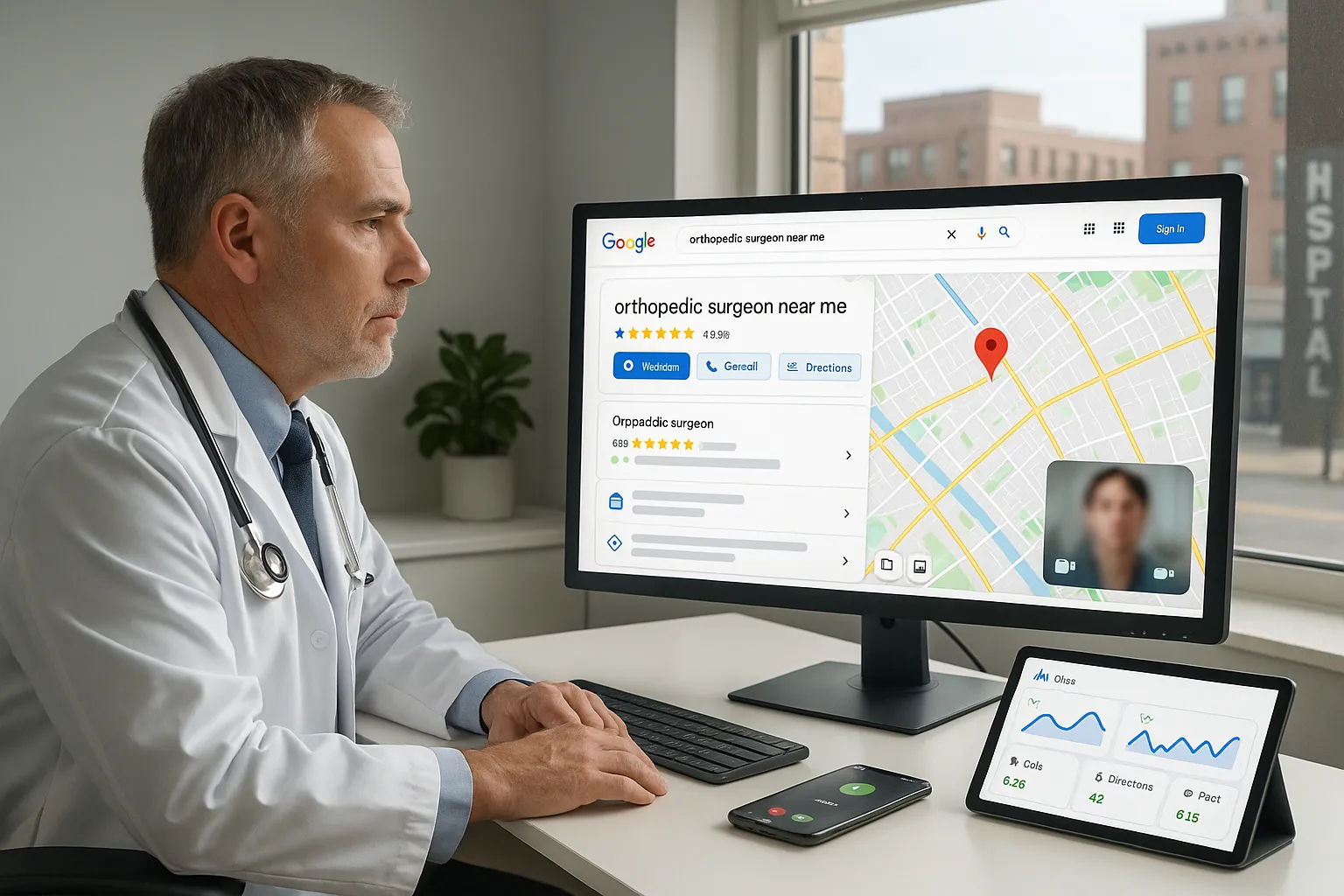
Local SEO for doctors works by sending clear, consistent location and service signals to search engines and patients. We want Google to understand three basic things: who we are, where we are, and which patients we help.
In simple terms, local SEO for doctors rests on four pillars:
- Relevance – Matching your pages and profiles to search terms such as “orthopedic surgeon in Dallas” or “telehealth psychiatrist near me.”
- Distance – How close your clinic address is to the searcher’s location on Google Maps.
- Prominence – Strength of your online presence: reviews, local links, citations, and mentions.
- User behavior – Clicks, calls, directions requests, and repeat visits that show patients actually prefer you.
We influence these signals by tuning your Google Business Profile, your site content, your local citations, and your review strategy. Done well, local SEO for doctors supports both brick-and-mortar visits and telehealth, while still respecting HIPAA and advertising rules.
Claiming And Optimizing Your Google Business Profile
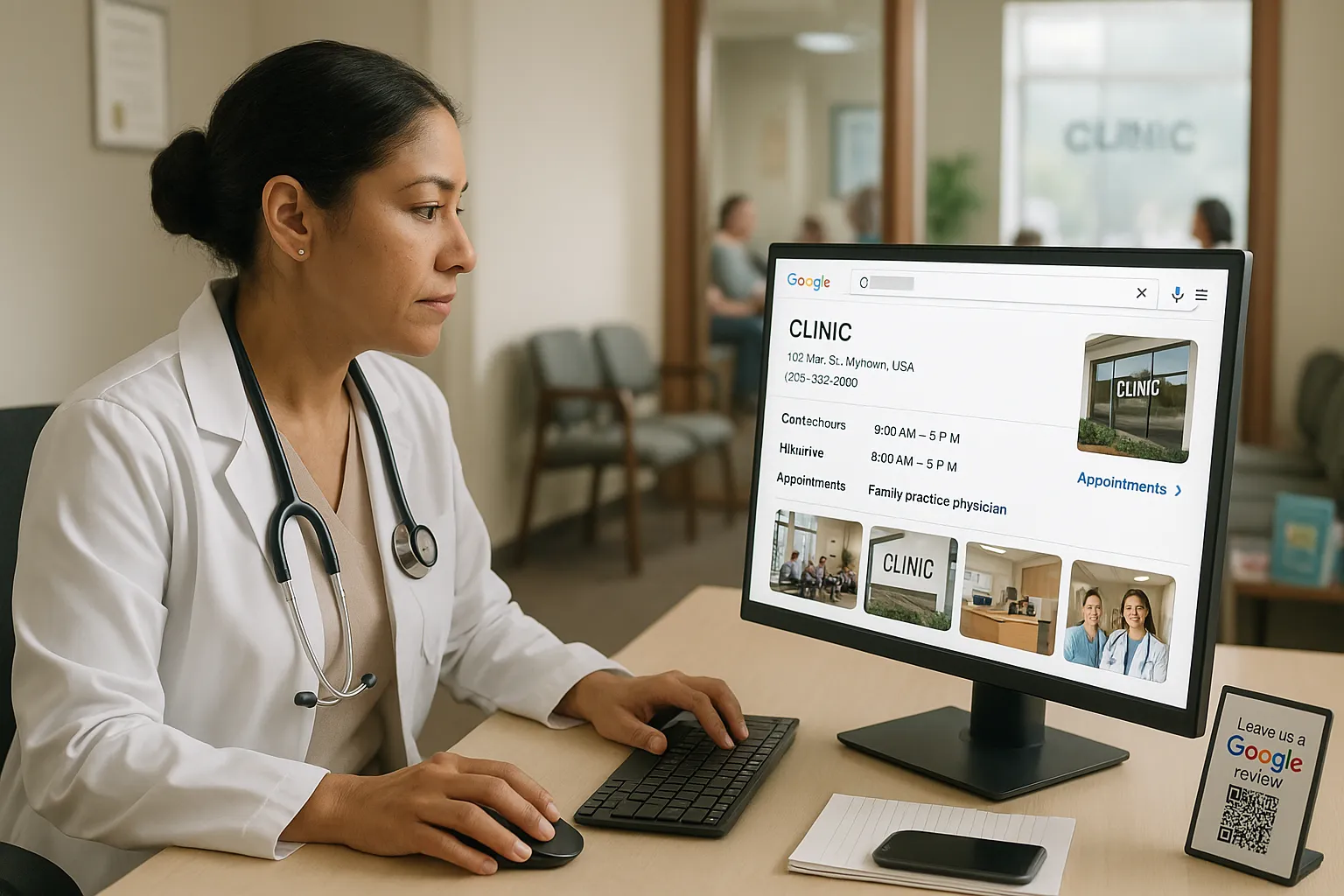
Our Google Business Profile (GBP) is often the first thing patients see, even before our website. Local SEO for doctors starts here.
Step one: claim and verify your listing at business.google.com using your practice email. Then we tighten several elements:
- Name – Use your real practice or provider name, no keyword stuffing.
- Categories – Choose a main category such as “Family practice physician” or “Pediatric dentist,” plus a few accurate secondary categories.
- Address and service area – Match your legal address, NPI records, and website exactly.
- Phone and booking link – Add a call tracking number if needed, but keep one consistent main number and clear links to your online scheduling page.
- Hours and special hours – Keep these updated for holidays and emergencies.
Add photos of your waiting room, exterior signage, front desk, and staff. Post short updates on seasonal vaccines, new services, or extended hours. All of this supports local SEO for doctors by improving relevance and patient engagement in Maps and Search.
On your site, link back to this GBP profile and from GBP to key pages such as /appointments and /contact-us to create a clean loop.
Building A Location-Optimized Medical Website
Your website acts as the central reference point for local SEO for doctors. Google checks it to confirm your location, specialties, and authority.
Here is what we focus on:
- Clear NAP data – Name, address, phone at the top and in the footer, identical to your GBP and major directories.
- Dedicated location pages – One page per clinic with maps, parking directions, nearby landmarks, bus or train details, and photos. This helps for searches like “OBGYN near Union Station.”
- Service pages – Separate pages for cardiology, dermatology, physical therapy, etc. Each should reference the city or region in natural language.
- Fast, mobile-friendly design – Many patients search from phones while in the car or at work. Slow load times cost appointments.
- Clear calls to action – “Call now,” “Book online,” “Request an appointment” buttons on every page.
We also set up smart internal links. From an article on back pain, link to your /orthopedics page. From the home page, link to /locations/chicago or /telehealth. These internal routes support local SEO for doctors and help both users and search engines move through your content logically.
Reputation Management And Local Reviews For Doctors
Local SEO for doctors depends heavily on trust, and online reviews are a public trust signal. Many patients will not book with a doctor who has fewer than 4 stars or very few reviews.
We want a steady stream of authentic, compliant reviews across Google, Healthgrades, Vitals, Yelp, and insurance directories. Some practical steps:
- Ask for reviews soon after a visit through email or SMS, using neutral language that does not pressure patients.
- Share a short URL that points directly to your Google review form.
- Train staff on what they can and cannot say, and never offer gifts or discounts in exchange for reviews.
Respond to reviews with care. Thank happy patients in a general way. For negative feedback, stay calm, do not reveal any protected health information, and invite the reviewer to contact the office privately. The American Medical Association (AMA) advises respect for privacy and professionalism in all online interactions.
Handled well, reviews do more than rescue local SEO for doctors. They give us real feedback on wait times, bedside manner, and front desk processes.
Local Content And Link Strategies For Healthcare Providers
Content and links tell search engines that your practice is a trusted health resource in a specific community. This layer turns basic local SEO for doctors into a stronger presence.
Ideas that tend to work:
- Publish city-focused guides such as “Flu season in Phoenix: when to see a doctor” or “Allergy calendar for Atlanta.”
- Create FAQ pages that answer common local questions about school physicals, travel vaccines, or local pollen counts.
- Partner with nearby gyms, senior centers, or schools on educational posts where they link back to your site.
Local press mentions, chamber of commerce listings, and sponsorship pages from community events all help. Each high quality local link supports local SEO for doctors more than a random directory across the country.
On your own site, weave in internal links from blog posts to your main service and location pages such as /pediatric-care or /locations/seattle so that readers always have a clear next step.
Tracking Local SEO Results And Staying Compliant
We cannot improve what we do not measure. Local SEO for doctors should tie back to appointments, not just rankings.
Set up Google Analytics and Google Search Console. Track:
- Organic traffic from your city and nearby suburbs
- Calls and form fills from organic search
- Directions clicks and calls from your Google Business Profile
- Rankings for search terms that match your services and city
At the same time, we respect HIPAA, state medical board rules, and advertising standards. Avoid mentioning specific patients, detailed case outcomes, or anything that could look like a guarantee.
The U.S. Department of Health & Human Services offers HIPAA marketing guidance, and the AMA publishes social media and digital conduct advice. Both are worth reviewing before any large campaign.
Local SEO for doctors works best when we keep messaging accurate, avoid exaggerated claims, and route sensitive conversations away from public channels and into secure systems.
Conclusion
Local SEO for doctors is not about tricks. It is about showing up clearly, honestly, and consistently wherever nearby patients search for care. When we tighten our profiles, site, content, and reviews, we do more than rank. We make it easier for worried people to find the right door.
Choosing The Right Metrics For A Medical Practice
We should judge local SEO for doctors by patient-centered metrics, not vanity numbers. Helpful metrics include:
- New patients per month from organic search and Google Maps
- Appointment requests and phone calls traced to local queries
- Review score averages and review volume over time
- Visibility in the local 3-pack for our most important search terms
Traffic and rankings still matter, but they serve as leading indicators. The real question is simple: “Are we seeing more of the right patients, with the right conditions, from nearby areas we serve?” If the answer is yes, our local SEO for doctors is moving in the right direction.
Balancing Marketing With Medical And Legal Guidelines
There is a quiet tension here. We want growth, but we also took an oath. Good local SEO for doctors respects that balance.
We avoid fear-based messaging, miracle claims, or language that oversells outcomes. We keep disclaimers clear. We train staff so that every online interaction matches the same ethics we follow in the exam room.
If we treat local SEO for doctors as an extension of patient care – clear information, easy access, respectful communication – we win twice. Search engines understand us better, and patients feel safer choosing us.
Sources
- “AMA Code of Medical Ethics Opinion 2.3.2: Online medical professionalism,” American Medical Association, 2016, https://www.ama-assn.org/delivering-care/ethics/online-medical-professionalism
- “Summary of the HIPAA Privacy Rule,” U.S. Department of Health & Human Services, 2013, https://www.hhs.gov/hipaa/for-professionals/privacy/laws-regulations/index.html
- “How to improve your local ranking on Google,” Google Business Profile Help, Google, 2023, https://support.google.com/business/answer/7091
Local SEO for Doctors: Frequently Asked Questions
What is local SEO for doctors and why does it matter for my medical practice?
Local SEO for doctors is the process of helping your practice show up in Google Search, Maps, and review sites when nearby patients search terms like “pediatrician near me.” It matters because if you don’t appear in local results, you never enter the patient’s decision process or booking journey.
How does local SEO for doctors actually work on Google and Maps?
Local SEO for doctors works by sending clear signals about who you are, where you are, and which patients you help. Google evaluates relevance to the search term, distance from the searcher, online prominence (reviews, links, citations), and user behavior such as clicks, calls, and directions requests to rank your practice.
What are the most important steps to optimize a Google Business Profile for a doctor’s office?
Start by claiming and verifying your Google Business Profile with your practice email. Use your real practice name, accurate medical categories, and consistent address and phone. Add booking links, correct hours, photos of your office and staff, and regular posts about services or seasonal updates to boost visibility and patient engagement.
How can doctors use reviews and reputation management to improve local SEO?
Ask patients for honest reviews soon after visits via neutral email or SMS requests, and share a direct Google review link. Aim for steady, authentic feedback on Google, Healthgrades, Vitals, and insurance directories. Respond professionally without sharing PHI, and use feedback to improve wait times, communication, and overall patient experience.
How should I measure the success of local SEO for doctors beyond rankings?
Focus on patient-centered metrics: new patients from organic search, appointment requests and calls from Google and Maps, directions clicks from your Google Business Profile, and visibility in the local 3-pack for key services. Track review scores and volume over time to see whether better visibility is translating into real, qualified appointments.
Some of the links shared in this post are affiliate links. If you click on the link & make any purchase, we will receive an affiliate commission at no extra cost of you.
