
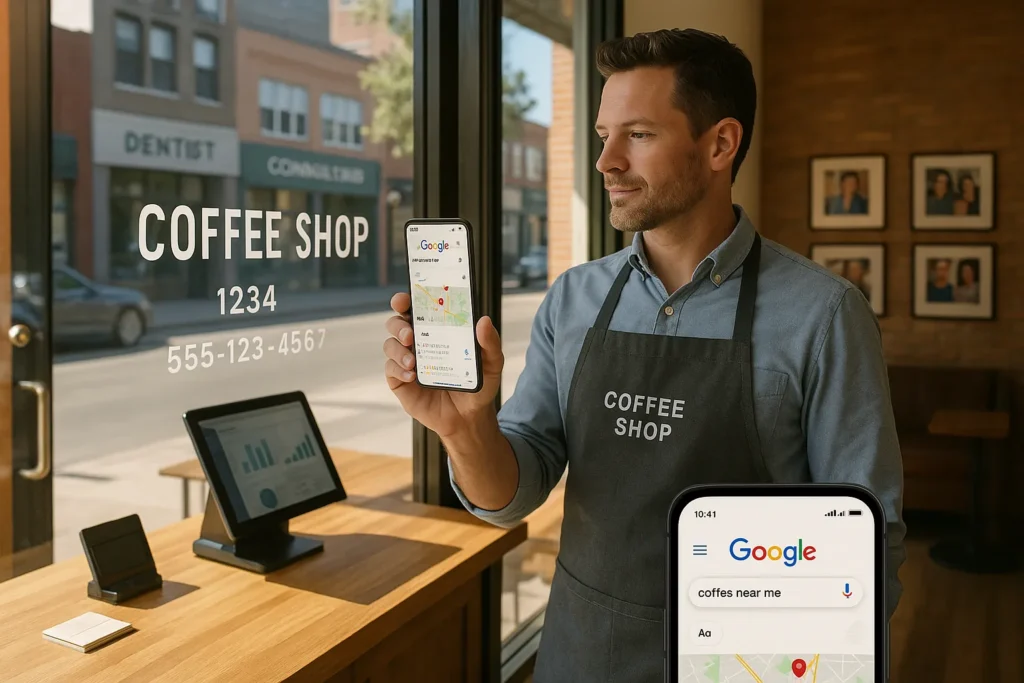
The last time we grabbed coffee from a new spot, we did what everyone does now: pulled out our phone, typed “coffee near me,“ and tapped one of the top three results. That tiny moment of choice is exactly where local business search engine marketing either wins us new customers or hands them to a competitor. In this guide, we will strip away jargon and show how we can show up in those local moments that actually bring revenue through the door.
Key Takeaways
- Local business search engine marketing helps your company appear in the critical “near me” moments across Google, Bing, Apple Maps, and other platforms when nearby customers are ready to buy.
- A strong local foundation starts with perfectly consistent NAP data, focused service and location pages, and visible trust signals like real photos, bios, and clear pricing.
- On-page local SEO—optimized titles, meta descriptions, headings, and locally relevant content—tells search engines exactly who you serve and where, boosting your local visibility.
- Complete, active profiles on Google Business Profile, Yelp, and industry directories plus a steady flow of honest reviews form the backbone of effective local business search engine marketing.
- Paid search and maps ads, tracked with clear conversion metrics, let you reach nearby customers quickly and continuously refine your local campaigns for more calls, bookings, and visits.
What Local Search Engine Marketing Actually Is
Local business search engine marketing is the combined effort to show up when people search for services or products near them on Google, Bing, Apple Maps, and other platforms.
At its core, local business search engine marketing covers three areas:
- Earning organic visibility with local SEO
- Managing profiles like Google Business Profile and Yelp
- Running paid local ads in search results and map packs
We focus on people who add geo terms like “near me,“ neighborhood names, or city names, and people whose devices already signal location. Our goal is simple: appear where local intent lives, earn the click, and turn that visit into a call, form fill, or walk-in.
If we want more booked tables, appointments, or site visits from people nearby, this is the channel that moves the needle.
Why Local Search Matters For Modern Businesses And Professionals
Local search matters because our customers trust it and use it constantly. Google has shared that a large share of searches carry local intent, and many of those turn into offline visits within a day.
Here is why that should get our attention:
- Local results often sit above regular organic links.
- Reviews and star ratings influence who users click first.
- Mobile users are usually close to making a decision.
If we are a lawyer, dentist, restaurant, SaaS office with local clients, or even a solo consultant, local business search engine marketing places us in front of people ready to act. It also builds real-world trust. Seeing our brand on maps, in the local pack, and across review sites makes us look established before anyone speaks to us.
Laying The Foundation: Your Local Search Visibility Basics
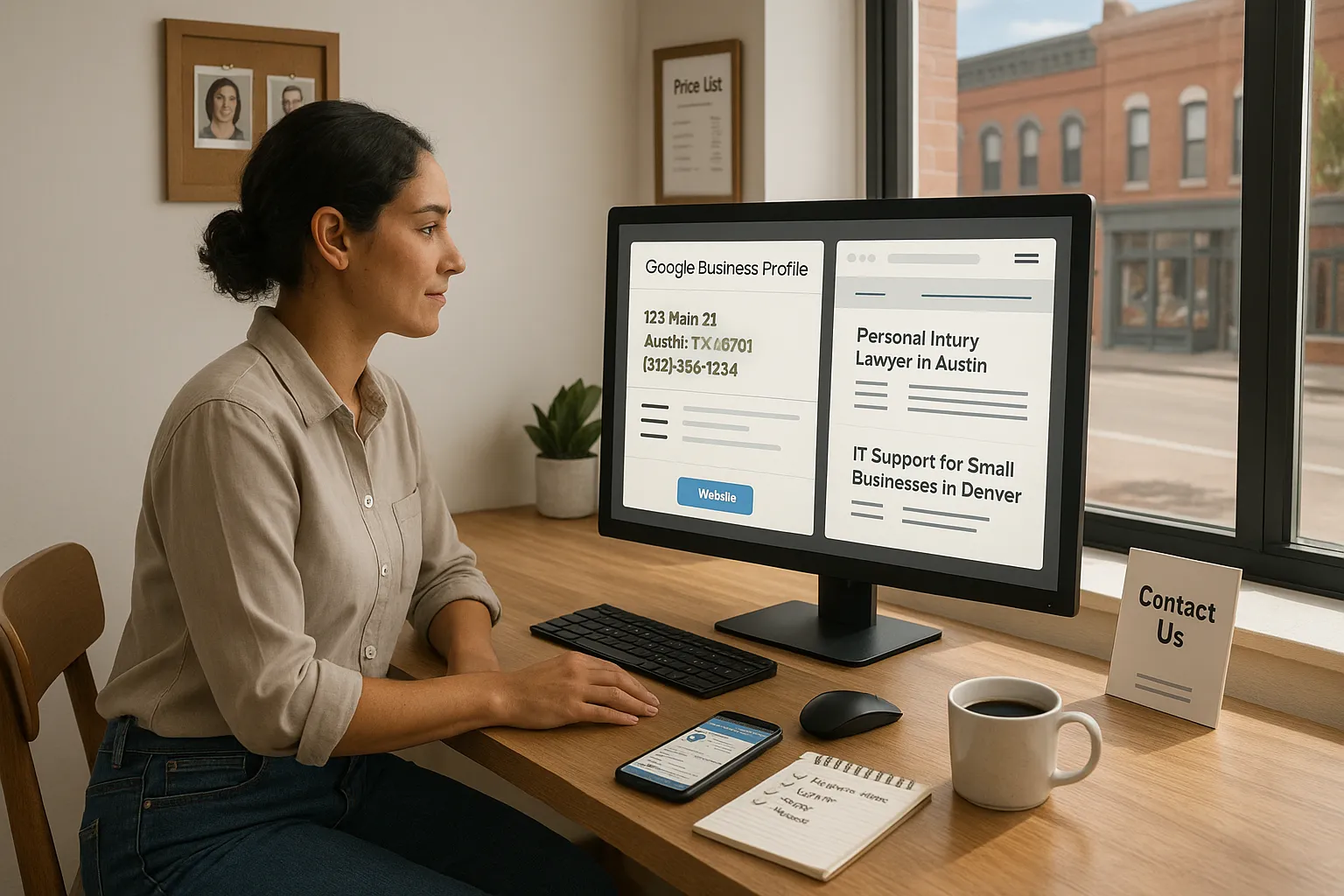
We cannot win local business search engine marketing without a clean foundation. That foundation has three pillars: data, content, and trust signals.
Start with consistent NAP:
- Name
- Address
- Phone number
The exact same format should appear on our website, Google Business Profile, social pages, and directory listings.
Next, make sure we have clear service and location pages. A single generic “Services” page rarely ranks well for city-based queries. Create dedicated pages like “Personal Injury Lawyer in Austin“ or “IT Support for Small Businesses in Denver.“
Finally, trust signals. That means real photos, staff bios, clear pricing or starting rates, and easy contact options. These details help both people and search engines understand that we are a real local entity worth showing.
If we are new to this, a good starting point is a simple Guide to Local SEO Basics.
Optimizing Your Website For Local Search Intent
Our website tells search engines who we are, what we do, and where we serve. We want that story to be very clear.
Start with on-page elements:
- Page titles that include service and city
- Meta descriptions that reflect local value
- Headings that mention neighborhoods or service areas
Write content that answers real local questions. A family doctor can cover “same day appointments in Chicago,“ while a restaurant might explain parking, wait times, or gluten-free options.
Add embedded maps on contact or location pages, schema markup for local business, and internal links between related city or service pages. Over time, this tight internal structure supports our broader local business search engine marketing work and keeps visitors moving instead of bouncing.
We can go deeper with a Local Landing Page Playbook once the basics are in place.
Leveraging Local Listings, Reviews, And Citations
Local listings and citations act like a public record of our business data. Search engines look at them to confirm that our NAP is accurate.
Start with these profiles:
- Google Business Profile
- Apple Maps
- Bing Places
- Yelp and industry sites like Avvo, Healthgrades, TripAdvisor, or Houzz
Fill out every field we can: categories, hours, holiday hours, services, photos, and FAQs. Treat our Google Business Profile as a mini home page.
Reviews matter a lot. Ask happy clients to review us while the experience is fresh. Respond to all reviews, good and bad, with calm and specific replies. That public conversation reinforces trust and sends quality signals.
Active listings plus honest reviews create a strong backbone for local business search engine marketing and can lift our map pack rankings over time.
Using Paid Search And Maps Ads To Reach Nearby Customers
Paid search and maps ads help us reach buyers fast while our organic presence grows. We can show at the very top for local terms that matter most.
The main options:
- Google Ads search campaigns with local keywords
- Location extensions that link to our Google Business Profile
- Local Services Ads for certain trades and professions
We can target by radius, zip code, or city, and adjust bids by device so we spend more on mobile where local intent runs high.
The smart move is to tie paid campaigns to the same goals as our broader local business search engine marketing: calls, booked appointments, directions, and form fills. Use clear offers in ad copy, add call tracking, and send traffic to focused local landing pages instead of a busy home page.
Measuring Results And Improving Your Local Campaigns Over Time
If we do not measure, we guess. Local search gives us rich data that we can turn into better results.
Metrics to watch:
- Calls and messages from Google Business Profile
- Direction requests and map interactions
- Local keyword rankings in organic and map packs
- Click through rates on search and maps ads
Use Google Analytics, Google Search Console, and the built in Google Business Profile insights. Track form submissions and calls with unique numbers for paid and organic.
Then we adjust. If a page ranks but does not earn clicks, tune the title and description. If searchers bounce, improve the content or page speed. This feedback loop turns local business search engine marketing from a one time project into a steady growth channel.
Conclusion
Local business search engine marketing is not magic. It is a series of clear steps: solid data, focused content, strong profiles, real reviews, and smart paid support.
When we treat our presence in Google, maps, and local directories as part of one system, we give search engines and people the same message about who we serve and where we work. That consistency builds trust.
If we want more nearby clients next quarter, we do not need to overhaul everything. We start with one location page, one cleaned up Google Business Profile, and one campaign aimed at our best local keyword. Then we learn from the data and keep going.
Local search rewards patience and clarity. If we show up honestly and stay active, the map pins and phone calls follow.
Sources
- “How to Improve Your Local Ranking on Google“, Google Business Profile Help, Google, updated 2024, https://support.google.com/business/answer/7091
- “Local Search Ranking Factors“, Whitespark, 2023, https://whitespark.ca/local-search-ranking-factors/
Frequently Asked Questions About Local Business Search Engine Marketing
What is local business search engine marketing?
Local business search engine marketing is the combined strategy of appearing in local search results on Google, Bing, Apple Maps, and other platforms. It includes local SEO, managing profiles like Google Business Profile and Yelp, and running paid search or map ads so nearby customers can find and contact you quickly.
How do I get started with local business search engine marketing for my business?
Begin by cleaning up your NAP (name, address, phone) so it’s consistent everywhere. Create clear service and location pages on your website, fully optimize your Google Business Profile and key directories, then consider focused local ad campaigns. Track calls, directions, and form fills to see what’s working.
Why does local search matter so much for modern businesses and professionals?
Local search matters because people use it right before they decide where to go or whom to call. Local results and map packs often appear above regular listings, reviews influence clicks, and mobile users typically act quickly. This makes local visibility a direct driver of visits, leads, and revenue.
What are the best ways to optimize my website for local search intent?
Use page titles and headings that include your service and city, write content that answers local questions, and create dedicated location or neighborhood pages. Add embedded maps, local business schema markup, and strong internal links between related pages to help search engines understand where and whom you serve.
How long does local business search engine marketing take to show results?
Organic local SEO often takes a few weeks to a few months to show measurable gains, depending on competition and how much you improve your site and profiles. Paid search and maps ads can drive calls and visits almost immediately, while reviews and citations steadily strengthen rankings over time.
Some of the links shared in this post are affiliate links. If you click on the link & make any purchase, we will receive an affiliate commission at no extra cost of you.
