

We nearly spilled our coffee the first time a client said, “ChatGPT sends me traffic, but I’m never mentioned by name.“ That is the quiet threat Generative Engine Optimization (GEO) solves. As AI answers compress search results into a single response, we either become the cited source inside that answer or we disappear behind it. In this guide, we walk through how we can tip the odds in our favor and turn generative engines into steady brand amplifiers.
Key Takeaways
- Generative Engine Optimization (GEO) shifts your focus from ranking links to earning citations and brand mentions inside AI-generated answers from tools like ChatGPT, Perplexity, Claude, and Google SGE.
- To improve GEO, structure content so each section answers one clear question, uses entity-rich headings, and presents information in chunks of 75–300 words that models can easily quote.
- Ground your content in data by adding statistics, expert quotes, tables, and authoritative outbound citations so generative engines treat your pages as credible, evidence-backed sources.
- Optimize existing pages for generative engines by rewriting intros to answer the core question fast, clarifying entities with consistent names, and strengthening internal links to build a meaningful content network.
- Measure the impact of your Generative Engine Optimization (GEO) work by tracking brand mentions in AI tools, monitoring AI-related referral traffic and branded search volume, and running manual checks on priority questions across multiple generative engines.
Understanding Generative Engine Optimization And Why It Matters
Generative Engine Optimization (GEO) focuses on how our content appears inside AI answers from tools like ChatGPT, Perplexity, Claude, and Google’s Search Generative Experience (SGE). Classic SEO tries to rank blue links. GEO works to earn citations, quotes, and brand mentions inside machine-written responses.
Here is why that matters. When users type a complex question into a generative engine, they often get a complete, conversational summary at the top. Many never scroll further. If our brand is not in that summary, we still may get impressions, but we lose awareness, leads, and trust.
GEO shifts our attention:
- From single keywords to query intent and entities
- From “ranking” to being cited as a trusted source
- From thin answers to structured, evidence-backed content
When we think this way, our content becomes easier for large language models (LLMs) to parse, quote, and weave into their answers. GEO does not replace SEO. It extends it into a world where AI sits between users and the open web.
How Generative Engines Interpret And Synthesize Content
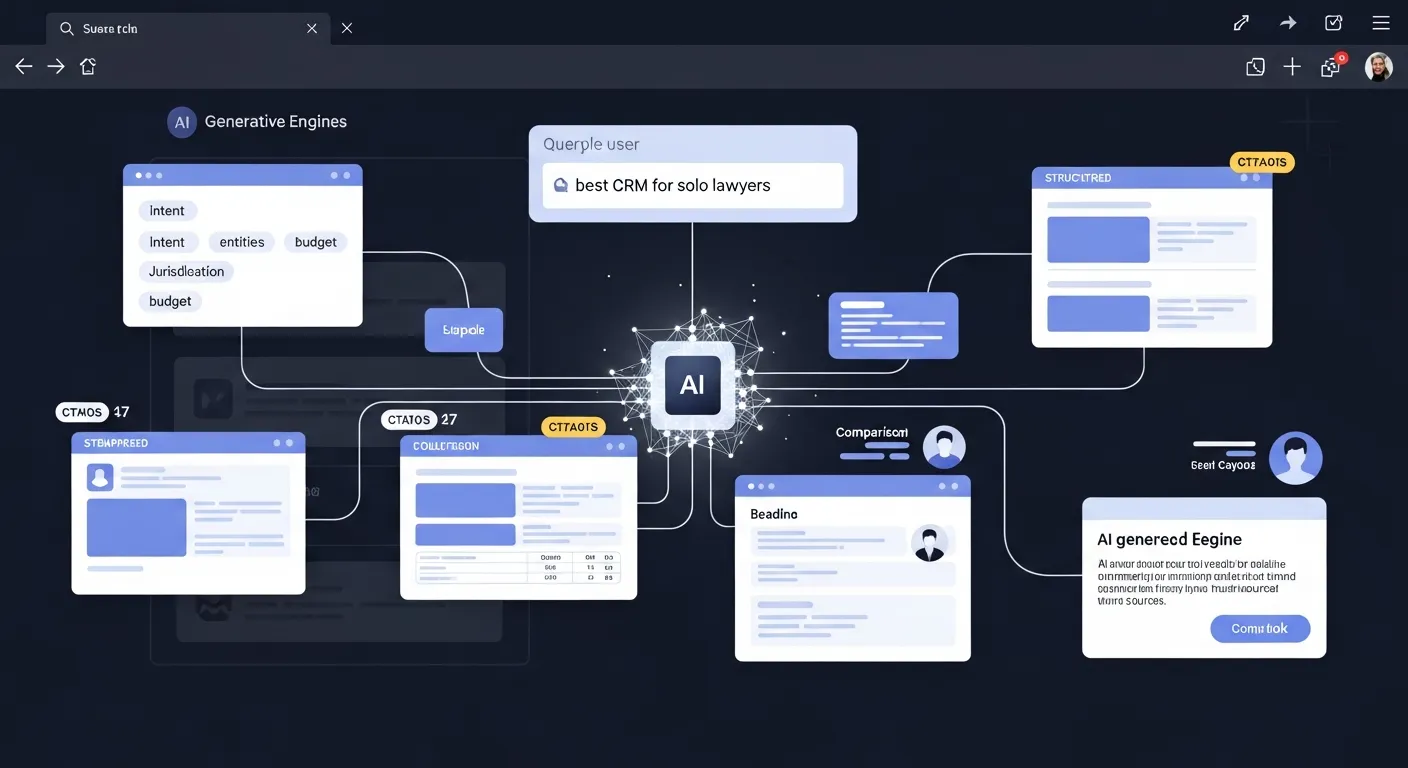
Generative engines take a user question, guess what the person really wants, then scan huge amounts of text to assemble a fresh answer. Under the hood, LLMs use natural language processing to:
- Detect intent and entities
They map phrases like “best CRM for solo lawyers“ to concepts: legal practice size, CRM features, jurisdiction, budget. GEO works best when we spell these out in plain language.
- Collect supporting facts
Some engines pull from real time web search, others work off training data and retrieval systems. Clear headings, bullet lists, and tables help engines grab the right snippet in one pass.
- Weigh credibility
Models prefer content that looks grounded in evidence: cited statistics, named experts, consistent facts, and content that matches signals of trust from search systems.
- Generate a readable response
Finally, they stitch together an answer in natural language, often summarizing several sites at once. GEO aims to make our page the easiest one to quote cleanly.
When we understand this process, we see why structure, clarity, and explicit context matter more than clever wording alone.
Core GEO Principles To Build Into Your Content Strategy
To improve Generative Engine Optimization (GEO) across our site, we can bake in a few stable habits.
- Answer one clear question per section
Start each section with a direct answer, then support it. This mirrors how generative engines write. It also matches a chunked, modular style that tools like ChatGPT handle well.
- Use entity rich, structured headings
Instead of “Tips,“ we use “GEO tactics for B2B SaaS pricing pages.“ Clear H2 and H3 headings tell models what each block covers. This helps engines assemble precise, cited snippets.
- Ground claims with data and citations
LLMs look for numbers, named sources, and external authority. We add stats, dates, quotes, and link out to standards bodies or major publishers. That makes GEO signals stronger because models see us as part of an established knowledge graph.
- Keep content conversational and comprehensive
Engines favor content that mirrors how users ask questions. We write in plain language, add FAQs, and cover related follow up questions on the same page.
- Support GEO with technical SEO
Fast loading pages, mobile friendly layouts, and clean internal links still matter. Schema markup for articles, products, and FAQs helps search systems understand our entities and feed richer context to generative engines. A deeper guide to semantic SEO can help here.
When these habits become routine, every new page ships in a GEO ready shape from day one.
Practical Steps To Optimize Existing Content For Generative Engines
We do not need to rebuild our site to improve Generative Engine Optimization (GEO). We can upgrade existing pages in passes.
- Rewrite intros to answer the core question fast
In the first 2 to 3 sentences, say who the page is for, what question it answers, and the short version of that answer. Generative engines often extract from that opening.
- Add statistics, quotes, and tables
We insert small tables that compare options, timelines, or metrics. We pull 1 to 3 credible statistics per page with citations. Tables and numbers give models “anchor points” that appear more often in responses.
- Break walls of text into chunks
We aim for sections of 75 to 300 words with clear headings. That chunk size matches how LLMs slice content. Each chunk should stand on its own.
- Clarify entities and use consistent names
Say “OpenAI GPT 4“ instead of just “the model.“ Use full company, product, and location names. GEO improves when models can confidently connect us to known entities.
- Tighten internal links
From every strong page, we link to deeper resources such as a topic clusters guide or a schema walkthrough. This builds a web of meaning that search systems and LLMs can trace.
We treat this as a rolling refresh program, starting with pages that already pull organic search traffic.
Creating New GEO-Ready Content Across Different Industries
New content gives us a chance to bake Generative Engine Optimization (GEO) into the outline before we write a single sentence. The approach shifts slightly by industry, but the GEO spine stays the same.
Here is how we might shape pages:
- Marketing and SaaS
Long guides that cover “how, why, when, and risks“ for a topic, with comparison tables, pricing ranges, and step lists. LLMs love these as source material for buying advice.
- Healthcare and legal
Clear, non sensational explanations of processes, rights, timelines, and disclaimers. We include patient or client journeys, definitions of terms, and jurisdiction notes. GEO supports safer, more accurate answers here.
- Finance and investing
Scenario based content that walks through example portfolios, cash flow tables, or tax outcomes. We label regions (US, EU, state level) so generative engines do not mix rules.
- Hospitality, restaurants, and local services
FAQ heavy pages that answer practical questions about hours, pricing ranges, parking, dietary options, or accessibility. GEO friendly content here helps AI assistants give precise local recommendations.
- Technology, engineering, and science
Step by step explanations, diagrams, and references to standards or specs. We define acronyms, describe failure modes, and list constraints.
Across all of these, we write as if we are explaining the topic to a colleague who might quote us in a report. That is exactly what generative engines do at scale.
Measuring GEO Impact And Iterating Over Time
To improve Generative Engine Optimization (GEO), we need some way to tell if our work shows up in AI answers.
We can track:
- Mentions of our brand or domain inside tools like Perplexity and ChatGPT browsing outputs
- Traffic from referrer strings tied to AI assistants where available
- Changes in branded search volume after publishing strong GEO focused content
We can also run manual checks. We pick 10 to 20 target questions and ask several generative engines. We note where our brand appears, what text they quote, and which pages they favor. Then we refine structure, add sources, or clarify entities.
Small experiments help. We might A/B test two versions of a guide: one with dense paragraphs and few tables, the other with tight sections, tables, and explicit entities. Over time we keep patterns that show up more often inside AI answers.
GEO is not a one time project. It is a habit of writing and updating content in a way that respects how LLMs read the web.
Conclusion
When we accept that many users now read answers written by machines before they ever see our site, Generative Engine Optimization (GEO) stops feeling optional. It becomes part of how we publish anything online.
If we keep content structured, grounded in real data, and rich in clear entities, we make life easy for generative engines. In return, they are more likely to mention us, quote us, and send users who want the full story.
From Search-First To Gen-First Content Strategy
A search first mindset asks, “What keyword do we want to rank for?“ A gen first mindset asks, “What answer do we want to own when someone asks this question out loud?“
So our next content brief might change from “rank for GEO“ to “be the source generative engines trust when professionals ask how to improve GEO.“ That small wording shift nudges us toward better structure, better citations, and better stories.
If we write every page as if a smart assistant will quote us directly to our next client, Generative Engine Optimization (GEO) becomes less theory and more common sense.
Sources
A new era for Search: the Search Generative Experience, Google, May 2023, https://blog.google/products/search/generative-ai-search/
How generative AI is changing search and SEO, Search Engine Land, August 2023, https://searchengineland.com/how-generative-ai-is-changing-search-and-seo-430857
GPT-4 Technical Report, OpenAI, March 2023, https://arxiv.org/abs/2303.08774
Search Quality Evaluator Guidelines, Google, December 2022, https://static.googleusercontent.com/media/guidelines.raterhub.com/en//searchqualityevaluatorguidelines.pdf
Frequently Asked Questions About Generative Engine Optimization (GEO)
What is Generative Engine Optimization (GEO)?
Generative Engine Optimization (GEO) is the practice of designing content so that generative engines like ChatGPT, Perplexity, Claude, and Google’s SGE cite, quote, and mention your brand inside their answers. Instead of only chasing blue-link rankings, GEO focuses on being the trusted source those AI systems summarize.
How can I improve Generative Engine Optimization (GEO) on existing content?
To improve GEO on existing pages, rewrite intros to answer the main question quickly, add statistics and tables, break long walls of text into 75–300 word sections, clarify entities with consistent names, and tighten internal links so LLMs can follow your topical clusters and context.
How is Generative Engine Optimization different from traditional SEO?
Traditional SEO focuses on ranking URLs for specific keywords in search results. Generative Engine Optimization extends this by optimizing for citations inside AI-generated answers. GEO shifts attention from single keywords to intent and entities, from rankings to being quoted, and from thin content to structured, evidence-backed explanations.
How do I measure the impact of my GEO strategy?
You can track brand or domain mentions in tools like Perplexity and ChatGPT with browsing, monitor traffic from AI assistant referrers, and watch branded search volume trends. Periodically ask target questions in multiple generative engines, note if and how they quote you, and adjust structure, data, and entities accordingly.
What are some practical GEO tactics for B2B and SaaS companies?
For B2B and SaaS, create long, comprehensive guides that cover how, why, when, and risks, plus comparison tables, pricing ranges, and step-by-step lists. Clearly label audiences, use entity-rich headings, and ground claims with data and citations so generative engines can confidently use your pages for buying advice.
Which tools or practices help support a long-term Generative Engine Optimization strategy?
GEO works best alongside strong technical SEO, schema markup for articles and FAQs, and a semantic SEO approach to topic clusters. Content briefs should define the core question, entities, and data sources, while ongoing experiments—like testing more structured layouts—reveal which formats get quoted most by AI systems.
Some of the links shared in this post are affiliate links. If you click on the link & make any purchase, we will receive an affiliate commission at no extra cost of you.
